
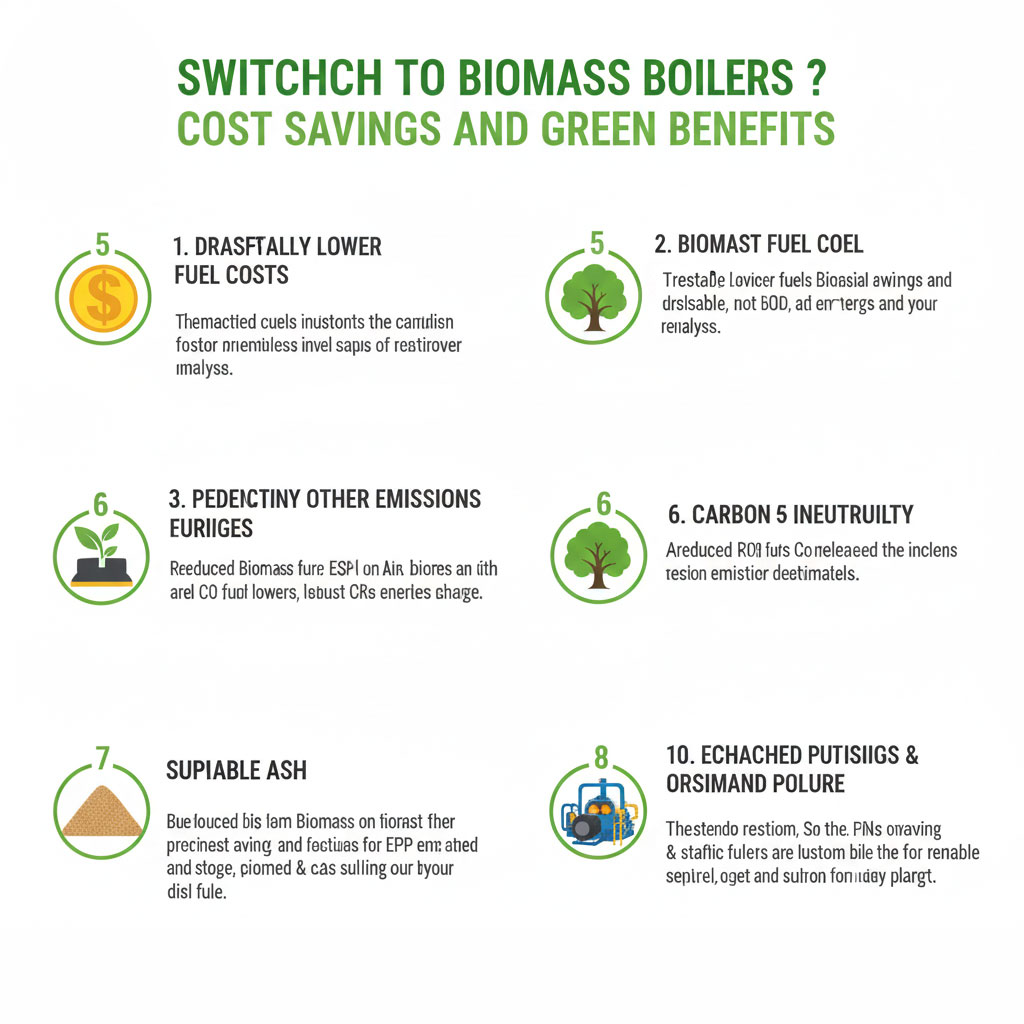
Why Switch to Biomass Boilers? Cost Savings and Green Benefits Explained
In India’s competitive industrial landscape, every decision, from raw material procurement to energy generation, profoundly impacts profitability and sustainability. For decades, factories have relied on fossil fuels for steam—the lifeblood of countless processes. However, a powerful shift is underway, driven by both economic necessity and environmental responsibility: the move to Biomass Steam Boilers.
At IndianBoilers.com, we see the future of industrial steam in India powered by its own agricultural abundance. Here’s a comprehensive look at why switching to a Biomass Hot Water Boiler is not just an option, but a strategic imperative for your business.
1. The Undeniable Economic Advantage: Drastically Lower Fuel Costs
This is the most immediate and often the most compelling reason for the switch. The difference in fuel cost between fossil fuels and biomass is staggering.
A. Direct Fuel Cost Reduction
- Up to 90% Savings: Depending on your location and the type of biomass used (e.g., rice husk, bagasse, wood chips, groundnut shells), you can reduce your annual fuel expenditure by $50\%$ to $90\%$ compared to coal, and even more drastically against furnace oil or diesel. For industries generating their own biomass waste, the fuel cost can effectively drop to zero.
- Rapid Payback Period: This massive reduction in operating costs translates into an incredibly fast Return on Investment (ROI) for the Biomass Boiler. Many factories report payback periods as short as 6 months to 2 years, making it one of the most financially attractive industrial upgrades.
B. Stable and Predictable Energy Prices
- Insulation from Global Volatility: Biomass prices are localized and far less susceptible to international market fluctuations, currency exchange rates, or geopolitical tensions that plague fossil fuel markets.
- Enhanced Budgeting: This stability allows for far more accurate long-term energy budgeting, reducing financial risk and providing greater operational security.
C. Reduced Waste Disposal Costs
- For industries that generate biomass waste (like rice mills with husk or sugar mills with bagasse), using it as fuel eliminates the need for costly and environmentally challenging waste disposal, turning a liability into a valuable resource.
2. The Indispensable Green Benefits: Environmental Stewardship & Compliance
Beyond the financial gains, Biomass Boilers offer profound ecological advantages that align with global sustainability goals and national mandates.
A. Carbon Neutrality: A Truly Green Footprint
- Closed Carbon Cycle: Biomass is a carbon-neutral fuel. During its growth, the plant absorbs atmospheric CO2. When that biomass is combusted in a boiler, it releases roughly the same amount of CO2, creating a balanced cycle without adding new carbon to the atmosphere (unlike fossil fuels which release ancient, stored carbon).
- Climate Change Mitigation: Switching significantly reduces your factory’s greenhouse gas emissions profile, contributing directly to India’s climate goals and your company’s net-zero targets.
B. Reduced Other Harmful Emissions
- Lower Sulfur and Nitrogen Oxides (SOx, NOx): Biomass typically has very low sulfur content, virtually eliminating SOx emissions (a major cause of acid rain and respiratory issues). NOx emissions are also generally lower compared to coal.
- Cleaner Air: Modern biomass boilers, equipped with efficient dust collectors (like Multi-Cyclone Dust Collectors or Bag Filters), ensure particulate matter (PM) emissions are well within stringent Pollution Control Board (PCB) norms. This directly contributes to cleaner ambient air quality around your factory.
C. Waste-to-Energy Solution
- Biomass boilers provide a sustainable solution for managing massive amounts of agricultural and industrial organic waste. This helps prevent destructive practices like open field burning of crop residue, which severely impacts air quality, especially in northern India.
D. Enhanced Corporate Image and Regulatory Compliance
- Green Brand Appeal: Companies utilizing renewable energy enhance their brand image, attracting environmentally conscious customers, investors, and talent.
- Future-Proofing Operations: As environmental regulations tighten globally and domestically, investing in biomass technology ensures long-term compliance, avoiding future penalties and expensive retrofits required for fossil fuel systems.
3. Beyond Cost & Green: Additional Strategic Advantages
The benefits extend beyond the immediate financial and environmental aspects.
- Promoting Local Economies: Sourcing biomass fuels supports local farmers, transporters, and biomass aggregators, channeling money back into the rural economy.
- Job Creation: The biomass supply chain, from collection to processing and transportation, creates new employment opportunities.
- Fuel Flexibility: Modern boilers can be designed to burn a variety of biomass fuels, providing operational resilience if one specific fuel source becomes scarce or expensive.
- Valuable Ash Byproduct: Rice Husk Ash (RHA), a major byproduct of husk combustion, is rich in silica and is a sought-after raw material for the cement, construction, and refractory industries, creating an additional revenue stream.
Conclusion: A Smart Decision for a Sustainable Future
Switching to Biomass Boilers is a clear win-win for Indian industries. It’s a powerful statement of commitment to sustainability that delivers immediate, tangible financial benefits. By harnessing India’s abundant agricultural resources, you can secure your energy supply, slash your operating costs, and contribute to a cleaner, greener future for generations to come.
Ready to transform your energy strategy and reap these immense benefits?
Contact IndianBoilers.com today for a personalized consultation and a detailed projection of your cost savings and green impact.
