
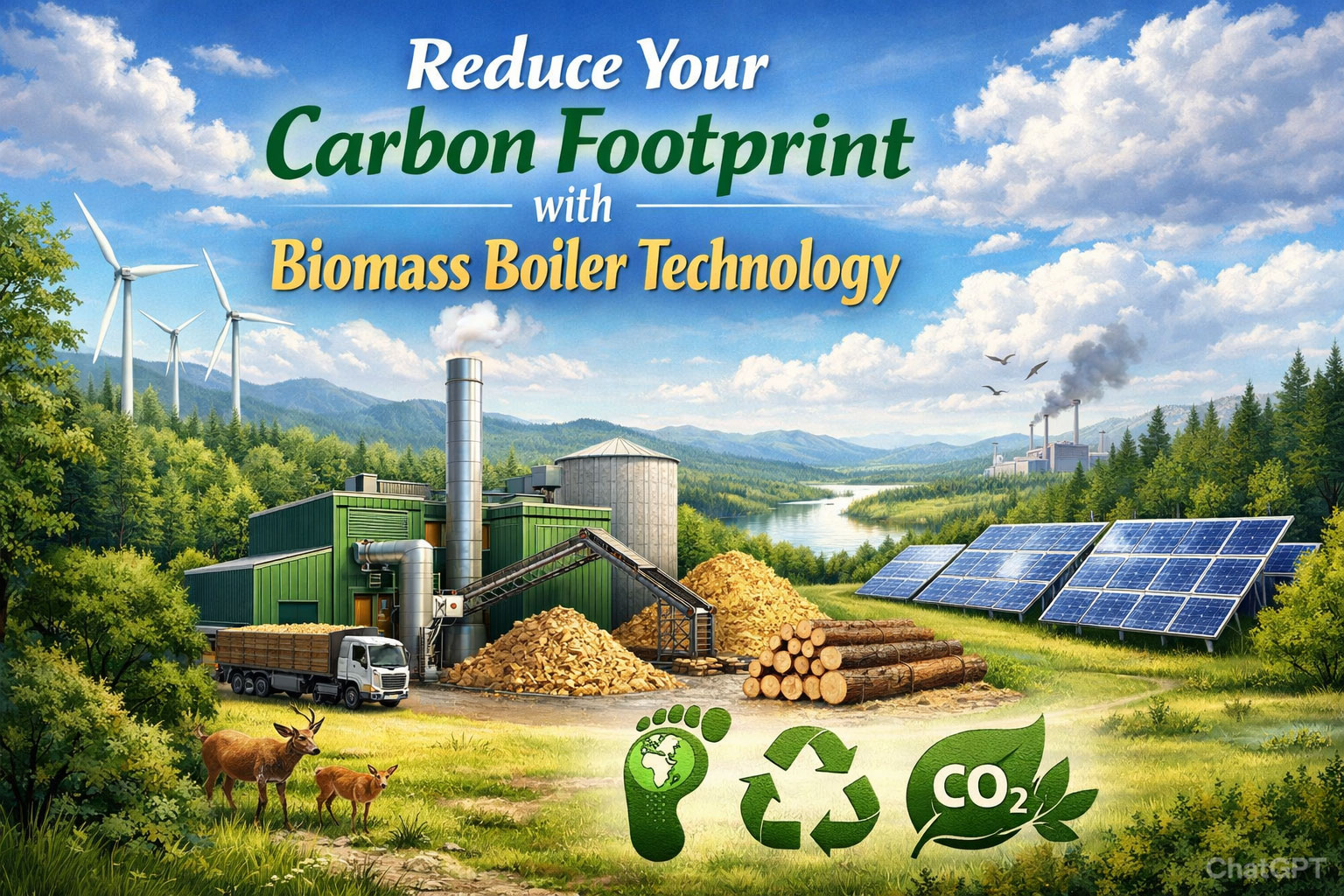
Carbon accounting has moved from a sustainability report to a genuine procurement and export criterion. Indian manufacturers selling into international markets are increasingly asked to document their emissions, and domestic policy is catching up too, with India’s own carbon trading framework now covering several energy-intensive sectors. For plants weighing how to actually reduce their carbon footprint rather than just talk about it, switching combustion fuel — specifically to biomass — remains the single most direct lever available, because it changes the physical source of the carbon released, not just the efficiency of burning it.
Why the Carbon Conversation Has Changed
A few concrete developments are driving this shift rather than general sustainability pressure alone:
India’s domestic carbon market is now operational, in a specific form. The Indian Carbon Market (ICM), established under the Carbon Credit Trading Scheme, currently covers obligated entities across specific energy-intensive sectors — aluminium, cement, chlor-alkali, pulp and paper, petroleum refining, petrochemicals, and textiles — with emissions intensity targets phased in through 2025–27. This is a real, functioning compliance mechanism, but it’s worth being precise: it currently applies to large obligated entities in these named sectors, not to every manufacturer generally. If your plant falls within one of these sectors and crosses the applicable size threshold, this is directly relevant to your compliance obligations — worth confirming your specific status with the Bureau of Energy Efficiency (BEE) or a carbon compliance consultant, since eligibility and thresholds are technical and specific.
International carbon border mechanisms are real, but sector-specific. The EU’s Carbon Border Adjustment Mechanism (CBAM) is in its transitional reporting phase and currently applies to a defined set of sectors — cement, iron and steel, aluminium, fertilisers, electricity, and hydrogen — requiring declared embedded emissions and, eventually, a carbon price on imports into the EU. If your export business falls into one of these specific categories, this is worth taking seriously; if not, it’s still worth monitoring, since the scope of CBAM-style mechanisms has expanded before and international buyers increasingly ask for carbon data regardless of formal mandate.
Fossil fuel price volatility hasn’t gone away. Geopolitical instability continues to make imported coal and oil pricing unpredictable, which is a purely commercial reason to diversify toward a more locally-sourced fuel, independent of any carbon consideration.
The Actual Science: Why Biomass Counts Differently
The core reason biomass combustion is treated differently from fossil fuel combustion in carbon accounting is straightforward: biomass is part of the short-term carbon cycle. The CO₂ released when rice husk, wood waste, or agricultural residue burns is, broadly, the same CO₂ that the plant absorbed from the atmosphere during its recent growth — a cycle measured in months or years. Coal and oil, by contrast, release carbon that was sequestered underground for millions of years, adding genuinely “new” carbon to the atmosphere rather than cycling existing carbon.
This distinction is why switching from coal or furnace oil to a well-combusted biomass system is widely recognised in emissions accounting frameworks as delivering a very large reduction in net fossil-origin CO₂ — commonly cited in the range of 80–95% depending on combustion completeness and any residual fossil fuel used for startup or auxiliary purposes. Treat any single precise percentage you’re quoted (by us or anyone else) as an estimate to verify against your specific fuel mix and combustion efficiency, since the real number depends on how completely your system burns the fuel — which brings us to the engineering side.
Complete Combustion Is the Actual Lever
Reducing carbon footprint isn’t just about switching fuel type — incomplete combustion of any fuel, biomass included, produces carbon monoxide and particulate matter, both genuine pollutants and both signs of wasted, unburned fuel. Modern biomass combustion systems are engineered specifically around achieving as close to complete combustion as possible, through:
Staged air injection — precisely controlled primary and secondary combustion air ensures fuel carbon actually finds oxygen to combine with, rather than passing through partially unburned.
Extended residence time — furnace geometry designed to keep flue gases in the high-temperature combustion zone longer, giving incomplete combustion products more opportunity to fully oxidise before exiting.
Consistent, low-moisture fuel — densified fuels like briquettes and pellets, typically processed to below 10% moisture, avoid the energy loss and combustion instability that comes from a boiler having to drive off excess water before useful combustion can even begin.
Our COMCUBE biomass-fired boiler and STEAMAX briquette-fired boiler are both engineered around these combustion principles, using staged air control and furnace designs built to maximise residence time and burn completeness rather than just raw throughput.
Matching System to Process for Maximum Carbon Reduction
Space-constrained SMEs and food processing units moving away from diesel generators or older, high-carbon combustion equipment often find the compact COMCUBE design a practical entry point — it lets smaller operations switch to localised agricultural waste fuel without a major footprint expansion.
High-pressure, high-volume steam users benefit from the STEAMAX, which uses reciprocating grate technology engineered to handle varying biomass fuel quality — sawdust, groundnut shells, bagasse — without efficiency dropping off, which matters because a boiler that can only run cleanly on one specific fuel grade limits your ability to actually secure a consistent, low-carbon supply chain year-round.
Drying and hot water processes — tea, spice, dairy, and similar applications — often gain more from removing steam as an intermediate step entirely. The wood briquette-fired hot air generator (AIRMAX) and wood briquette-fired hot water boiler (AQUAMAX) provide direct heating rather than generating steam only to convert it into hot air or water downstream — a genuine system-level efficiency gain, since every conversion step between fuel and final process heat carries some loss, and cutting a step reduces fuel burned per unit of useful output.
These sit within our Steam Boiler, Hot Air Generator, and Hot Water Boiler ranges, alongside the husk-specific HUSKPOWER and waste-heat-recovery ENERPOWER systems on Balkrishn.com.
The Cost Side of the Decision
Carbon reduction and cost reduction point in the same direction here, which is precisely why biomass adoption has accelerated rather than remaining a purely environmental gesture. Biomass fuels generally cost meaningfully less per unit of delivered heat than furnace oil, and often less than coal once you account for ash disposal and, increasingly, compliance costs on the fossil side. Payback periods for a genuine fuel-switch conversion commonly fall in the 12–18 month range for many industrial applications, though this depends heavily on your current fuel type, utilisation hours, and local biomass pricing — always calculate this against your own current fuel invoice rather than a generic industry figure. Our detailed comparisons of Rice Husk vs Mustard Straw ROI and Biomass Pellet vs Biomass Briquette performance are useful starting points for that calculation.
Solving the Practical Barriers
The historical concerns about biomass — inconsistent fuel supply and messy ash handling — are largely solved by modern operating practice rather than remaining unavoidable trade-offs:
Fuel consistency comes from working with established briquette and pellet aggregators on standing supply arrangements, rather than sourcing loose biomass on the spot market, which is where most of the old “unreliable fuel supply” reputation originated.
Ash management is handled by automated ash removal systems, and biomass ash — being rich in potash — is frequently sold on to local farmers or fertiliser manufacturers as a soil amendment, turning a disposal cost into a modest secondary revenue stream rather than pure expense.
Automation through PLC-based fuel feeding and combustion control removes most of the manual operator burden that made older biomass systems labour-intensive to run well.
Combustion Technology Still Matters More Than the Fuel Switch Alone
Switching fuel type without matching grate and combustion technology to your specific fuel characteristics won’t deliver the emission reduction the fuel switch is capable of. If you’re running loose agro-residue rather than densified fuel, our guides on grate speed’s effect on steam production and fuel consumption and Vibrating Grate vs Reciprocating Grate performance explain how grate design directly affects burn completeness. Fuel moisture remains one of the most controllable variables in achieving genuinely low emissions — see our breakdown of fuel moisture vs boiler efficiency for target ranges to negotiate with your fuel supplier.
Compliance Alongside Carbon Reduction
Lower carbon intensity and regulatory emission compliance move together here — better combustion control that reduces fossil-origin carbon also reduces particulate matter and NOx output, which matters as CPCB and state pollution control norms continue to tighten regardless of carbon market developments. A complete system pairs combustion improvements with proper filtration; see our biomass boiler emission control systems guide and our Pollution Control Equipment range — bag filters, ESPs, and wet scrubbers — for what a fully compliant setup requires.
Building Your Own Carbon Reduction Case
Rather than relying on an industry-wide percentage, the more useful exercise is establishing your own baseline: calculate your current fossil fuel consumption and its associated emissions using standard emission factors for your specific fuel type, then model the reduction from switching a defined share of that load to biomass. This gives you a number specific to your operation that will hold up under scrutiny from auditors, buyers, or regulators — far more useful than quoting a generic industry average when a customer or compliance body asks for your actual figures. If your plant is large enough to fall under ICM obligations, this baseline work is not optional; if you’re outside that scope, it’s still the foundation for any voluntary carbon claim you might want to make credibly.
Sequencing a Carbon-Focused Conversion
For plants prioritising carbon reduction specifically, alongside cost savings, the practical order tends to be: establish your current emissions baseline first, identify which portion of your fossil fuel load can realistically shift to biomass given local fuel availability, size and specify the boiler and combustion technology to that specific fuel profile, and build in emission monitoring from day one so you have a defensible, auditable record rather than a one-time claim. Skipping the baseline step is the most common reason a “green transition” ends up being difficult to substantiate later when a buyer or auditor asks for actual numbers rather than a general statement of intent.
Frequently Asked Questions
Can any factory monetise carbon credits by switching to biomass? Not automatically. India’s compliance carbon market (ICM) currently applies to obligated entities in specific named sectors above certain size thresholds. Smaller manufacturers outside those sectors may have access to voluntary carbon markets or project-based crediting mechanisms, but this requires separate registration and verification — it isn’t an automatic byproduct of installing a biomass boiler. Confirm your specific eligibility with BEE or a carbon markets consultant before factoring credit revenue into your ROI case.
How much can switching from coal to biomass actually cut emissions? Commonly cited reductions in net fossil-origin CO₂ fall in the 80–95% range, since biomass carbon is part of the short-term carbon cycle rather than newly released fossil carbon — but the precise figure for your plant depends on combustion completeness and any residual fossil fuel used in the process.
Does my industry face carbon border taxes on exports? The EU’s CBAM currently applies to cement, iron and steel, aluminium, fertilisers, electricity, and hydrogen specifically — not a blanket requirement across all export sectors. Check your product’s HS code classification against current CBAM scope, since coverage has expanded before and may again.
Is fuel supply for biomass reliable year-round now? Working with established briquette and pellet aggregators on standing supply contracts has significantly improved consistency compared to sourcing loose biomass directly — this is worth treating as seriously as the boiler purchase itself during project planning.
Talk to Our Team
Balkrishna Boilers Pvt Ltd — IndianBoilers.com and Balkrishn.com — can help you assess your current emissions baseline, calculate realistic savings specific to your fuel and load, and specify the right combustion technology for the biomass fuel actually available in your region. Contact our engineering team or explore our complete product range.
Further reading: How Biomass Boilers Cut Costs and Emissions for Factories · Biomass Boiler Trends in 2026 · Biomass Boiler Emission Control Systems: A Complete Guide · What is a Biomass Boiler?