
Introduction
A thermic fluid heater is an industrial heating system used to transfer heat efficiently without using high-pressure steam. It is widely used in industries like textiles, chemicals, food processing, and pharmaceuticals where consistent and controlled heating is required.
Unlike traditional boilers, thermic fluid heaters use a special heat transfer oil (thermic fluid) that can reach high temperatures at low pressure, making the system safer and more energy-efficient.
What is a Thermic Fluid Heater?
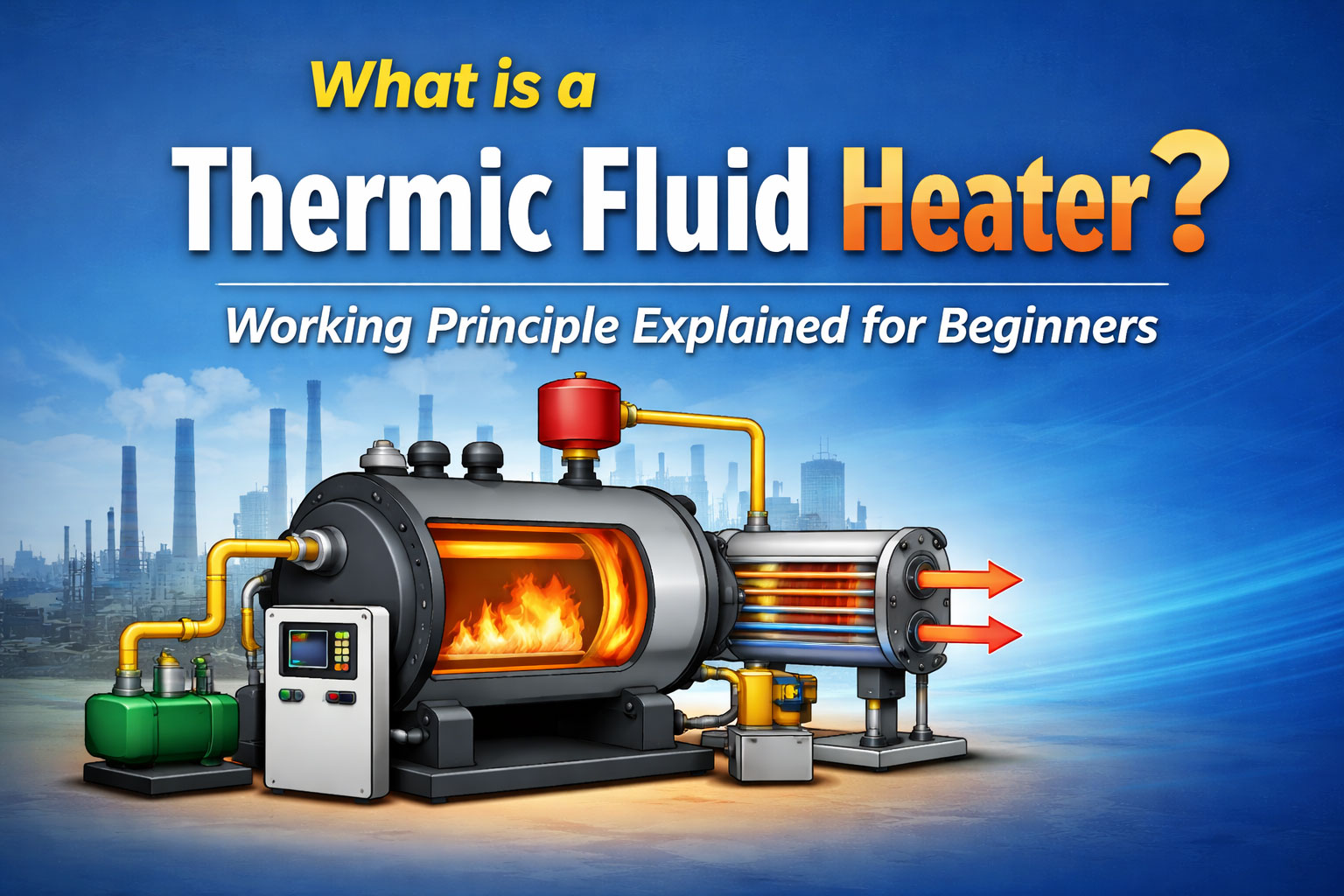
A thermic fluid heater (also known as a hot oil heater) is a closed-loop heating system where a heat transfer fluid is heated and circulated to provide thermal energy to various processes.
Instead of generating steam, the system heats oil, which then flows through pipelines to deliver heat to different parts of the plant.
Key Components of a Thermic Fluid Heater
- Heater Coil – Where the fuel is burned and heat is transferred to the fluid
- Thermic Fluid Pump – Circulates the fluid through the system
- Expansion Tank – Allows fluid expansion due to temperature rise
- Fuel System – Supplies fuel such as gas, oil, or solid fuel
- Control Panel – Monitors temperature, pressure, and safety systems
- Heat Exchanger / Process Equipment – Where the heat is utilized
Working Principle of a Thermic Fluid Heater
The working principle is simple and efficient. It operates in a closed loop:
Step-by-Step Process
- Fuel Combustion
Fuel (such as gas, diesel, or coal) is burned inside the heater. - Heat Transfer to Fluid
The generated heat is transferred to the thermic fluid flowing through the heater coil. - Circulation of Hot Fluid
A pump circulates the heated fluid through pipelines to different process equipment. - Heat Utilization
The hot fluid transfers heat to machines or materials through heat exchangers. - Return Cycle
After releasing heat, the fluid returns to the heater to be reheated.
This continuous cycle ensures consistent temperature control and efficient heat distribution.
Why Use Thermic Fluid Instead of Steam?
Thermic fluid heaters offer several advantages over steam boilers:
- Low Operating Pressure – High temperatures without high pressure
- Energy Efficient – Minimal heat loss
- Uniform Heating – Consistent temperature across processes
- Low Maintenance – No scaling or water treatment required
- Safe Operation – Reduced risk of explosion compared to steam systems
Applications of Thermic Fluid Heaters
Thermic fluid heaters are used across multiple industries:
- Textile industries (drying and processing)
- Chemical and pharmaceutical plants
- Food processing units
- Paper and pulp industries
- Plastic and rubber manufacturing
- Oil and gas sector
Key Benefits
- High thermal efficiency
- Precise temperature control
- Longer equipment life
- Reduced operational costs
- Easy installation and operation
Conclusion
A thermic fluid heater is a reliable and efficient solution for industrial heating needs. Its ability to deliver high temperatures at low pressure makes it safer and more economical than traditional steam boilers.
For industries looking for consistent heating, energy savings, and low maintenance, thermic fluid heaters are an excellent choice.
