
Choosing the right heating system is critical for industrial efficiency, safety, and cost control. Two of the most widely used systems are thermic fluid heaters and steam boilers. While both serve the purpose of heat generation, they operate differently and are suited to different industrial needs.
In this guide, we’ll break down the key differences, advantages, and ideal applications to help you decide which is better for your industry.
What is a Thermic Fluid Heater?
A thermic fluid heater uses a specialized heat transfer oil (thermic fluid) to generate and circulate heat at high temperatures without increasing pressure.
Key Features:
- Operates at high temperatures (up to 300°C or more) at atmospheric pressure
- Uses thermal oil as a heat transfer medium
- Closed-loop system with minimal water-related issues
- Uniform heat distribution
What is a Steam Boiler?
A steam boiler heats water to produce steam, which is then used for heating, power generation, or processing applications.
Key Features:
- Generates steam under high pressure
- Requires water treatment systems
- Widely used in process industries
- Can deliver both heat and mechanical energy
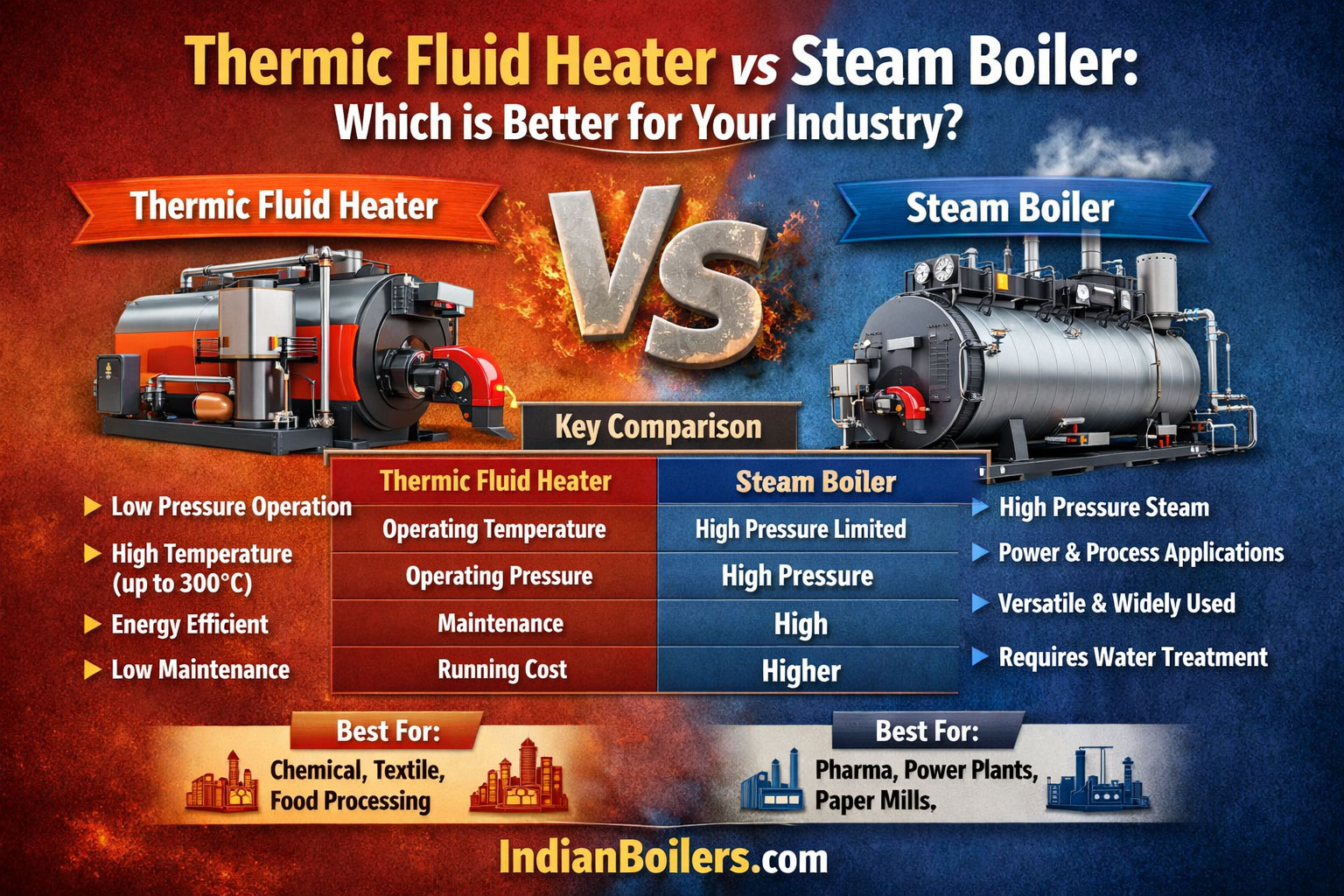
Thermic Fluid Heater vs Steam Boiler: Key Differences
| Parameter | Thermic Fluid Heater | Steam Boiler |
|---|---|---|
| Operating Temperature | High (up to 300°C+) | Limited by pressure |
| Operating Pressure | Low (atmospheric) | High pressure required |
| Efficiency | High (less heat loss) | Moderate |
| Maintenance | Low | High (scale, corrosion) |
| Startup Time | Faster | Slower |
| Safety | Safer (low pressure) | Requires strict safety controls |
| Heat Control | Precise | Less precise |
| Installation Cost | Moderate | Higher |
| Running Cost | Lower | Higher (due to water treatment & losses) |
Advantages of Thermic Fluid Heaters
- Energy Efficient: Minimal heat loss due to closed-loop system
- Low Maintenance: No scaling, corrosion, or blowdown issues
- Safe Operation: Works at low pressure, reducing risk
- Precise Temperature Control: Ideal for sensitive processes
- No Water Treatment Required
Advantages of Steam Boilers
- Versatility: Steam can be used for heating, sterilization, and power generation
- High Heat Transfer Rate: Steam carries large amounts of latent heat
- Established Technology: Widely used across industries
- Suitable for Process Applications requiring moisture or steam contact
Which Industries Should Choose What?
Choose Thermic Fluid Heater if your industry requires:
- Consistent and controlled heating
- High temperature without high pressure
- Applications like:
- Chemical processing
- Textile industries
- Food processing (dry heating)
- Plywood & laminates
- Bitumen & asphalt plants
Choose Steam Boiler if your industry requires:
- Steam for processing or sterilization
- Moist heat applications
- Power generation or mechanical energy
- Applications like:
- Pharmaceuticals
- Dairy & food processing (steam-based)
- Power plants
- Sugar mills
- Paper industries
Cost Comparison
- Initial Investment: Steam boilers are generally more expensive due to auxiliary systems like water treatment and safety equipment.
- Operating Cost: Thermic fluid heaters are more economical in the long run due to lower maintenance and energy losses.
- Fuel Efficiency: Thermic fluid systems typically offer better fuel utilization.
Safety Considerations
- Thermic fluid heaters operate at low pressure, making them inherently safer.
- Steam boilers involve high-pressure steam, requiring trained operators, regular inspections, and strict compliance with safety regulations.
Final Verdict: Which is Better?
There is no one-size-fits-all answer.
- Go for a Thermic Fluid Heater if your priority is energy efficiency, safety, and precise high-temperature heating without pressure complications.
- Choose a Steam Boiler if your process specifically requires steam for heating, sterilization, or power generation.
Conclusion
Both thermic fluid heaters and steam boilers play vital roles in industrial heating. The right choice depends on your process requirements, budget, safety considerations, and long-term operational goals.
Before making a decision, it’s always advisable to consult with industry experts and evaluate your plant’s specific needs.
