
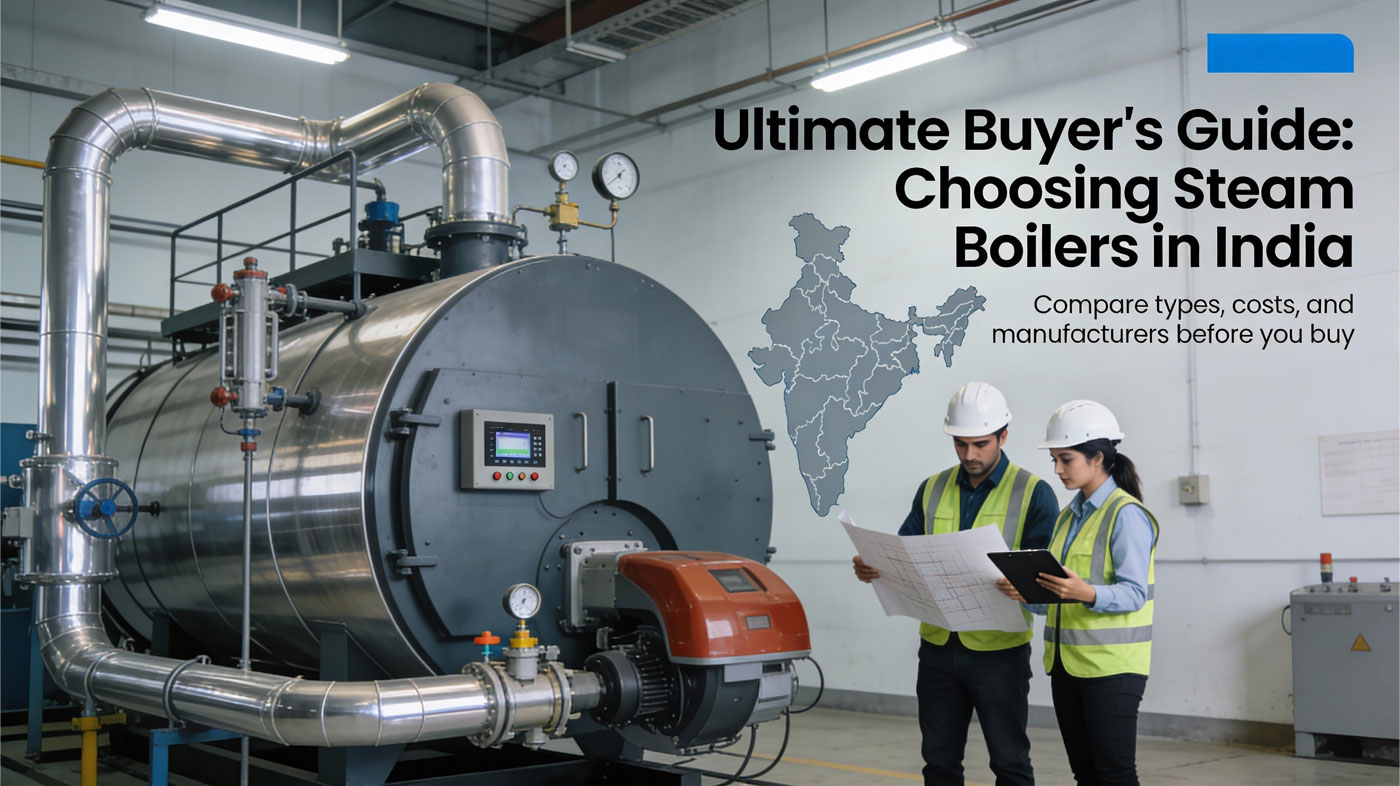
Ultimate Buyer’s Guide: Choosing Steam Boilers in India
Selecting the right steam boiler is crucial for Indian industries like textiles, food processing, and chemicals, where reliable steam generation drives efficiency and compliance with IBR regulations. This comprehensive guide covers types, key factors, top manufacturers, and buying tips tailored for 2025 market conditions in India.
Understanding Steam Boiler Basics
Steam boilers convert water into high-pressure steam using fuel combustion, essential for heating, power, and processing in factories. In India, they must adhere to the Indian Boiler Regulations (IBR) for safety, with capacities ranging from 1 TPH to over 50 TPH for large plants. Common fuels include coal, biomass (rice husk, wood), oil, gas, and agro-waste, reflecting India’s abundant local resources for cost savings.
Key components include the furnace, tubes, drum, and controls. Efficiency ratings above 85% are standard, with modern models achieving 90-95% via advanced combustion tech. For Indian buyers, prioritize IBR-certified models to avoid legal issues during inspections.
Types of Steam Boilers for Indian Industries
Fire tube boilers suit small-to-medium plants (up to 20 TPH), with hot gases passing through tubes surrounded by water—ideal for textiles and rice mills due to simplicity and quick startup. Water tube boilers excel in high-pressure applications (above 17.5 kg/cm²), used in pharmaceuticals and power plants for faster steam production and better scalability.
Packaged boilers offer plug-and-play installation, popular among MSMEs, while fluidized bed combustion (FBC) types handle multi-fuels like coal and biomass efficiently, reducing emissions. Non-IBR boilers fit low-pressure needs (<3.5 kg/cm²) in small food units, costing 20-30% less. Choose based on pressure: low (up to 7 kg/cm²) for processing, high for power.
| Boiler Type | Capacity Range | Best For | Efficiency | Price Range (₹ Lakh, 1-5 TPH) |
|---|---|---|---|---|
| Fire Tube | 1-20 TPH | Textiles, Food | 82-85% | 10-25 |
| Water Tube | 5-100 TPH | Pharma, Power | 88-92% | 20-50 |
| Packaged | 0.5-10 TPH | MSMEs | 85-90% | 8-20 |
| FBC | 2-50 TPH | Biomass-heavy | 87-95% | 15-40 |
| Non-IBR | 0.3-2 TPH | Small units | 80-85% | 5-15 |
Key Factors to Consider When Buying
Assess steam demand: Calculate TPH needed (e.g., 2 TPH for a mid-size dye house) plus 10-20% buffer for peaks. Fuel availability matters—opt for rice husk-fired in Punjab or gas-fired in Gujarat for lower logistics costs. Efficiency directly impacts ROI; look for models with economizers and air preheaters to cut fuel by 15-20%.
IBR compliance is non-negotiable for pressures over 3.5 kg/cm², requiring certified welders and third-party inspections. Factor in automation: PLC controls with auto blowdown and low-water alarms enhance safety. Maintenance ease, spare parts availability, and after-sales support are vital in remote Indian areas. Budget for installation (10-15% of boiler cost) and annual O&M (2-5%).
Prioritize energy savings: Biomass boilers yield payback in 2-3 years amid rising fuel prices. Environmental norms like CPCB emission limits favor low-NOx burners.
Top Steam Boiler Manufacturer in India 2025
Indianboilers.com stands out with fully automatic, wetback designs for diverse fuels, offering customized solutions for MSMEs. Thermax leads with high-pressure, hybrid systems boasting 92% efficiency and global tech. Thermodyne excels in energy-efficient coal/wood models under brands like Intech and Revosteam.
Cost Breakdown and Pricing in 2025
Entry-level non-IBR (1 TPH) starts at ₹5-10 lakh, while IBR fire tube (5 TPH) ranges ₹20-35 lakh. Premium water tube or FBC models hit ₹40-100 lakh for 10+ TPH, influenced by automation and fuel systems. Add ₹2-5 lakh for accessories like feed pumps and softeners.
Fuel costs dominate: Coal at ₹5,000/ton vs. gas at ₹50/scm—biomass saves 30% long-term. Total ownership: Factor 5-7 year lifespan with proper maintenance. Government subsidies under PLI scheme can cut 10-20% for energy-efficient models. Negotiate bulk deals; expect 10-15% discounts from direct manufacturers like Indianboilers.com.
Installation, Maintenance, and Compliance
Site preparation needs concrete foundations (1.5x boiler base) and clear 2m service space. Hire IBR-approved engineers; commissioning takes 7-14 days with hydrostatic testing. Annual maintenance: Check tubes quarterly, blowdown daily, full inspection yearly—costs ₹1-2 lakh/TPH.
Follow IBR Act 1923: Register boilers over 25 liters/1.8 kg/cm² with state inspectors. Digital monitoring via IoT cuts downtime by 40%. Train staff on safety to prevent 70% of incidents from human error.
Making the Final Decision
Compare quotes from 3-5 vendors, prioritizing local service networks. Visit demos or client sites—Indianboilers.com offers trials for real-world testing. Calculate NPV: Efficient boilers recoup premiums in 18-24 months via fuel savings.
For Indian industries, balance upfront cost with lifecycle efficiency. Contact Indianboilers.com for tailored quotes matching your TPH, fuel, and budget needs.
