
Fuel is usually the single largest recurring cost of running process heat in an industrial plant, which means efficiency isn’t an abstract engineering metric — it shows up directly on the monthly fuel bill. When plants compare a thermic fluid heater against steam or direct-fired alternatives, efficiency is usually one of the first numbers they ask about, and for good reason: the closed-loop design of a thermic fluid system removes several of the energy losses that steam systems carry as a matter of course.
This piece breaks down exactly where a thermic fluid heater saves energy compared to alternatives, what levers actually move the efficiency number in the field, and where plants leave savings on the table without realizing it.
Where Steam Systems Lose Energy That Thermic Fluid Doesn’t
To understand why thermic fluid heaters run efficiently, it helps to look at where a comparable steam system loses energy — because a lot of thermic fluid’s efficiency advantage comes simply from avoiding these losses rather than from any single dramatic innovation.
Blowdown losses. Steam boilers periodically discharge a portion of boiler water to control dissolved solids concentration. That discharged water carries away useful heat energy that has to be replaced by burning more fuel. A closed-loop thermal fluid system has no equivalent loss — the same fluid circulates indefinitely without needing periodic discharge.
Condensate losses. Steam that isn’t fully recovered as condensate — through leaks, venting, or process consumption — takes its latent heat with it. Thermal fluid, staying in the liquid phase throughout, has no latent heat of vaporization to lose in the first place.
Feedwater treatment energy. Steam systems need continuously treated makeup water, and depending on the treatment process, that carries its own energy cost, separate from the boiler’s own fuel consumption. A sealed thermal fluid circuit needs only a small top-up over years of operation, not continuous makeup.
Flash steam losses. When high-pressure condensate is released to a lower pressure, a portion flashes back to steam and is frequently lost to atmosphere unless a flash recovery system is installed and properly maintained. Thermal fluid systems don’t generate this loss because there’s no pressure letdown step in a typical closed loop.
Add these up across a full year of operation, and the gap between a well-run thermic fluid system and a comparable steam system is often substantial — which is one reason thermic fluid has become the default choice for high-temperature process heat in industries where fuel cost is a major line item.
Thermal Efficiency: What the Numbers Actually Mean
Thermic fluid heaters are typically rated by NCV (net calorific value) thermal efficiency — the percentage of fuel energy actually transferred into the thermal fluid, versus lost up the stack or radiated from the heater body.
Standard three-pass and four-pass thermic fluid heater designs commonly achieve 85% to 88% efficiency (NCV). That’s already a strong baseline compared to older single-pass or poorly maintained combustion equipment, which can run well below 80%. Where plants push efficiency further is with a few specific additions and disciplines, covered below.
Waste Heat Recovery Units (WHRU)
The single biggest efficiency lever beyond the base heater design is a Waste Heat Recovery Unit, which captures residual heat from the flue gas after it has already passed through the main coil, and uses it to preheat combustion air or incoming fluid.
Adding a WHRU to a standard three-pass or four-pass thermic fluid heater can push overall efficiency as high as 92%, recovering heat that would otherwise exit through the chimney as waste. For plants running heaters continuously across multiple shifts, the fuel savings from a WHRU typically pay back the additional capital cost within a reasonably short period — worth discussing with your supplier’s technical team against your specific fuel cost and running hours.
Low Heat Flux Coil Design
Efficiency isn’t only about how much heat gets into the fluid — it’s also about protecting the fluid so the system keeps performing at its rated efficiency over years, not just at commissioning. A low heat flux coil design ensures oil flows at high velocity through the coil, keeping the film temperature at the tube wall from exceeding the fluid’s safe limit.
This matters for efficiency in a less obvious way: fluid that carbonizes and deposits carbon on the coil wall insulates that surface, forcing the burner to work harder to achieve the same outlet temperature. A heater that starts at 87% efficiency can drift down several points over months of operation purely because of coil fouling from a poorly designed or poorly maintained flow path. Our guide on common thermic fluid heater problems and their solutions covers exactly how this shows up in daily operation and what to check.
Combustion Tuning and Air-Fuel Ratio
A burner running with excess air wastes energy heating air that then exits uselessly through the stack; one running with too little air risks incomplete combustion, soot formation, and reduced heat transfer. Getting the air-fuel ratio tuned correctly — and keeping it tuned as fuel supply conditions and ambient temperature shift through the year — is one of the most cost-effective efficiency actions available on an existing heater, requiring no capital investment, only a flue gas analyzer and a disciplined tuning schedule.
Plants that let combustion tuning drift for months at a time commonly lose several efficiency points without any dramatic symptom — the flame still looks reasonable to the eye, but stack temperature and fuel consumption creep up. A flue gas analysis on a regular schedule, as part of your broader maintenance routine, catches this before it compounds.
Insulation Quality
Heat lost through poorly insulated heater bodies and pipework doesn’t just waste fuel — it also creates a safety hazard for personnel working near hot surfaces. Well-specified insulation with intact cladding, especially at pipe joints and valve bodies where insulation is often skipped or damaged during other maintenance work, keeps radiant losses to a minimum across the whole thermal fluid circuit, not just at the heater itself.
Fluid Selection and Condition
An overlooked efficiency factor: the thermal fluid itself. A degraded or wrong-grade fluid has reduced heat transfer properties compared to fresh, correctly specified fluid — meaning the heater has to work harder to deliver the same process temperature. Selecting the right fluid for your operating temperature range from the start, and keeping it in good condition through regular fluid analysis, protects both equipment life and ongoing efficiency. Our thermic fluid heater oil selection guide covers how to match fluid to your process temperature and read a fluid analysis report.
System-Level Efficiency: Insulated Piping and Flow Balancing
Efficiency doesn’t stop at the heater — it extends across the whole distribution circuit. Two system-level factors that plants sometimes overlook:
- Insulated distribution piping. Long runs of thermal fluid piping between the heater and process equipment lose heat continuously if under-insulated, and that loss has to be made up by the heater running harder. This is a one-time capital cost that pays back through reduced fuel consumption for the life of the system.
- Balanced flow across multiple heat users. When one thermic fluid heater serves several pieces of process equipment, poor flow balancing can starve some users of adequate flow while over-supplying others, forcing the system to run at a higher overall temperature than necessary to satisfy the worst-served user. Properly balanced distribution, with balancing valves set correctly at commissioning and rechecked periodically, keeps the whole system running at the lowest temperature that still satisfies every process — and lower operating temperature generally means better efficiency and longer fluid life.
Efficiency and Fuel Choice
Different fuel options carry different efficiency and cost profiles, and the right choice depends heavily on local fuel economics:
- Gas-fired systems typically achieve strong, stable combustion efficiency with minimal maintenance overhead, making them a common choice where natural gas or LPG is reliably available.
- Biomass and solid-fuel systems (rice husk, wood, briquettes) can offer significant fuel cost savings in regions with accessible biomass supply, though they generally need more attentive combustion management to hold efficiency consistently.
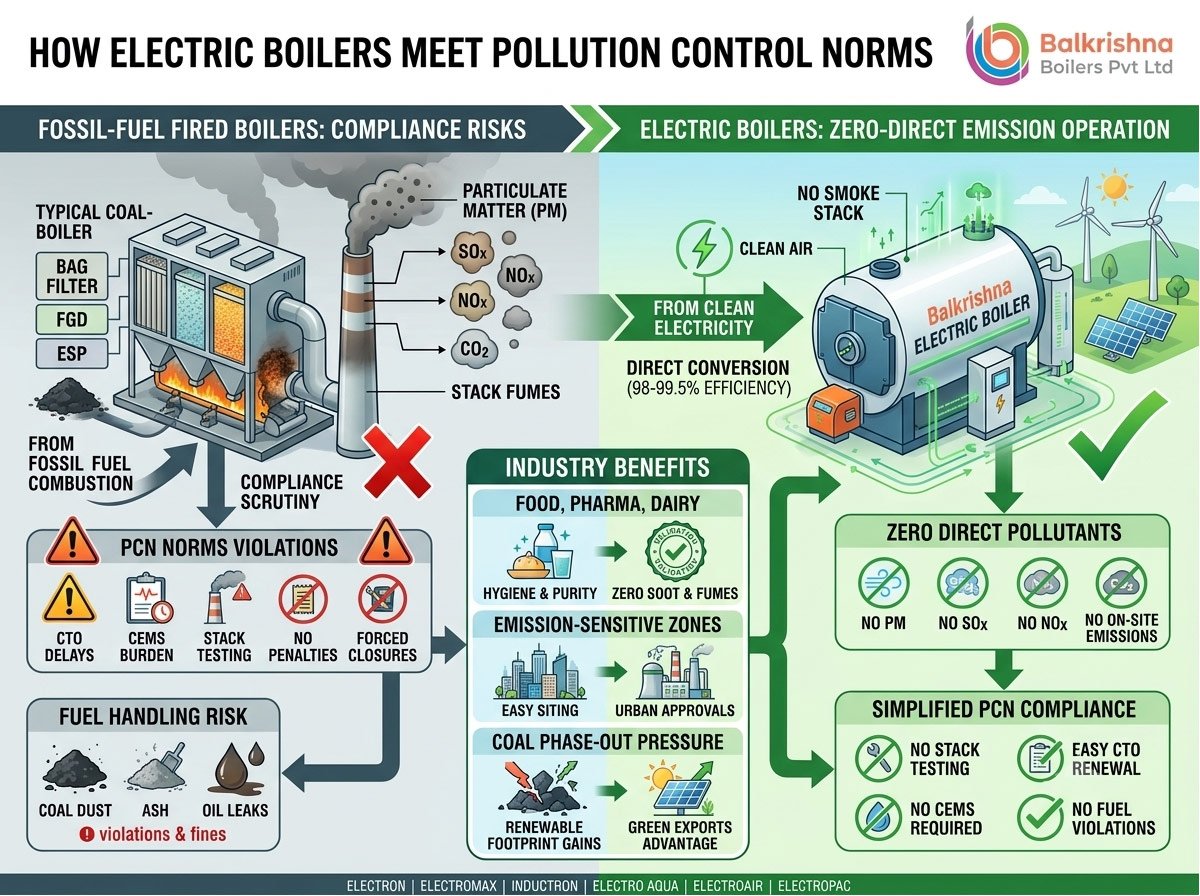
- Electric thermic fluid heaters convert electrical energy to heat with very high efficiency at the point of use, though the overall cost picture depends on local electricity tariffs relative to fuel prices.
Maintaining Efficiency Over the Life of the System
A heater commissioned at 87% efficiency doesn’t stay there automatically — efficiency is a moving target that drifts downward without disciplined maintenance, primarily through coil fouling, combustion drift, and instrumentation calibration errors that mask real performance loss. The full daily-to-annual routine that keeps a system running near its rated efficiency for its whole service life is covered in how to maintain a thermic fluid heater for long service life — tracking stack temperature, flow rate, and fluid condition consistently is what catches efficiency loss early enough to correct cheaply, rather than discovering it as a large fuel bill months later.
Efficiency as Part of the Steam vs. Thermic Fluid Decision
For plants evaluating thermic fluid against a steam system for a new or replacement installation, efficiency is one factor among several — alongside safety, compliance overhead, and capital cost — that should inform the decision. Our detailed comparison, Thermic Fluid Heater vs Steam Boiler: Which Suits Your Process?, walks through how these factors weigh against each other for different process requirements.
Typical Payback on Efficiency Upgrades
Because thermic fluid heaters avoid the blowdown, condensate, and water treatment losses inherent to steam, plants switching from steam to thermic fluid for eligible processes commonly see payback within 12 to 18 months, driven largely by these avoided losses rather than any single dramatic technology change. For plants already running thermic fluid and considering a WHRU retrofit or combustion system upgrade, payback periods vary with running hours and current fuel cost, but the calculation is generally straightforward once you have accurate current fuel consumption and stack temperature data to work from.
Our Thermic Fluid Heater Range
At Balkrishna Boilers Pvt Ltd, our thermic fluid heaters are engineered with low heat flux coil design as standard, and we offer Waste Heat Recovery Units across our range for plants looking to push efficiency further:
- Electric Thermic Fluid Heater
- Oil / Gas Fired Thermic Fluid Heater
- Vertical Three Pass Oil / Gas Fired Thermic Fluid Heater
- Vertical Four Pass FBC Thermic Fluid Heater
Get an Efficiency Assessment for Your System
Whether you’re specifying a new thermic fluid heater and want to build in maximum efficiency from day one, or trying to understand why an existing system’s fuel consumption has crept up, our technical team can help. Get in touch with your current capacity, fuel type, and running hours, and we’ll advise on where the real efficiency gains are available for your system.