As the industrial landscape in India shifts toward sustainability, the boiler room is no longer just a utility hub—it is the frontline of the green revolution. For decades, coal and furnace oil were the undisputed kings of industrial steam. However, volatile global oil prices and tightening emission norms by the Central Pollution Control Board (CPCB) have made Biomass Boilers the most strategic investment for 2026.
In this guide, we break down everything you need to know about transitioning to biomass-based steam generation.
A biomass boiler is a heating system that utilizes biological materials—primarily agricultural waste—to generate thermal energy. Unlike fossil fuel boilers, these systems use “carbon-neutral” fuels.
Common Biomass Fuels in India:
Rice Husk: The most popular choice due to its high silica content and availability.
Bagasse: A byproduct of sugar mills, perfect for co-generation.
Mustard Stalk & Cotton Stalk: Emerging alternatives in Northern and Western India.
Briquettes: Compressed agricultural waste that offers a consistent burning rate.
2. How Biomass Boilers Work: The Combustion Cycle
The core objective of a biomass boiler is to convert the chemical energy stored in organic matter into high-pressure steam.
Fuel Storage & Feeding: Biomass is stored in a dry bunker and transported via screw conveyors or drag chain feeders to the furnace.
Combustion: The fuel enters the furnace where it meets pre-heated air.
Heat Exchange: The hot flue gases pass through a series of tubes (Fire Tube) or around tubes (Water Tube), transferring heat to the water.
Steam Generation: The water reaches its boiling point and turns into saturated or superheated steam, ready for process use.
Ash Removal: The remaining residue (ash) is collected at the bottom of the furnace and through dust collectors.
3. Key Combustion Technologies
Choosing the right combustion technology is the difference between a high-efficiency plant and a maintenance nightmare.
A. Fixed Grate / Stationary Grate
Simple and cost-effective, these are best for manual firing of wood logs or large briquettes. However, they require frequent manual de-ashing and have lower efficiency.
B. Bubbling Fluidized Bed Combustion (BFBC)
In BFBC, the biomass is burned in a “bed” of hot sand or refractory material suspended by upward-blowing air.
Best for: Rice husk, sawdust, and fuels with high moisture.
Advantage: Extremely high thermal efficiency (>80%) and uniform temperature distribution.
C. Traveling Grate (Chain Grate)
The fuel is spread onto a moving grate that carries it through the furnace.
Best for: Varying fuel sizes and high-ash fuels.
Advantage: Automated ash discharge and continuous operation without shutdown.
4. Technical Specifications & Performance Metrics
When evaluating a boiler from IndianBoilers.com, pay attention to these critical parameters:
Parameter
Industry Standard
High-Performance Target
Thermal Efficiency
70% – 75%
82% + (with Economizers)
Turndown Ratio
3:1
5:1
Steam Quality
97% Dry Saturated
99% Dry Saturated
Ash Content Handling
Up to 15%
Up to 25% (Rice Husk Specific)
The Role of Waste Heat Recovery (WHR)
To reach peak efficiency, modern biomass systems include:
Economizers: Pre-heat the feed water using exit flue gases.
Air Pre-heaters (APH): Use exhaust heat to warm the combustion air, ensuring faster ignition of damp biomass.
5. Economic Analysis: Biomass vs. Fossil Fuels
For an Indian industrialist, the “Green” argument is secondary to the “Gold” argument. Let’s look at the operational savings.
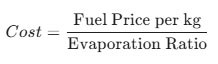
Potential Savings: ₹1,000 per ton of steam. If your plant runs 24/7, the savings can run into Crores of Rupees annually.
6. Overcoming Technical Challenges
Biomass is not a “plug-and-play” fuel. It requires expert engineering to manage its unique properties.
Handling Silica & Slagging
Rice husk contains high amounts of silica. If the furnace temperature exceeds 1,050°C, the ash turns into a glass-like substance (slag) that sticks to tubes. IndianBoilers.com designs use specific furnace volumes to keep temperatures below the ash fusion point.
Particulate Emissions
Biomass generates more suspended particulate matter (SPM) than gas. To stay compliant with the Ministry of Environment, Forest and Climate Change (MoEFCC), your boiler must be equipped with:
Cyclone Separators: For coarse particles.
Bag Filters: For fine dust.
Electrostatic Precipitators (ESP): For large-scale industrial plants.
7. Maintenance Checklist for Longevity
A well-maintained biomass boiler can last 20–25 years.
Daily: Check water softener levels and blowdown the boiler to remove sludge.
Weekly: Inspect the fuel feeding screw for wear and tear from abrasive husk.
Monthly: Clean the APH and Economizer tubes to prevent soot buildup.
Annually: Conduct a full hydraulic test and ultrasonic thickness gauging of the tubes.
8. Why Partner with IndianBoilers.com?
At IndianBoilers.com, we don’t just manufacture pressure vessels; we engineer energy independence. Our boilers are designed specifically for the Indian climatic conditions and the varied quality of local biomass.
Our Competitive Edge:
Custom Grate Designs: Tailored for the specific fuel available in your region.
PLC-Based Automation: Remote monitoring of steam pressure and fuel consumption.
Rapid Service Support: Pan-India network to ensure your production never stops.
Conclusion: The Future is Renewable
The transition to biomass steam generation is no longer an “option”—it is a necessity for staying competitive in a global market that demands low-carbon footprints. By utilizing India’s vast agricultural residue, your facility can reduce costs, support local farmers, and protect the environment.