
“Switch to biomass and save 40%” is the kind of headline that sounds compelling and tells you almost nothing useful. Every plant’s actual return on a biomass transition depends on its current fuel type, local biomass access, utilization hours, and existing maintenance burden — inputs that vary enough between two plants in neighboring districts that a single percentage figure is close to meaningless without knowing your specific numbers.
This guide walks through how to actually calculate the ROI of switching to a biomass system properly, rather than quoting a headline savings figure. If you’re still working through whether biomass beats coal specifically for your operation, our biomass vs. coal comparison covers that fuel-level decision directly — this piece assumes you’re already biomass-leaning and want to understand the actual financial case in detail.
1. The Three Real Cost Categories a Boiler ROI Calculation Needs
A proper ROI calculation for a boiler transition needs to account for more than just the fuel invoice — fuel typically represents the largest share of a boiler’s total lifecycle operating cost, but maintenance, compliance, and downtime all matter enough to genuinely move the final number.
A. Direct Fuel Cost Differential
This is the calculation most people jump straight to, and it’s the right starting point — but it needs your actual current fuel spend, not an industry average. Compare your current per-kg or per-litre fuel cost, adjusted for calorific value, against local biomass pricing (rice husk, wood chips, briquettes, or pellets) in your specific region. Regional biomass pricing varies meaningfully based on local agricultural output and transport distance, so a quote sourced from your actual local supplier will always be more useful than a national average figure.
B. Maintenance and Downtime Cost
Coal-fired systems, particularly older ones, tend to accumulate heavier ash and slagging over time, which drives more frequent shutdowns for cleaning and higher annual maintenance contract costs. A well-engineered biomass system with modern furnace geometry and complete combustion design typically produces less residue, translating into fewer unplanned shutdowns — a real cost saving, but one that depends heavily on your current system’s age and condition, so it’s worth comparing against your actual current maintenance spend rather than a generic estimate.
C. Compliance and Regulatory Cost
Coal-fired systems in emission-controlled zones increasingly require investment in emission control equipment to remain compliant, along with ongoing monitoring costs. Biomass combustion generally faces a more favorable regulatory position, given its broadly carbon-neutral accounting treatment — this can mean avoided capital expenditure on emission control equipment that a coal-fired retrofit or replacement would otherwise require. Our biomass boiler emission control systems guide covers what’s actually required for compliant biomass operation.
2. Building Your Own Payback Calculation
Rather than quoting a fixed timeline, here’s the actual framework:
Step 1: Calculate your current annual fuel cost — current fuel consumption × current per-unit price.
Step 2: Estimate biomass fuel cost for equivalent output — this requires converting your steam demand into required biomass tonnage based on the calorific value of your locally available biomass fuel, then multiplying by local biomass pricing.
Step 3: Calculate the annual savings differential, and add estimated maintenance savings based on your current system’s condition and the new system’s design.
Step 4: Divide the additional capital cost of the biomass system (over what a comparable fuel-fired alternative would cost) by your calculated annual savings to get your payback period in years.
This is a genuinely different number for a plant running two shifts versus three, for a plant in a strong biomass-supply region versus a weaker one, and for a plant replacing an aging coal system versus a relatively new one. Any payback figure that doesn’t ask about your specific utilization hours and current equipment condition is giving you a rough industry guess, not your actual number — which is exactly why we’d recommend requesting a tailored calculation rather than relying on a general timeline.
3. Where the Engineering Actually Matters: The Derating Problem
One genuine technical risk in a coal-to-biomass transition is worth understanding before you commit: simply feeding biomass into a furnace originally designed for coal often causes “derating” — a meaningful loss of rated capacity, because biomass combustion characteristics (moisture content, burn rate, ash behavior) differ enough from coal that a coal-optimized furnace geometry doesn’t extract full performance from biomass fuel.
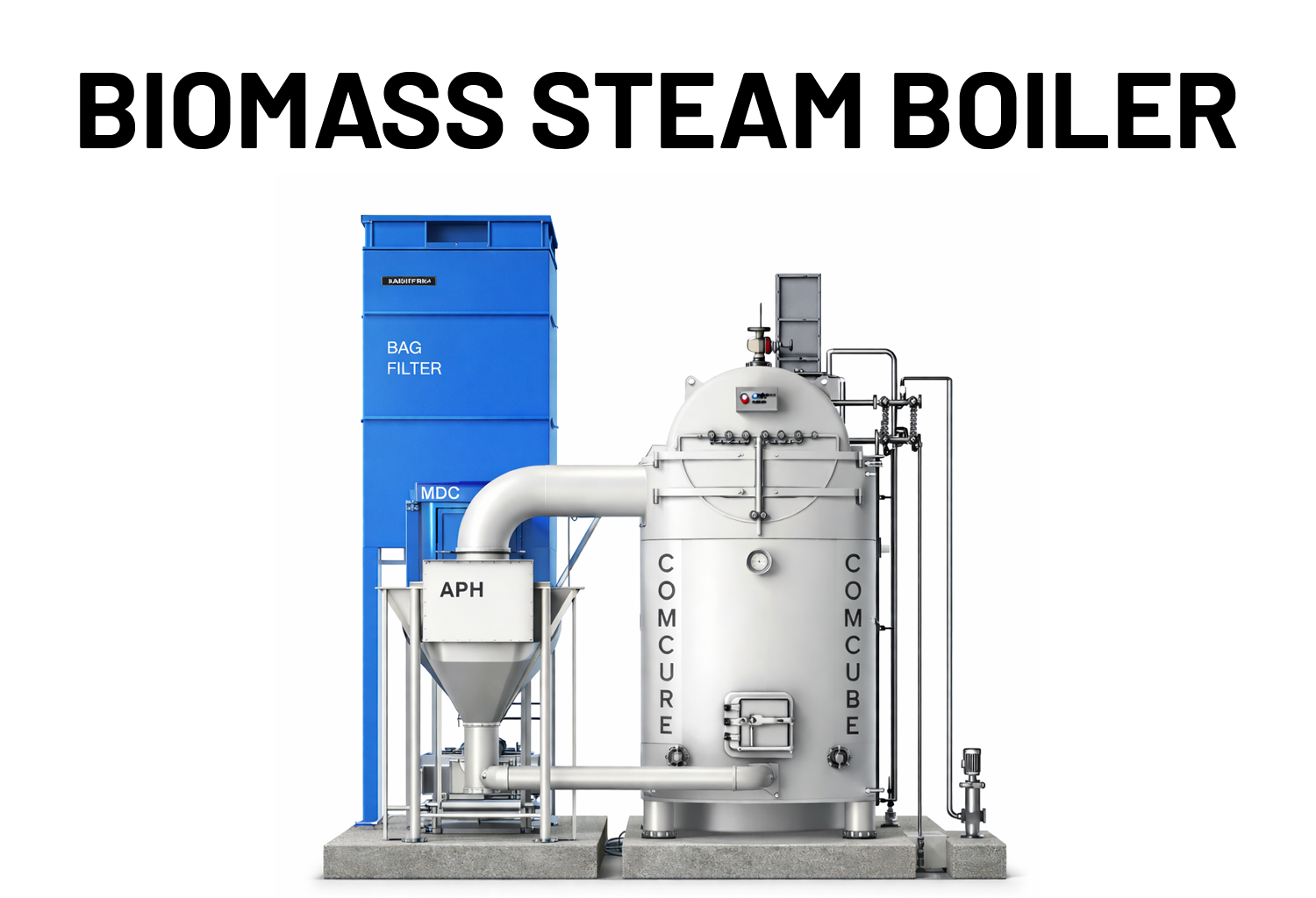
This is why a purpose-built biomass system, rather than a simple fuel conversion of existing coal equipment, matters for getting the ROI calculation to actually hold up in practice. Our COMCUBE Series is engineered specifically around biomass combustion characteristics rather than adapted from a coal design:
- Multi-fuel flexibility — designed to handle varying biomass types and moisture contents, including rice husk, mustard husk, groundnut shells, and pellets, without requiring significant recalibration between fuel sources.
- Modular, skid-mounted construction — pre-insulated units designed to reduce on-site installation time significantly compared to field-erected alternatives.
- Automated feeding systems — screw-conveyor feeding that syncs with steam demand, replacing the inconsistency of manual stoking that plagues many older coal-to-biomass conversions.
- Fluidized Bed Combustion capability — supports efficient combustion of lower-grade biomass and rice husk specifically.
- Dust collection integration — cyclonic separators and bag filtration designed to maintain compliance with CPCB emission norms.
For plants weighing a hybrid approach that hedges against seasonal biomass supply variability, our multi-fuel boilers guide covers designs that retain flexibility across fuel types.
4. Addressing the Supply Chain Concern Honestly
The most common hesitation we hear is some version of: “Will I have reliable biomass supply through the monsoon season, or during a poor harvest year?”
This is a legitimate concern worth planning around rather than dismissing. The organized biomass aggregator market in India has matured considerably, with standardized briquette and pellet supply chains now operating in most major industrial regions — but supply reliability still genuinely varies by location, and it’s worth confirming your specific regional supply chain directly with local suppliers before committing to a biomass-only system. A fuel-flexible furnace design, like COMCUBE’s multi-fuel capability, meaningfully reduces this risk by letting you shift between biomass types if your primary source becomes constrained, rather than betting your entire steam supply on a single fuel stream.
5. The Government Incentive Picture — Accurately
It’s worth being precise here rather than making a sweeping claim: India’s PAT (Perform, Achieve, Trade) scheme, administered by the Bureau of Energy Efficiency, applies to designated large energy consumers across specific sectors and creates trading mechanisms for energy efficiency improvements — it isn’t an automatic benefit that any plant switching to biomass qualifies for outright. Whether your facility falls under a designated PAT sector, and what specific incentives or credit mechanisms might apply to your situation, is worth confirming with a qualified energy consultant or directly with the Bureau of Energy Efficiency rather than assuming eligibility. What’s more broadly and reliably true is that biomass’s carbon-neutral accounting treatment strengthens ESG reporting and sustainability positioning for businesses reporting to customers, investors, or export markets increasingly scrutinizing supply chain emissions — a genuine, if less quantifiable, business benefit.
6. Environmental Positioning as a Genuine Business Asset
Beyond the direct cost calculation, there’s a real market dimension worth factoring in. Buyers — particularly in export markets and among larger Indian corporates with their own sustainability commitments — increasingly scrutinize supplier energy sourcing as part of procurement decisions. A documented shift to carbon-neutral steam generation is a genuine, verifiable claim that can matter in these conversations, distinct from the direct fuel-cost savings covered above.
Conclusion: Run Your Own Numbers, Not an Industry Average
The case for biomass has strengthened meaningfully in recent years — regulatory pressure on coal is increasing, the 2025 GST reform widened the tax differential in biomass’s favor, and equipment engineering has genuinely improved to avoid the derating problems that plagued earlier fuel-conversion attempts. But the actual ROI for your specific plant depends on inputs only you have — your current fuel spend, your utilization hours, your local biomass supply access, and your existing equipment’s condition. A properly built calculation using those specific numbers will always be more useful than a headline percentage borrowed from someone else’s plant.
Balkrishna Boilers Pvt Ltd’s engineering team builds this calculation with you directly, using your actual fuel costs and steam demand rather than industry averages. Explore our COMCUBE biomass range and full steam boiler category on IndianBoilers.com or Balkrishn.com.
Want your actual ROI calculated with real numbers instead of an industry estimate? Contact our engineering team with your current fuel type, consumption, and steam demand for a tailored analysis.