
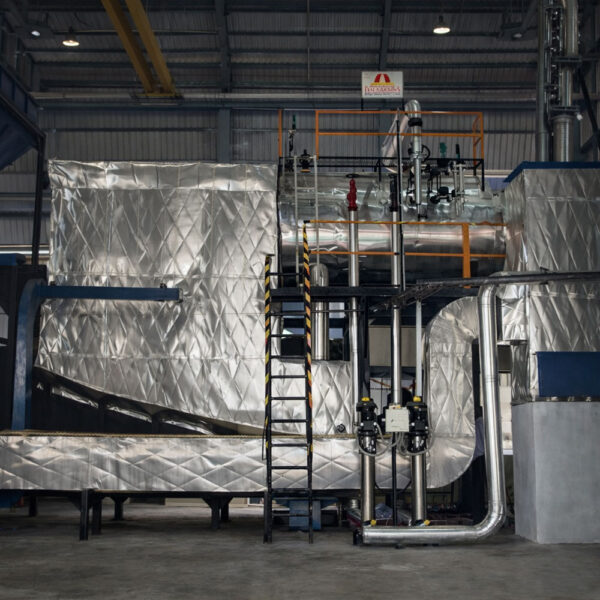
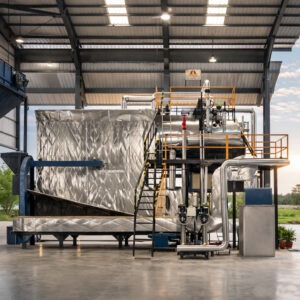
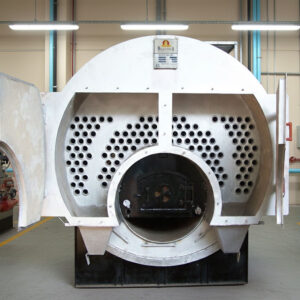
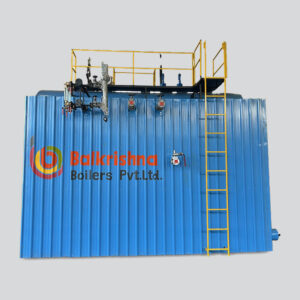
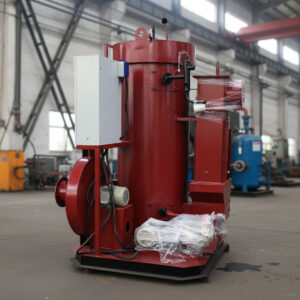
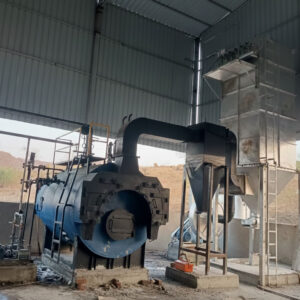
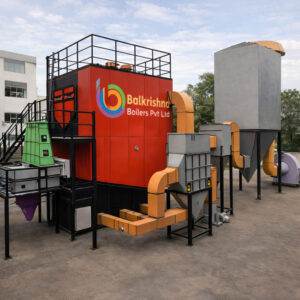

MSW Fired Boiler (Municipal Solid Waste)
Mass Burn Waste-to-Energy | Sustainable Urban Waste Management
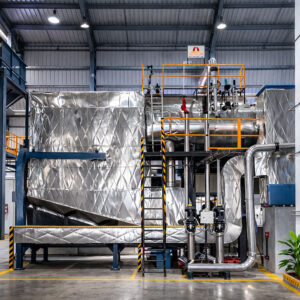
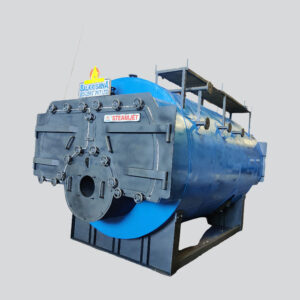
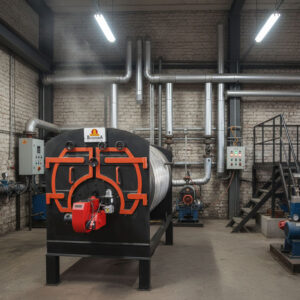
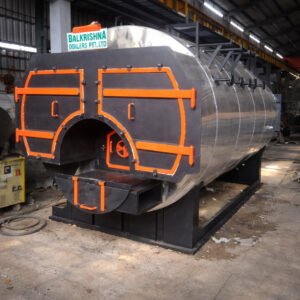
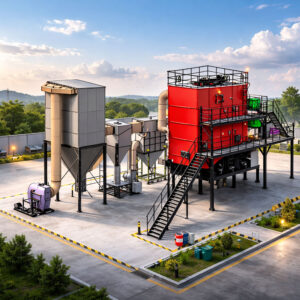
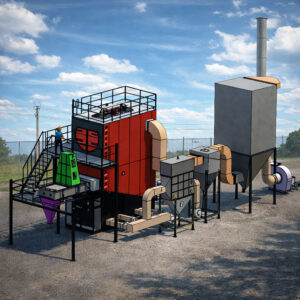
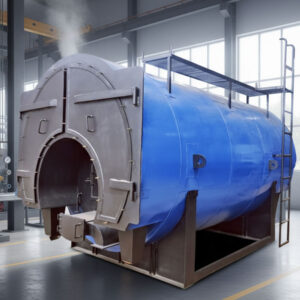
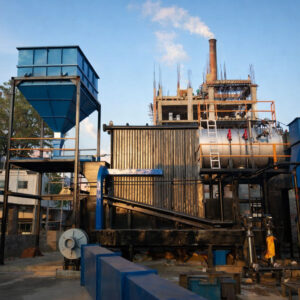
At IndianBoilers.com, we turn urban liabilities into industrial assets. Our MSW Fired Boilers are engineered to handle “Mass Burn” applications, where raw municipal solid waste is incinerated directly to generate steam. Unlike RDF systems that require extensive pre-processing, our MSW boilers are designed to manage the high moisture and heterogeneous nature of raw garbage, providing a powerful tool for city municipalities and large-scale industrial parks to reduce landfill pressure.
Manufactured with high-grade European-standard combustion technology, our MSW units ensure that even the most complex waste streams are converted into clean, reliable thermal energy.
Key Features & Performance
- True “Mass Burn” Capability: Designed to incinerate raw MSW with minimal sorting. It effectively handles a mix of organic waste, paper, plastic, wood, and packaging materials.
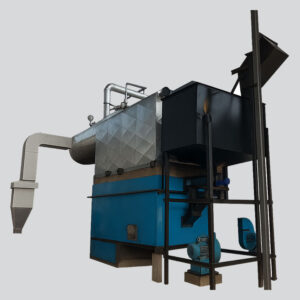
- Reciprocating Grate Technology: Features a specialized moving grate system (Vibrating or Reciprocating) that agitates and tumbles the waste, ensuring that air reaches every part of the heterogeneous fuel bed for complete burnout.
- High Moisture Tolerance: Raw MSW often has a moisture content of 30% to 50%. Our furnaces include a dedicated “drying zone” on the grate to evaporate moisture before the fuel reaches the primary combustion zone.
- Tall Membrane-Wall Furnace: Engineered with an extra-tall furnace to provide maximum “residence time” (2 seconds at >850°C), ensuring the complete destruction of organic compounds and minimizing the formation of dioxins and furans.
- Corrosion Protection: Waste flue gases can be aggressive. We utilize Alloy 625 cladding and specialized refractory lining in critical furnace zones to protect against high-temperature chlorine corrosion.
- Zero-Landfill Advantage: Reduces the volume of municipal waste by up to 90%, leaving only inert ash that can be safely used in construction or cement manufacturing.
Core Industry Applications
The MSW Fired Boiler is the backbone for:
- Waste-to-Energy (WtE) Plants: Captive power generation for smart cities and urban municipalities.
- Industrial Estates: Centralized steam and power for multi-factory industrial parks using local community waste.
- Cement & Steel Plants: Large-scale waste disposal combined with process heat recovery.
- District Heating/Cooling: Providing thermal energy for large residential or commercial complexes.
Advantages
- Environmentally Compliant: Every MSW unit is paired with a state-of-the-art Air Pollution Control (APC) system, including lime scrubbers, activated carbon injection, and high-efficiency baghouses.
- Turnkey Engineering: From the waste receiving pit and overhead crane systems to the steam turbine integration, we provide a complete end-to-end energy solution.
- Local Manufacturing, Global Tech: Based in Ahmedabad, we combine local cost-efficiencies with international design standards to provide a competitive ROI.
Operating Range
- Capacity – 5 THP to 20 THP
- Fuel- wood pellets, Agri-pellets, biomass fuel, wood chips, Biomass agro fuels, coal etc.
- Pressure- 10.54 Kg/cm² to 21 Kg/cm²
Technical Specifications
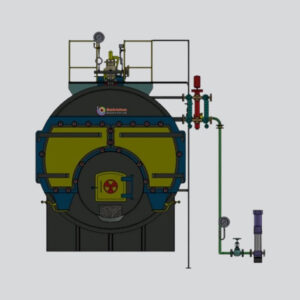
| Specification | Unit | CPD-RSG-40 | CPD-RSG-60 | CPD-RSG-80 | CPD-RSG-100 | CPD-RSG-120 | CPD-RSG-150 | CPD-RSG-200 | ||
|---|---|---|---|---|---|---|---|---|---|---|
| General | ||||||||||
| Steam Output From & at 100°C | Kg/hr | 4000 | 6000 | 8000 | 10000 | 12000 | 15000 | 20000 | ||
| Working Pressure | Kg/CM² | 10.54 | 10.54 | 10.54 | 10.54 | 10.54 | 10.54 | 10.54 | ||
| Steam Temperature | °C | 183 | 183 | 183 | 183 | 183 | 183 | 183 | ||
| No’s Passes | No’s | Four | Four | Four | Four | Four | Four | Four | ||
| No’s of Furnace | No’s | 1 | 1 | 1 | 1 | 1 | 1 | 1 | ||
| No’s of Furnace Zone | No’s | 4 | 4 | 4 | 4 | 4 | 4 | 4 | ||
| Steam Outlet | MM | 100 | 125 | 150 | 200 | 200 | 200 | 250 | ||
| HTA | M² | 160 | 240 | 320 | 400 | 480 | 600 | 800 | ||
| Type of Crushed Fuel Fuel Crushed Briquette, Boimass Pellet, Rice husk, Plam kernel shell |
||||||||||
| Boilers Efficinecey with APH | ||||||||||
| On Crushed Briquette | % | 78 +/-2 | 78 +/-2 | 78 +/-2 | 78 +/-2 | 78 +/-2 | 78 +/-2 | 78 +/-2 | ||
| On Pellet | % | 78 +/-2 | 78 +/-2 | 78 +/-2 | 78 +/-2 | 78 +/-2 | 78 +/-2 | 78 +/-2 | ||
| On Rice Husk | % | 78 +/-2 | 78 +/-2 | 78 +/-2 | 78 +/-2 | 78 +/-2 | 78 +/-2 | 78 +/-2 | ||
| On Plam kernel shell | % | 75 +/-2 | 75 +/-2 | 75 +/-2 | 75 +/-2 | 75 +/-2 | 75 +/-2 | 75 +/-2 | ||
| Fuel Consumption | ||||||||||
| Briquette (4000) | Kg/hr | 692 | 1038 | 1385 | 1731 | 2077 | 2596 | 3462 | ||
| Pellet (4500) | Kg/hr | 615 | 923 | 1231 | 1538 | 1846 | 2308 | 3077 | ||
| Rice Husk (3000) | Kg/hr | 923 | 1385 | 1846 | 2308 | 2769 | 3462 | 4615 | ||
| Plam kernel (4000) | Kg/hr | 720 | 1080 | 1440 | 1800 | 2160 | 2700 | 3600 | ||
| Electrical Load | ||||||||||
| Feed Water Pump | H.P. | 6.00 | 7.50 | 7.50 | 10.00 | 15.00 | 15.00 | 20.00 | ||
| I.D. fan without BF | H.P. | 20.00 | 30.00 | 40.00 | 50.00 | 60.00 | 75.00 | 100.00 | ||
| P.A. Fan | H.P. | 10.00 | 15.00 | 20.00 | 25.00 | 30.00 | 40.00 | 50.00 | ||
| S.A. Fan | H.P. | 10.00 | 15.00 | 20.00 | 25.00 | 30.00 | 40.00 | 50.00 | ||
| Furnace Movement | H.P. | 4.00 | 6.00 | 6.00 | 8.00 | 8.00 | 12.00 | 20.00 | ||
| Wet ash Remover | H.P. | 2.00 | 2.00 | 2.00 | 3.00 | 3.00 | 5.00 | 5.00 | ||
| Fuel Feeder systems | H.P. | 3.00 | 5.00 | 7.50 | 10.00 | 10.00 | 15.00 | 15.00 | ||
| Total Electric Load | H.P. | 55.00 | 80.50 | 103.00 | 131.00 | 156.00 | 202.00 | 260.00 | ||
| NOTE: In view of constant endeavors to improve our products, we reserve the right to alter or change above specifications without prior notice. | ||||||||||
Frequently Asked Questions
Can this boiler handle "unsegregated" municipal waste?
While it can handle a degree of variation, for optimal performance and emission control, we recommend Pre-processed MSW (removing large inerts like stones, metal, and glass). This increases the GCV and protects the grate.
What is the minimum GCV required for MSW combustion?
Ideally, the waste should have a Gross Calorific Value (GCV) of 1200 to 1800 Kcal/kg. If the waste is too wet or low-energy, it may require "co-firing" with a small amount of biomass or support fuel.
Is this boiler IBR certified?
Yes. All our MSW boilers are manufactured under Indian Boiler Regulations (IBR), ensuring they meet the high-pressure safety standards required for power generation.
What is the typical capacity range for MSW boilers?
We offer MSW-fired systems ranging from 5.0 TPH to 50.0 TPH, suitable for small municipalities to large-scale urban Waste-to-Energy plants.
How do you manage the high moisture content in MSW?
We use Hot Air Recirculation and specialized "drying zones" at the top of the reciprocating grate. This flash-dries the waste before it reaches the primary combustion zone.
How do you prevent grate wear and tear?
MSW is abrasive. We use High-Chrome Alloy Steel for the grate bars and a water-cooled grate support system to prevent thermal warping and extend the mechanical life of the stoker.
How do you handle "Clinkering" from plastics and glass?
The constant movement of the Reciprocating Grate prevents ash from fusing into large blocks. Furthermore, we precisely control the primary air temperature to stay below the ash fusion point.
Can this boiler generate electricity?
Yes. Our MSW boilers are typically designed for high-pressure and superheated steam, making them ideal for driving steam turbines in Waste-to-Energy (WtE) power plants.
How do you handle the "Bulky" nature of waste?
We use a Hydraulic Feeding Ram that pushes controlled "plugs" of waste onto the grate, preventing air leaks and ensuring a consistent fuel depth.
How much ash does MSW produce?
MSW typically yields 15% to 25% Bottom Ash and 3% to 5% Fly Ash. We provide automated submerged ash conveyors to handle these high volumes cleanly.
How do you prevent corrosion from PVC and plastics?
Burning plastics releases Chlorine, which can cause "High-Temperature Corrosion." We use Inconel cladding or specialized alloy protection on the superheater tubes to extend their lifespan.
What is the maintenance schedule for a Reciprocating Grate?
Due to the mechanical nature of the grate, we recommend a monthly visual inspection and a major annual overhaul to check for grate bar wear and hydraulic seal integrity.
Does the boiler produce a bad smell?
No. The furnace operates at 850°C to 1000°C with a minimum 2-second residence time. This high heat completely destroys odor-causing organic compounds.
Is the feeding system prone to jamming?
Our hoppers are designed with a divergent "anti-bridge" geometry and heavy-duty shredder-feeders to ensure even the most "stringy" waste doesn't get stuck.
How do you control Dioxins and Furans?
We strictly maintain a furnace temperature above 850°C for at least 2 seconds (as per international norms) followed by rapid flue gas cooling to prevent the reformation of toxic dioxins.
What Air Pollution Control (APC) equipment is included?
A standard MSW plant includes a Semi-Dry Scrubber (for acid gases), Activated Carbon Injection (for heavy metals), and a Bag Filter (for fine particulates).
What is the ROI for an MSW-to-Steam project?
The ROI comes from three streams: Tipping Fees (collected for waste disposal), Steam/Power sales, and Recyclable recovery. Most projects break even in 3 to 5 years.
Does this help in achieving "Zero Waste to Landfill"?
Yes. By reducing the volume of waste by up to 90%, our boilers significantly extend the life of city landfills and prevent groundwater contamination from leachate.
Why choose IndianBoilers.com for MSW projects?
Based in Ahmedabad, we provide a rugged, "Indianized" design that accounts for the high moisture and organic content typical of Indian city waste, offering better uptime than European designs.

Reviews
There are no reviews yet.