
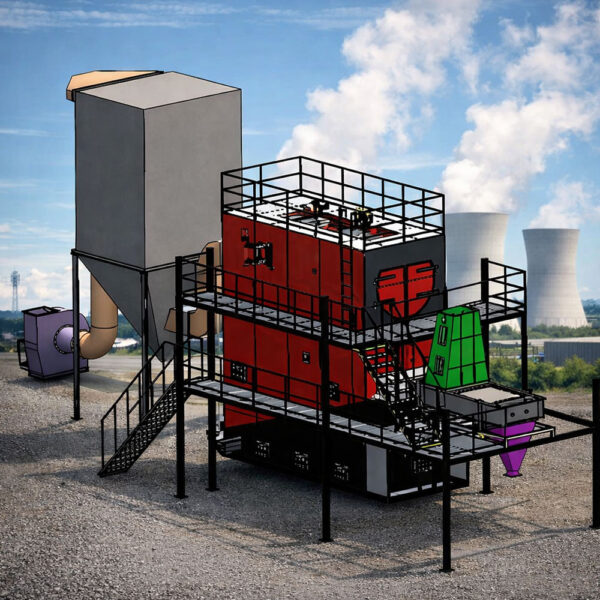
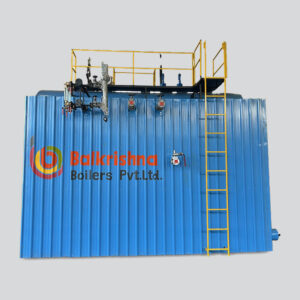
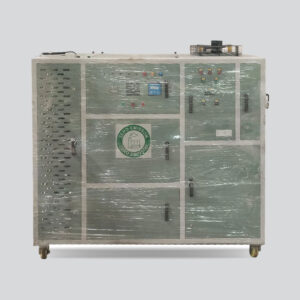
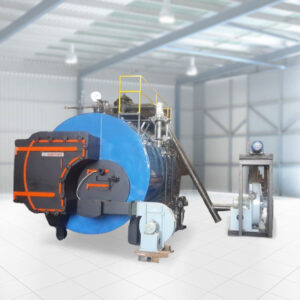

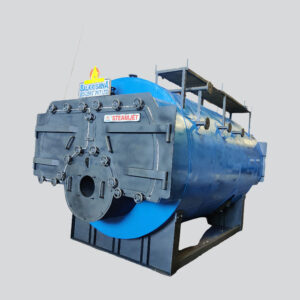
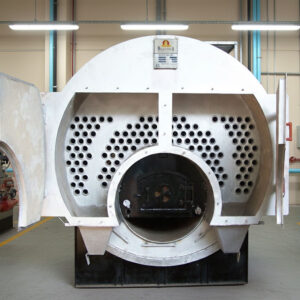
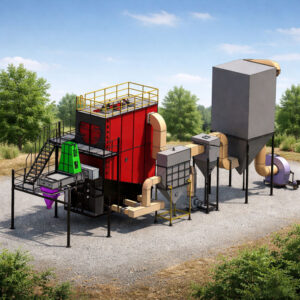
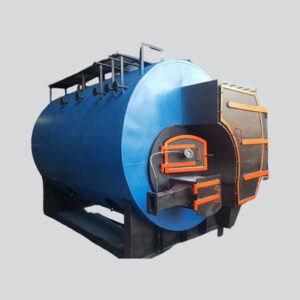
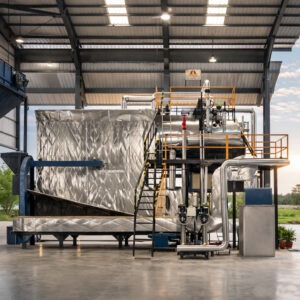
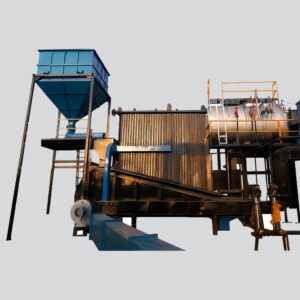
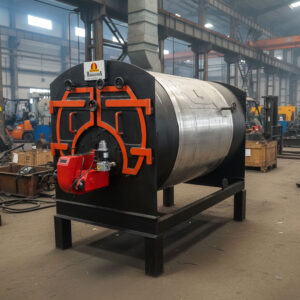
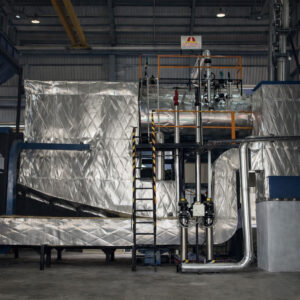
Palm Fiber Fired Boiler
High-Performance Biomass Steam | Sustainable Energy from Oil Palm Waste
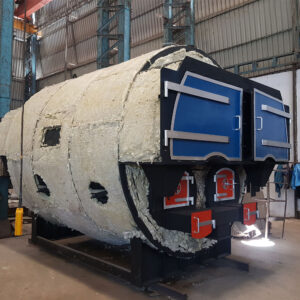
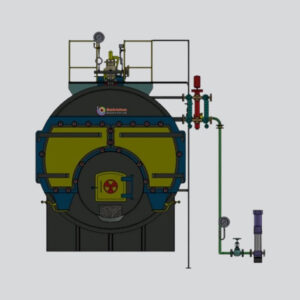
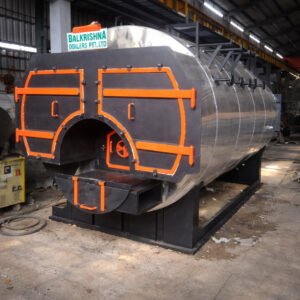
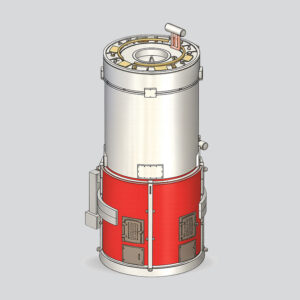
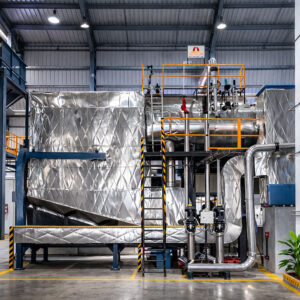
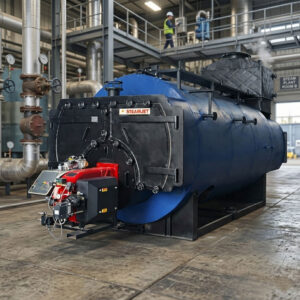
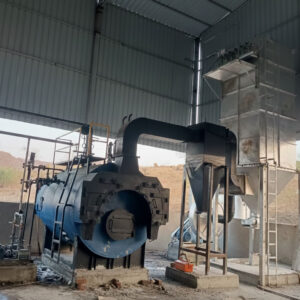
At IndianBoilers.com, we engineer specialized steam solutions for the global palm oil industry. Our Palm Fiber Fired Boilers are custom-designed to handle the unique combustion properties of palm oil mill residues, particularly Mesocarp Fiber and Empty Fruit Bunches (EFB).
Palm fiber is a high-energy biomass fuel, but its high moisture and alkaline content require a specialized furnace design. Our boilers feature advanced grate technology and high-volume furnaces that ensure complete combustion and prevent the common “slagging” issues associated with palm waste.
Key Features & Performance
- Specialized Grate Technology: Equipped with Reciprocating or Dumping Grates specifically engineered to handle the high ash content and fibrous nature of palm residue.
- Refractory-Lined Tall Furnace: Designed with an extra-large combustion chamber to provide sufficient residence time for fibers to burn completely, even with moisture levels up to 40%.
- Anti-Slagging Design: Optimized furnace geometry and controlled air distribution prevent the buildup of alkaline slag on the boiler tubes, extending the time between maintenance shutdowns.
- Pneumatic Fuel Feeding: Features a high-velocity air-feeding system that spreads the light palm fibers evenly across the grate, ensuring a uniform fire bed and stable steam pressure.
- High Thermal Efficiency: Designed to achieve 78% to 83% efficiency, allowing palm oil mills to become energy-self-sufficient by using their own waste.
- Dual-Fuel Capability: Our boilers can seamlessly transition between Palm Fiber, Palm Shells, and Wood Chips, providing 365-day fuel security.
Core Industry Applications
The Palm Fiber Fired Boiler is a critical asset for:
- Palm Oil Mills: Utilizing internal waste (fibers and shells) to power the entire extraction process.
- Refineries: Providing high-pressure steam for fractionation and deodorization plants.
- Biomass Power Plants: Generating “Green Power” for the grid using palm residue as a sustainable feedstock.
- Animal Feed Plants: Efficient steam for pelletizing and sterilization processes.
Advantages
- Corrosion Protection: Palm flue gases can be aggressive; we use specialized tube materials and coatings in the superheater zones to resist chemical corrosion.
- Turnkey Fuel Logistics: We provide integrated solutions, including fiber shredders and conveyor systems, to streamline fuel preparation.
- Ahmedabad Engineering: Proudly manufactured in India with global design standards, ensuring robust performance in tropical climates.
Operating Range
- Capacity – 0.5 THP to 6 THP
- Fuel- wood log, Briquette, Lignite and Coal
- Pressure- 10.54 Kg/cm² to 21 Kg/cm²
Technical Specifications
| Specification | Unit | CC-05 | CC-10 | CC-20 | CC-30 | CC-40 | CC-50 | CC-60 | ||
|---|---|---|---|---|---|---|---|---|---|---|
| General | ||||||||||
| Steam Output From & at 100°C | Kg/hr | 500 | 1000 | 2000 | 3000 | 4000 | 5000 | 6000 | ||
| Working Pressure | Kg/CM² | 10.54 | 10.54 | 10.54 | 10.54 | 10.54 | 10.54 | 10.54 | ||
| Steam Temperature | °C | 183 | 183 | 183 | 183 | 183 | 183 | 183 | ||
| No’s of Passes | No’s | Three | Three | Three | Three | Three | Three | Three | ||
| No’s of Furnace | No’s | 1 | 1 | 1 | 1 | 1 | 1 | 1 | ||
| Grate Area | M² | 0.85 | 1.25 | 2.2 | 2.9 | 4.15 | 5.7 | 6 | ||
| Steam Outlet | MM | 40 | 50 | 80 | 100 | 100 | 125 | 150 | ||
| Heat Transfer Area | M² | 20 | 40 | 80 | 120 | 160 | 200 | 240 | ||
| Type of Fuel: woodlog, Briquette, Lignite and Coal | ||||||||||
| Boilers Efficiency with APH | ||||||||||
| On woodlog | % | 78 +/-2 | 78 +/-2 | 78 +/-2 | 78 +/-2 | 78 +/-2 | 78 +/-2 | 78 +/-2 | ||
| On Coal | % | 78 +/-2 | 78 +/-2 | 78 +/-2 | 78 +/-2 | 78 +/-2 | 78 +/-2 | 78 +/-2 | ||
| Fuel Consumption | ||||||||||
| WoodLog (3500) | Kg/hr | 99 | 198 | 396 | 593 | 791 | 989 | 1187 | ||
| Briquette (4000) | Kg/hr | 87 | 173 | 346 | 519 | 692 | 865 | 1038 | ||
| Lignite (3000) | Kg/hr | 115 | 231 | 462 | 692 | 923 | 1154 | 1385 | ||
| Coal (4500) | Kg/hr | 77 | 154 | 308 | 462 | 615 | 769 | 923 | ||
| Electrical Load | ||||||||||
| Feed Water Pump | H.P. | 2.00 | 2.00 | 3.00 | 4.00 | 4.00 | 6.00 | 7.50 | ||
| I.D. fan without BF | H.P. | 3.00 | 5.00 | 10.00 | 15.00 | 20.00 | 25.00 | 30.00 | ||
| F.D. Fan | H.P. | 1.00 | 2.00 | 5.00 | 7.50 | 7.40 | 10.00 | 12.50 | ||
| Total Electric Load | H.P. | 6.00 | 9.00 | 18.00 | 26.50 | 31.40 | 41.00 | 50.00 | ||
| NOTE: In view of constant endeavors to improve our products, we reserve the right to alter or change above specifications without prior notice. | ||||||||||
Frequently Asked Questions
Can Napier grass be fired fresh or does it need drying?
Freshly cut Napier grass has 70% moisture. For efficient combustion in a chain grate boiler, it should be field-dried or mechanically pressed to bring moisture below 25–30%.
Why use a "Chain Grate" for these specific fuels?
Chain grates provide a moving bed that allows for uniform air distribution. Since palm fiber is light and Napier grass is fibrous, the constant movement of the chain grate prevents the fuel from clumping and ensures complete burnout.
What is the calorific value of this fuel mix?
Palm fiber offers ~2500–2800 Kcal/kg (at 35% moisture), while dried Napier grass offers ~3600–4000 Kcal/kg. Together, they provide a very stable and high-intensity thermal output.
Is this boiler IBR certified?
Yes. All IndianBoilers.com units are manufactured under Indian Boiler Regulations (IBR), ensuring the highest safety standards for high-pressure power and process steam.
How do you handle the "low bulk density" of these fuels?
Both fuels are light and voluminous. We design extra-deep furnace arches and specialized fuel hoppers with agitators to prevent "bridging" (fuel getting stuck) and ensure a steady feed onto the grate.
How do you prevent "Clinkering" with Napier grass?
Napier grass, like most grasses, has high silica and potassium. We use water-cooled grate bars or controlled primary air to keep the grate temperature below the ash fusion point, preventing the formation of hard "clinkers."
Can the boiler handle 100% Palm Fiber or 100% Napier Grass?
Yes. The Chain Grate Stoker is versatile. Our control system allows you to adjust the grate speed and air-to-fuel ratio depending on which fuel is currently more abundant.
What is the role of the "Secondary Air" system in this boiler?
Since these fuels have high volatile matter, they tend to flame up quickly. Secondary air nozzles create turbulence in the furnace to burn these gases completely, increasing efficiency and eliminating black smoke.
How do you manage the "Stranding" of long grass fibers?
Napier grass must be pre-shredded to 2–3 inches. Our feeding system is designed with "anti-wrap" bearings to ensure long fibers don't tangle in the moving parts of the stoker.
How often does the Chain Grate require maintenance?
Our chain grates are made of heat-resistant alloy steel. With proper lubrication of the drive chain and regular inspection of the grate bars, they are designed for 24/7 industrial operation with an annual overhaul.
How do you handle ash removal?
The boiler is equipped with an Automatic Submerged Ash Conveyor or a dry ash screw system. As the chain grate moves, ash is automatically dumped at the end of the travel into the ash pit.
What is the ash content of this fuel mix?
The combined ash content is typically 3% to 6%. This ash is high in potash and is often sold to farmers as a high-quality soil conditioner.
Does the boiler produce a lot of particulate matter?
Biomass fibers are light. We install a Multi-cyclone Dust Collector (MDC) and often a Bag Filter to ensure emissions stay below 50 mg/Nm³, meeting strict environmental norms.
Can the boiler be started quickly?
Because palm fiber is a "fast-burning" fuel, the boiler can reach full pressure from a warm state in 30–45 minutes. Cold starts take approximately 3–4 hours to protect the refractory.
What is the ROI for a palm mill or power plant?
By using Napier grass grown on marginal land and palm waste from the mill, fuel costs are drastically reduced. Most plants see a full ROI within 14 to 20 months.
Why is this better than a traditional wood-fired boiler?
It offers fuel security. You are not dependent on the timber industry; you can grow your own fuel (Napier grass) and use your own waste (Palm fiber), making you energy independent.
Is this system compatible with Co-generation (Power + Steam)?
Yes. Our high-pressure models (up to 45 kg/cm²) are perfectly suited for driving Steam Turbines to produce electricity while providing low-pressure exhaust steam for the mill.
How do you control the moisture fluctuations in the fuel?
Our boilers feature an Automated Combustion Control (ACC) system. If a "wet patch" of fuel enters the furnace, the sensors detect the drop in temperature and automatically increase the air-preheat and grate residence time.
Why choose IndianBoilers.com for this hybrid system?
Based in Ahmedabad, we have specialized in biomass combustion for over two decades. We understand the specific metallurgy required to handle the corrosive elements in palm waste and the abrasive silica in Napier grass.

Reviews
There are no reviews yet.