

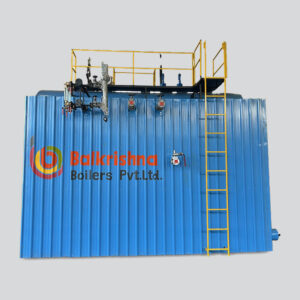
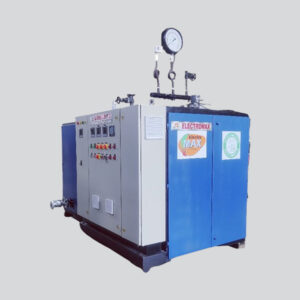
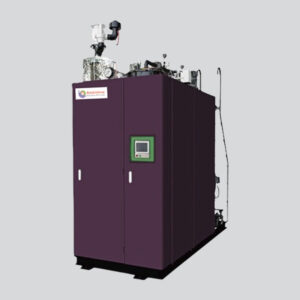
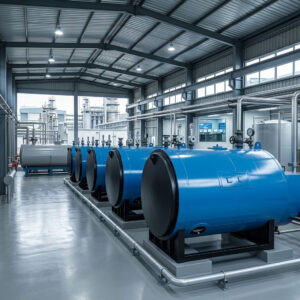

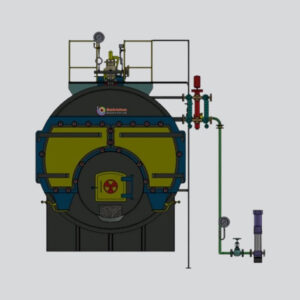
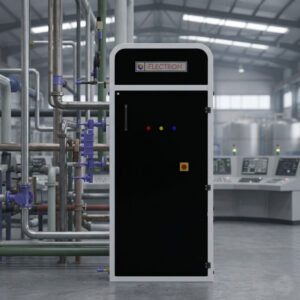
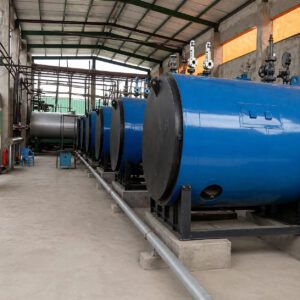
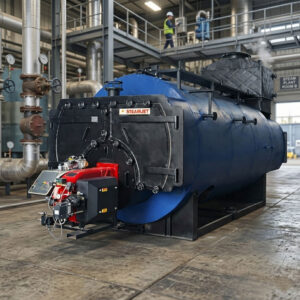
INDUCTRON – Electric Induction Boiler
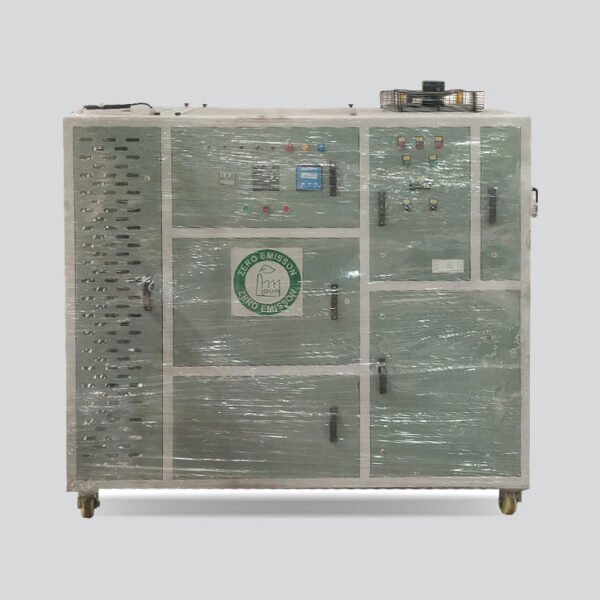
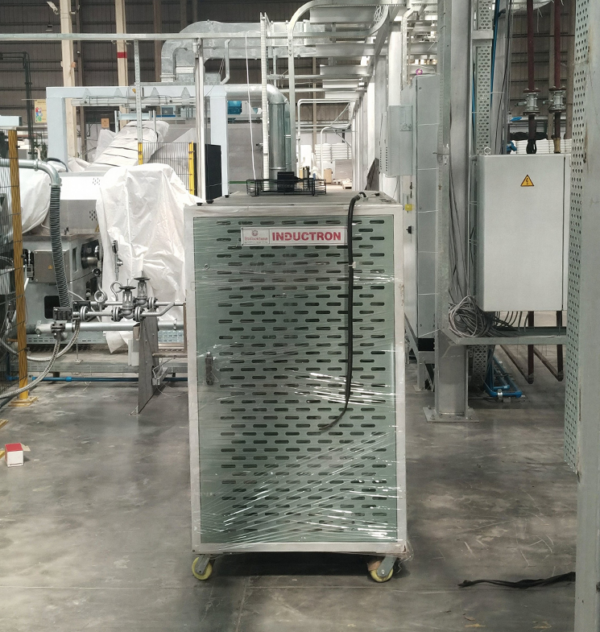
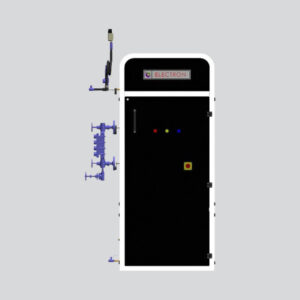
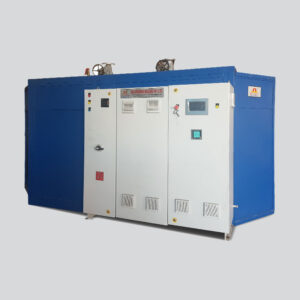
Indianboilers.com proudly presents Inductron, a revolutionary product and a pioneer in induction boiler technology. Inductron sets a new benchmark in clean and green steam generation, offering zero emissions and no pollution, making it an ideal solution for environmentally conscious industries. With its compact footprint, it saves space while delivering unmatched efficiency. Engineered with high-quality stainless steel, the Inductron steam generator ensures durability, hygiene, and reliable performance in every application.
IndianBoilers.com is proud to introduce the Electric Induction Boiler, a breakthrough technology that represents the next generation of industrial steam generation. Utilizing advanced electromagnetic principles, this boiler offers unparalleled speed, efficiency, and cleanliness, making it an ideal choice for modern, agile manufacturing environments.
Forget traditional heating elements and combustion—embrace the instant power of induction.
The Science of Speed: How Induction Works
Unlike conventional resistance or fuel-fired boilers, the Electric Induction Boiler uses electromagnetic induction to directly heat the water.
- Electromagnetic Coils: High-frequency currents pass through coils around the pressure vessel.
- Instant Heat Generation: This creates an alternating magnetic field, generating eddy currents directly within the heat transfer medium or vessel walls.
- Rapid Steam: Heat is generated instantly and volumetrically, resulting in the fastest possible ramp-up time and superior energy conversion.
Ideal Applications
The Electric Induction Boiler is perfectly suited for industries that require quick response, variable steam loads, and the highest level of steam purity:
- Pharmaceuticals & Laboratories
- Small-Batch Food & Beverage Processing
- Textiles and Garment Industry
- Clean Manufacturing Environments
Operating Range
- Capacity –100 Kg/hr. to 1000 Kg/hr***
- Fuel type – Electric Power
- Pressure- up to 10.54 kg/cm2
Technical Specifications
| Specification | Unit | IN-30 | IN-60 | IN-120 | IN-180 | IN-240 | IN-300 |
|---|---|---|---|---|---|---|---|
| General | |||||||
| Steam Output From & at 100°C | Kg/hr | 100 | 200 | 400 | 600 | 800 | 1000 |
| Working Pressure | Kg/CM² | 10.54 | 10.54 | 10.54 | 10.54 | 10.54 | 10.54 |
| Water Volume | L | 22.5 | 22.5 | – | – | – | – |
| Steam Temperature | °C | 183 | 183 | 183 | 183 | 183 | 183 |
| Input Power Required | K.W. | 30 | 60 | 120 | 180 | 240 | 300 |
| Steam Outlet | MM | 15 | 20 | 25 | 40 | 40 | 50 |
| Input Power | Volt | 415 V – 3Phase 50 Hz | |||||
| Type of Fuel | Fuel | Electric Power | |||||
| Boiler Efficiency | |||||||
| On Electric Power | % | 220% | 220% | 220% | 220% | 220% | 220% |
| Power Consumption | |||||||
| Electric Power | KW/Hr | 30 | 60 | 120 | 180 | 240 | 300 |
| Electrical Load | |||||||
| Feed Water Pump | H.P. | 0.50 | 0.50 | 1.00 | 2.00 | 3.00 | 3.00 |
| Input Heater Power | H.P. | 40.00 | 80.00 | 160.00 | 240.00 | 320.00 | 400.00 |
| Total Electric Load | H.P. | 40.50 | 80.50 | 161.00 | 242.00 | 323.00 | 403.00 |
Frequently Asked Questions
How does the induction heating process work?
High-frequency electricity passes through a coil, creating a rapidly alternating magnetic field. When this field passes through the metal boiler body, it induces "eddy currents" that generate heat instantly within the metal itself.
How is it different from a regular Electric Steam Boiler?
Standard electric boilers use resistive heaters that are in direct contact with water. In an Induction Steam Boiler, the heating source (the coil) is separated from the water by a metal wall, significantly reducing the risk of electrical leakage and scaling on the heating source.
Is it a "Plug and Play" system?
Yes. Induction steam boilers are compact, modular, and require only a water inlet, a 3-phase electrical connection, and a steam outlet to begin operation.
How fast can it produce steam?
One of the biggest advantages is speed. While traditional boilers take 20–40 minutes to reach pressure, an induction boiler can produce steam in as little as 3 to 5 minutes from a cold start.
What is the thermal efficiency of an Induction Steam Boiler?
These units are incredibly efficient, typically achieving 98% to 99% efficiency. Since the heat is generated directly in the metal of the boiler, there is virtually no transmission loss.
Does it save energy compared to resistive electric boilers?
Yes. Due to the rapid heat transfer and lack of "pre-heating" time, induction boilers can save between 20% to 30% on electricity bills compared to traditional resistive electric boilers for intermittent processes.
What steam pressure can these units achieve?
Standard industrial induction boilers are designed for pressures of 7 kg/cm² to 10 kg/cm², but they can be customized for higher pressure requirements.
Which industries are best suited for Induction Steam Boilers?
They are ideal for industries requiring high purity and fast response times:
- Pharmaceuticals: Sterilization and lab work.
- Food & Beverage: Cooking, pasteurization, and cleaning.
- Garment Industry: Industrial ironing and curing.
- Hospitals: Laundry and equipment sterilization.
Is the steam produced "Clean Steam"?
Yes. Because there is no combustion and the heating surface is typically high-grade stainless steel, the steam is clean and free from fuel-related contaminants.
Can these boilers be used in series?
Absolutely. Their modular design allows you to connect multiple units in parallel to meet higher steam demands while maintaining the flexibility to turn off individual units during low-load periods.
Is scaling a problem in Induction Boilers?
Scaling is significantly reduced. In resistive boilers, "hot spots" on the elements attract scale. In an induction boiler, the heat is distributed uniformly over a larger surface area, which minimizes scale buildup and extends the unit's life.
What is the average lifespan of an Induction Steam Boiler?
With proper water treatment, these units can last 10 to 12 years. The induction coils themselves have a very long life as they do not "burn out" like traditional resistive elements.
Are they safer than fuel-fired boilers?
Yes. There is no open flame, no fuel storage risk, and no exhaust gases. Furthermore, the heating coil is electrically insulated from the water-carrying parts, eliminating the risk of electric shocks.
What maintenance is required?
Maintenance is minimal. It includes periodic "blow-down" to remove water impurities, checking electrical connections, and ensuring the cooling fan for the induction electronics is clean.
What is the price of an Industrial Induction Steam Boiler?
Pricing depends on the capacity (measured in kW or kg/hr). For a standard industrial model, prices typically start at approximately ₹900,000.00 for small units (up to 50 kg/hr). Larger, high-capacity industrial systems can range from ₹9,00,000 to ₹12,00,000 depending on the automation level and pressure rating.
Why is the initial cost higher than resistive boilers?
Induction technology involves complex power electronics and high-frequency inverters. While the "sticker price" is higher, the lower electricity consumption and reduced maintenance usually make it the cheaper option over its total lifecycle.
What factors influence the final quote?
The cost is determined by the kW rating, the material of construction (e.g., SS 316 for food grade), the automation level (PLC/Touchscreen controls), and whether the unit requires IBR certification.
What is the typical Payback Period?
Based on fuel and energy savings, most of our clients at indianboilers.com see a complete Return on Investment (ROI) within 12 to 18 months.
How can I get a technical proposal for my project?
Simply visit the Contact Us page on indianboilers.com or message us on WhatsApp with your steam requirement in kg/hr. Our engineers will provide a customized technical and commercial proposal within 24 hours.