
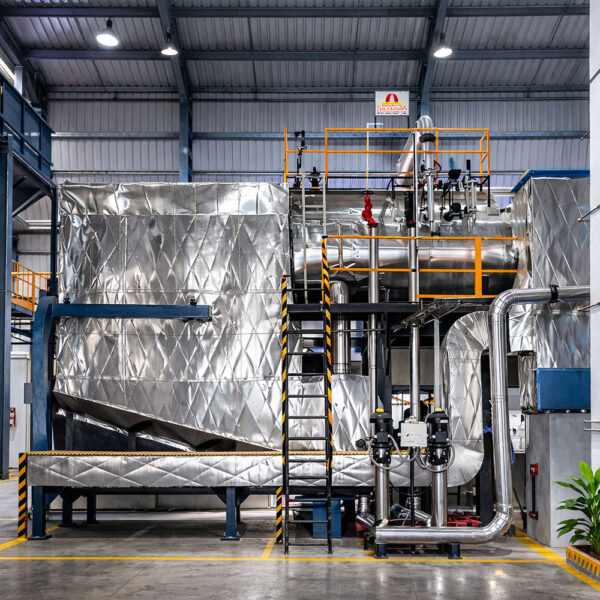
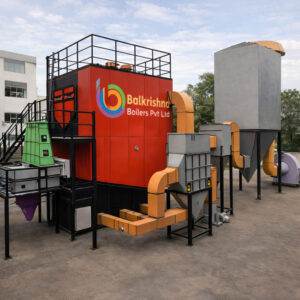
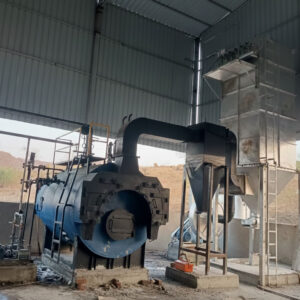
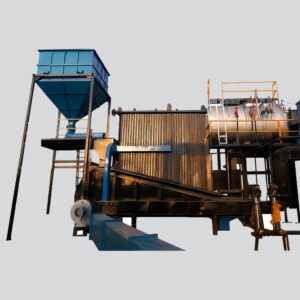
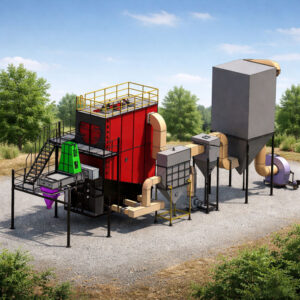
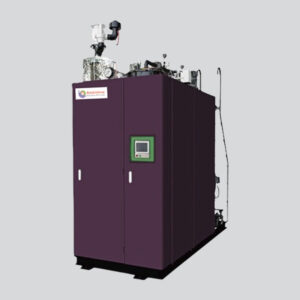
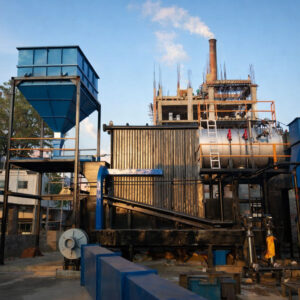
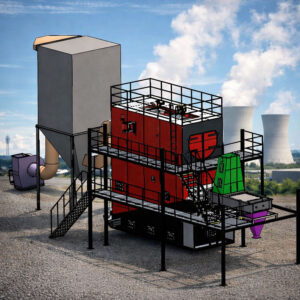
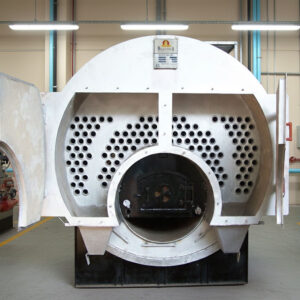
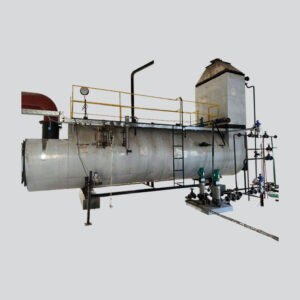

Chain Grate Boiler – Paddy Straw – Parali Waste Boiler
Turn Crop Residue into Clean Energy | Sustainable & Cost-Effective
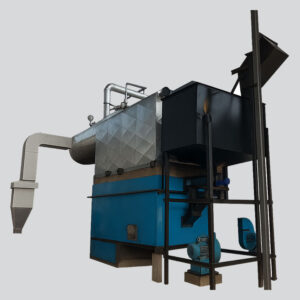
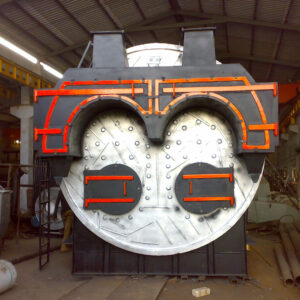
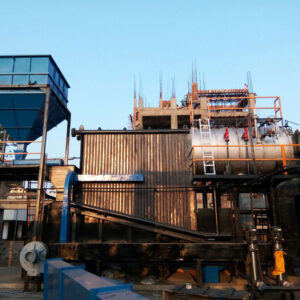
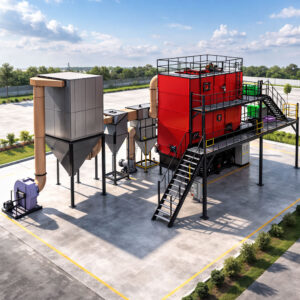
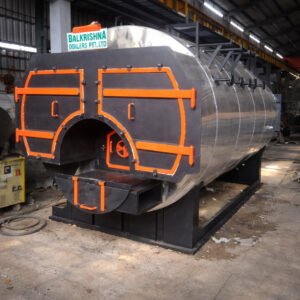
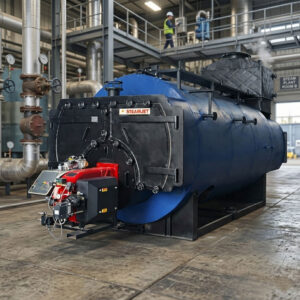
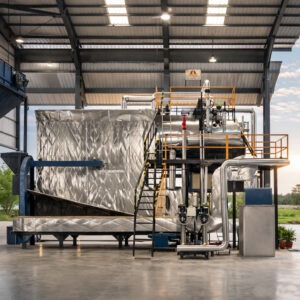
At IndianBoilers.com, we are at the forefront of the green energy revolution. Our Chain Grate Boiler – Paddy Straw – Parali Waste Boiler are specifically designed to tackle one of India’s biggest environmental challenges—stubble burning. By converting paddy straw (Parali) into high-pressure industrial steam, we help industries achieve zero-fuel-cost advantages while supporting farmers and reducing carbon footprints.
Manufactured in Ahmedabad, our Parali boilers feature advanced combustion technology to handle the high silica and moisture content of rice straw, ensuring long-term reliability and peak efficiency.
Key Features & Performance
- Advanced Combustion for High Silica: Parali contains high levels of silica; our furnaces are equipped with Pulsating or Vibratory Grates that prevent clinker formation and ensure smooth ash removal.
- Large Furnace Design: Paddy straw has low bulk density and high volatile matter. Our extra-large furnace volumes allow for complete combustion and prevent unburnt fuel from escaping.
- Specialized Fuel Handling: Available with Bale Breaking and Automatic Feeding systems (Twin-screw or Pneumatic) to handle the awkward shape and size of Parali bales.
- High Thermal Efficiency: Achieves 78% to 82% efficiency with the integration of our in-house Air Pre-heaters (APH) and Multi-cyclone Dust Collectors (MDC).
- Carbon Neutral Energy: Using Parali replaces fossil fuels like coal or diesel, helping your facility meet ESG (Environmental, Social, and Governance) goals and qualify for green energy credits.
- Multi-Fuel Capability: Our design is flexible. If Parali is seasonally unavailable, the boiler can easily fire Wood Chips, Mustard Husk, or Biomass Briquettes.
Core Industry Applications
The Parali Waste Fired Boiler is ideal for:
- Paper & Pulp Mills: Utilizing locally sourced straw for massive steam demands in drying cylinders.
- Textile Processing: Providing consistent, low-cost heat for dyeing and finishing units.
- Distilleries: Driving high-capacity distillation columns with sustainable biomass.
- Food & Dairy: Steam for sterilization, pasteurization, and large-scale industrial cooking.
Operating Range
- Capacity – 5 THP to 20 THP
- Fuel- wood pellets, Agri-pellets, biomass fuel, wood chips, Biomass agro fuels, coal etc.
- Pressure- 10.54 Kg/cm² to 21 Kg/cm²
Technical Specifications
| Specification | Unit | CPD-RSG-40 | CPD-RSG-60 | CPD-RSG-80 | CPD-RSG-100 | CPD-RSG-120 | CPD-RSG-150 | CPD-RSG-200 | ||
|---|---|---|---|---|---|---|---|---|---|---|
| General | ||||||||||
| Steam Output From & at 100°C | Kg/hr | 4000 | 6000 | 8000 | 10000 | 12000 | 15000 | 20000 | ||
| Working Pressure | Kg/CM² | 10.54 | 10.54 | 10.54 | 10.54 | 10.54 | 10.54 | 10.54 | ||
| Steam Temperature | °C | 183 | 183 | 183 | 183 | 183 | 183 | 183 | ||
| No’s Passes | No’s | Four | Four | Four | Four | Four | Four | Four | ||
| No’s of Furnace | No’s | 1 | 1 | 1 | 1 | 1 | 1 | 1 | ||
| No’s of Furnace Zone | No’s | 4 | 4 | 4 | 4 | 4 | 4 | 4 | ||
| Steam Outlet | MM | 100 | 125 | 150 | 200 | 200 | 200 | 250 | ||
| HTA | M² | 160 | 240 | 320 | 400 | 480 | 600 | 800 | ||
| Type of Crushed Fuel Fuel Crushed Briquette, Boimass Pellet, Rice husk, Plam kernel shell | ||||||||||
| Boilers Efficinecey with APH | ||||||||||
| On Crushed Briquette | % | 78 +/-2 | 78 +/-2 | 78 +/-2 | 78 +/-2 | 78 +/-2 | 78 +/-2 | 78 +/-2 | ||
| On Pellet | % | 78 +/-2 | 78 +/-2 | 78 +/-2 | 78 +/-2 | 78 +/-2 | 78 +/-2 | 78 +/-2 | ||
| On Rice Husk | % | 78 +/-2 | 78 +/-2 | 78 +/-2 | 78 +/-2 | 78 +/-2 | 78 +/-2 | 78 +/-2 | ||
| On Plam kernel shell | % | 75 +/-2 | 75 +/-2 | 75 +/-2 | 75 +/-2 | 75 +/-2 | 75 +/-2 | 75 +/-2 | ||
| Fuel Consumption | ||||||||||
| Briquette (4000) | Kg/hr | 692 | 1038 | 1385 | 1731 | 2077 | 2596 | 3462 | ||
| Pellet (4500) | Kg/hr | 615 | 923 | 1231 | 1538 | 1846 | 2308 | 3077 | ||
| Rice Husk (3000) | Kg/hr | 923 | 1385 | 1846 | 2308 | 2769 | 3462 | 4615 | ||
| Plam kernel (4000) | Kg/hr | 720 | 1080 | 1440 | 1800 | 2160 | 2700 | 3600 | ||
| Electrical Load | ||||||||||
| Feed Water Pump | H.P. | 6.00 | 7.50 | 7.50 | 10.00 | 15.00 | 15.00 | 20.00 | ||
| I.D. fan without BF | H.P. | 20.00 | 30.00 | 40.00 | 50.00 | 60.00 | 75.00 | 100.00 | ||
| P.A. Fan | H.P. | 10.00 | 15.00 | 20.00 | 25.00 | 30.00 | 40.00 | 50.00 | ||
| S.A. Fan | H.P. | 10.00 | 15.00 | 20.00 | 25.00 | 30.00 | 40.00 | 50.00 | ||
| Furnace Movement | H.P. | 4.00 | 6.00 | 6.00 | 8.00 | 8.00 | 12.00 | 20.00 | ||
| Wet ash Remover | H.P. | 2.00 | 2.00 | 2.00 | 3.00 | 3.00 | 5.00 | 5.00 | ||
| Fuel Feeder systems | H.P. | 3.00 | 5.00 | 7.50 | 10.00 | 10.00 | 15.00 | 15.00 | ||
| Total Electric Load | H.P. | 55.00 | 80.50 | 103.00 | 131.00 | 156.00 | 202.00 | 260.00 | ||
| NOTE: In view of constant endeavors to improve our products, we reserve the right to alter or change above specifications without prior notice. | ||||||||||
Frequently Asked Questions
Why is Paddy Straw considered a difficult fuel?
It has two main challenges: Low Bulk Density (it's very light and takes up lots of space) and High Silica/Potassium content, which can lead to ash melting (slagging) if not managed correctly.
Does the straw need to be baled or loose?
Our boilers can handle both. However, Baled Straw is easier for transport and storage, while Shredded Straw is better for automated, consistent feeding and higher thermal efficiency.
What is the Calorific Value of Paddy Straw?
The Gross Calorific Value (GCV) of paddy straw is typically 3200 to 3500 Kcal/kg, making it a highly viable and cost-effective alternative to expensive fossil fuels.
Is this boiler IBR certified?
Yes. IndianBoilers.com manufactures these units in strict accordance with Indian Boiler Regulations (IBR), ensuring safety and compliance for high-pressure industrial steam applications.
How do you prevent "Slagging" (ash melting) on the grates?
Paddy straw ash melts at a lower temperature (~850°C). We use Water-Cooled Grates or specialized Reciprocating Grates with controlled primary air to keep the temperature below the ash fusion point.
What is the best grate technology for Paddy Straw?
For large-scale operations, a Traveling Grate or Reciprocating Grate is best as it continuously moves the fuel and prevents the high-silica ash from sticking to the grate bars.
How do you handle the bulky nature of the straw?
We provide Extra-Large Feed Hoppers and specialized "anti-bridging" agitators to ensure that the light straw doesn't get stuck in the feeding system.
Why is "Secondary Air" injection important for Parali?
Paddy straw has high volatile matter. Our Secondary Air Nozzles create high turbulence in the furnace, ensuring these gases burn completely, which prevents black smoke and maximizes heat recovery.
Can I fire other fuels like Mustard Stalk or Wood Chips?
Yes. These are multi-fuel biomass boilers. Our furnace designs are versatile enough to handle a mix of agricultural residues depending on seasonal availability.
How much ash does Paddy Straw produce?
It has a relatively high ash content (12% to 18%), mostly composed of silica. We provide automated Submerged Ash Conveyors to handle this volume cleanly and continuously.
Does the silica in the straw cause tube erosion?
To prevent erosion from the abrasive silica, we use lower flue gas velocities and install erosion shields on the first row of boiler tubes to extend their lifespan.
How often do the tubes need cleaning?
Due to the high ash content, we integrate Automatic Soot Blowers (Steam or Sonic) that clean the tubes during operation to maintain high heat transfer efficiency.
What is the moisture limit for firing Paddy Straw?
For stable combustion, moisture should be below 15–20%. If the straw is too wet, it will produce white smoke and significantly reduce the boiler's steam output.
Is the feeding system fully automated?
Yes. We offer PLC-based automation where the fuel feed rate is synchronized with the steam demand, reducing the need for manual labor and ensuring steady pressure.
How does this boiler help with the "Parali Burning" issue?
By giving paddy straw an industrial value, farmers are incentivized to sell it to factories instead of burning it in the fields. This significantly reduces seasonal smog and air pollution.
What is the typical ROI (Return on Investment)?
Since paddy straw is often available at a fraction of the cost of coal or pellets, most industrial units recover their investment in 10 to 15 months through fuel savings.
What Air Pollution Control (APC) equipment is included?
We equip our Parali boilers with Multi-cyclone Dust Collectors (MDC) and Bag Filters to ensure that fine silica dust and particulates are captured before the air leaves the chimney.
Are there government incentives for Parali-fired boilers?
Yes. Under various "Waste-to-Energy" and "Biomass Mission" schemes, companies can often access subsidies or low-interest loans for installing crop-residue-based boilers.
Why choose IndianBoilers.com?
Based in Ahmedabad, we have optimized our furnace geometry specifically for Indian crop residues. We offer a rugged, IBR-certified design that is built to handle the abrasive and bulky nature of paddy straw for 24/7 industrial use.