

Groundnut Husk Fired Boiler
High-Calorific Biomass Heating | Reduce Fuel Costs by 60%
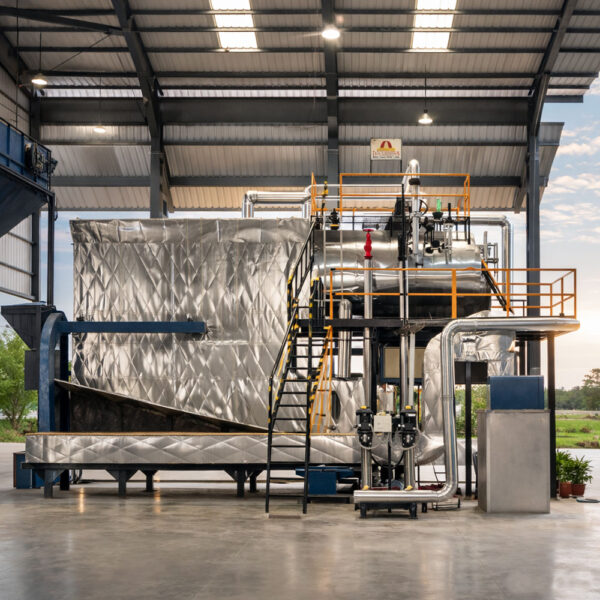
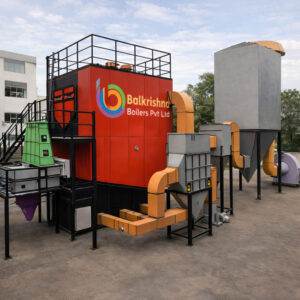
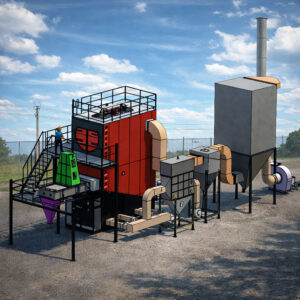
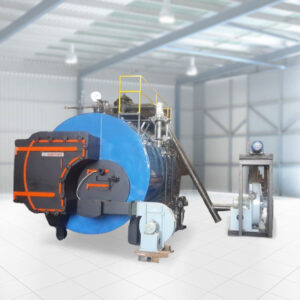
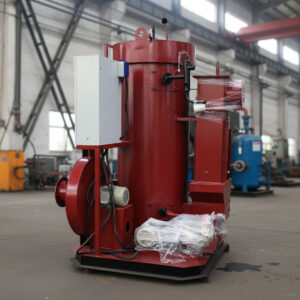
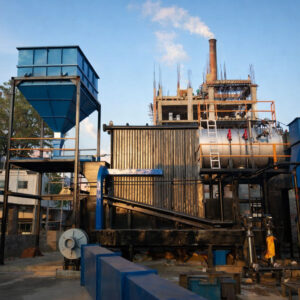
At IndianBoilers.com, our Groundnut Husk Fired Boilers are engineered to transform agricultural residue into high-pressure industrial steam. Groundnut shells (peanut husks) are one of India’s most efficient biomass fuels, boasting a heat output nearly comparable to low-grade coal but at a fraction of the cost.
Manufactured in our Ahmedabad facility, these boilers feature specialized furnace geometries designed to handle the unique “quick-burn” characteristics of groundnut husks, ensuring zero fuel wastage and maximum thermal output.
Key Features & Performance
- Superior Calorific Value: Groundnut husks offer an impressive GCV of 3800-4200 Kcal/kg, making them significantly more powerful than rice husk or wood waste.
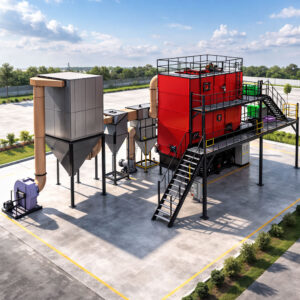
- Specialized Combustion Design: Featuring a custom-built furnace that ensures complete burnout of light-density husks, preventing unburnt particles from escaping through the chimney.
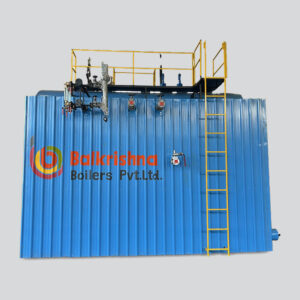
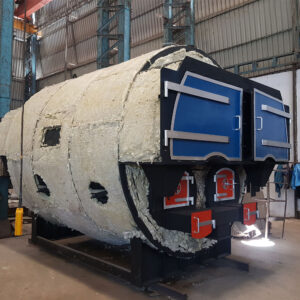
- 3-Pass Smoke Tube Technology: Flue gases travel through three distinct passes, maximizing heat transfer and achieving thermal efficiencies of up to 82% (with heat recovery units).
- Multi-Fuel Flexibility: While optimized for groundnut shells, the grate system is versatile. If shells are seasonally unavailable, you can seamlessly switch to Wood, Briquettes, or Coal.
- Clean Emission Profile: Low sulfur and nitrogen content in groundnut husks mean lower SOx/NOx emissions. Integrated Multi-cyclone Dust Collectors (MDC) ensure compliance with pollution norms.
- Robust Construction: Built using IBR-certified boiler-quality steel (SA 515/516) and seamless tubes for a projected service life of 20+ years.
Core Industry Applications
The Groundnut Fired Boiler is the preferred choice for:
- Edible Oil Mills: Utilizing byproduct shells to power extraction and refining.
- Food & Snacks Industry: Cost-effective steam for frying, roasting, and dehydration plants.
- Textile & Garments: Managing high-volume steam requirements for dyeing and processing.
- Solvent Extraction Plants: High-efficiency heating for solvent recovery and oil distillation.
Operating Range
- Capacity: 5 TPH to 20 TPH
- Fuel Compatibility: Wood pellets, Agri-pellets, biomass fuel, wood chips, coal, etc.
- Pressure: 10.54 kg/cm² to 21 kg/cm²
Technical Specifications
| Specification | Unit | CPD-RSG-40 | CPD-RSG-60 | CPD-RSG-80 | CPD-RSG-100 | CPD-RSG-120 | CPD-RSG-150 | CPD-RSG-200 | ||
|---|---|---|---|---|---|---|---|---|---|---|
| General | ||||||||||
| Steam Output From & at 100°C | Kg/hr | 4000 | 6000 | 8000 | 10000 | 12000 | 15000 | 20000 | ||
| Working Pressure | Kg/CM² | 10.54 | 10.54 | 10.54 | 10.54 | 10.54 | 10.54 | 10.54 | ||
| Steam Temperature | °C | 183 | 183 | 183 | 183 | 183 | 183 | 183 | ||
| No’s Passes | No’s | Four | Four | Four | Four | Four | Four | Four | ||
| No’s of Furnace | No’s | 1 | 1 | 1 | 1 | 1 | 1 | 1 | ||
| No’s of Furnace Zone | No’s | 4 | 4 | 4 | 4 | 4 | 4 | 4 | ||
| Steam Outlet | MM | 100 | 125 | 150 | 200 | 200 | 200 | 250 | ||
| HTA | M² | 160 | 240 | 320 | 400 | 480 | 600 | 800 | ||
| Type of Crushed Fuel Fuel Crushed Briquette, Boimass Pellet, Rice husk, Plam kernel shell | ||||||||||
| Boilers Efficinecey with APH | ||||||||||
| On Crushed Briquette | % | 78 +/-2 | 78 +/-2 | 78 +/-2 | 78 +/-2 | 78 +/-2 | 78 +/-2 | 78 +/-2 | ||
| On Pellet | % | 78 +/-2 | 78 +/-2 | 78 +/-2 | 78 +/-2 | 78 +/-2 | 78 +/-2 | 78 +/-2 | ||
| On Rice Husk | % | 78 +/-2 | 78 +/-2 | 78 +/-2 | 78 +/-2 | 78 +/-2 | 78 +/-2 | 78 +/-2 | ||
| On Plam kernel shell | % | 75 +/-2 | 75 +/-2 | 75 +/-2 | 75 +/-2 | 75 +/-2 | 75 +/-2 | 75 +/-2 | ||
| Fuel Consumption | ||||||||||
| Briquette (4000) | Kg/hr | 692 | 1038 | 1385 | 1731 | 2077 | 2596 | 3462 | ||
| Pellet (4500) | Kg/hr | 615 | 923 | 1231 | 1538 | 1846 | 2308 | 3077 | ||
| Rice Husk (3000) | Kg/hr | 923 | 1385 | 1846 | 2308 | 2769 | 3462 | 4615 | ||
| Plam kernel (4000) | Kg/hr | 720 | 1080 | 1440 | 1800 | 2160 | 2700 | 3600 | ||
| Electrical Load | ||||||||||
| Feed Water Pump | H.P. | 6.00 | 7.50 | 7.50 | 10.00 | 15.00 | 15.00 | 20.00 | ||
| I.D. fan without BF | H.P. | 20.00 | 30.00 | 40.00 | 50.00 | 60.00 | 75.00 | 100.00 | ||
| P.A. Fan | H.P. | 10.00 | 15.00 | 20.00 | 25.00 | 30.00 | 40.00 | 50.00 | ||
| S.A. Fan | H.P. | 10.00 | 15.00 | 20.00 | 25.00 | 30.00 | 40.00 | 50.00 | ||
| Furnace Movement | H.P. | 4.00 | 6.00 | 6.00 | 8.00 | 8.00 | 12.00 | 20.00 | ||
| Wet ash Remover | H.P. | 2.00 | 2.00 | 2.00 | 3.00 | 3.00 | 5.00 | 5.00 | ||
| Fuel Feeder systems | H.P. | 3.00 | 5.00 | 7.50 | 10.00 | 10.00 | 15.00 | 15.00 | ||
| Total Electric Load | H.P. | 55.00 | 80.50 | 103.00 | 131.00 | 156.00 | 202.00 | 260.00 | ||
| NOTE: In view of constant endeavors to improve our products, we reserve the right to alter or change above specifications without prior notice. | ||||||||||
Frequently Asked Questions
Can the boiler handle both whole shells and crushed husks?
Yes. Our fully automatic systems are designed to handle whole groundnut shells as well as the finer husks or meal residue from oil extraction plants.
Is this boiler IBR (Indian Boiler Regulations) certified?
Absolutely. All our groundnut-fired boilers are manufactured under IBR standards, ensuring maximum safety and high-pressure steam reliability for your facility.
How much steam can 1 ton of groundnut shells produce?
On average, 1 ton of groundnut shells can produce approximately 3.2 to 3.8 tons of steam, depending on the boiler's efficiency and the specific GCV of the shells.
How does it compare to wood-fired boilers?
Groundnut shells are much more flowable and consistent than firewood. This allows for true automation, similar to a gas or oil burner, which is difficult to achieve with bulky firewood.
What does "Fully Automatic" mean in a biomass context?
It means the entire process—from fuel feeding via screw conveyors to water level management and steam pressure regulation—is controlled by a PLC system with minimal manual intervention.
What type of grate is best for groundnut shells?
For these shells, we typically recommend a Pulsating Grate or a specialized Reciprocating Grate. These ensure that the light shells stay in the high-heat zone long enough for complete combustion.
How do you prevent the fuel from "clogging" in the hopper?
Groundnut shells can sometimes "bridge" in the storage bin. Our hoppers are equipped with mechanical agitators and a specific divergent wall design to ensure a continuous, jam-free flow.
Can the boiler co-fire groundnut husks with other fuels?
Yes. You can easily mix them with wood chips, briquettes, or even coal. The PLC system allows you to adjust air-flow settings to match the fuel blend.
How do you manage the "fines" (dust) in groundnut husks?
Finer husks burn almost instantly (suspension firing). We use a combination of Underfeed and Overfeed air to ensure that both heavy shells and fine dust burn completely without escaping through the chimney.
What is the ash content of groundnut shells?
Groundnut shells have a very low ash content, typically between 2% and 4%. This results in less downtime for ash cleaning compared to coal or other agri-residues.
How often do the boiler tubes need cleaning?
Since groundnut shells burn clean, tube fouling is minimal. However, we recommend a monthly inspection and the use of integrated Soot Blowers for continuous 24/7 operations.
Does the boiler require a specialized operator?
No. Because it is Fully Automatic, a general supervisor can manage the unit. The system includes "Safe-Shut-Off" protocols for high pressure or low water levels.
What is the startup time for a groundnut-fired boiler?
Because the shells are dry and ignite rapidly, our boilers can reach operating pressure from a cold start in approximately 45 to 60 minutes.
Is there a risk of "back-fire" in the automatic feeder?
We install Rotary Air Locks and independent water-sprinkler safety valves in the feed line to ensure that flames cannot travel back from the furnace into the fuel hopper.
What is the typical ROI (Return on Investment)?
For oil mills or food processors using their own shells, the "fuel" is free. Most plants recover the entire capital cost of the boiler in 8 to 12 months through fuel savings.
How do you control smoke and particulate emissions?
Every boiler is equipped with a Multi-cyclone Dust Collector (MDC). This ensures that the fine ash from the husks is captured, keeping your chimney discharge clean and within PCB norms.
Is groundnut husk firing carbon neutral?
Yes. It is a 100% renewable energy source. Using these shells prevents them from decomposing in landfills and replaces fossil fuels, significantly lowering your carbon footprint.
Can I get a government subsidy for this boiler?
Yes. Many green energy initiatives and agricultural processing schemes offer subsidies or low-interest loans for biomass-fired boilers. We provide the technical certificates needed for your application.
Why choose IndianBoilers.com for groundnut-fired systems?
Based in Ahmedabad, we serve the heart of India's groundnut belt. We have optimized our furnace geometry specifically for the combustion characteristics of these shells, ensuring a rugged, reliable, and high-efficiency system.