
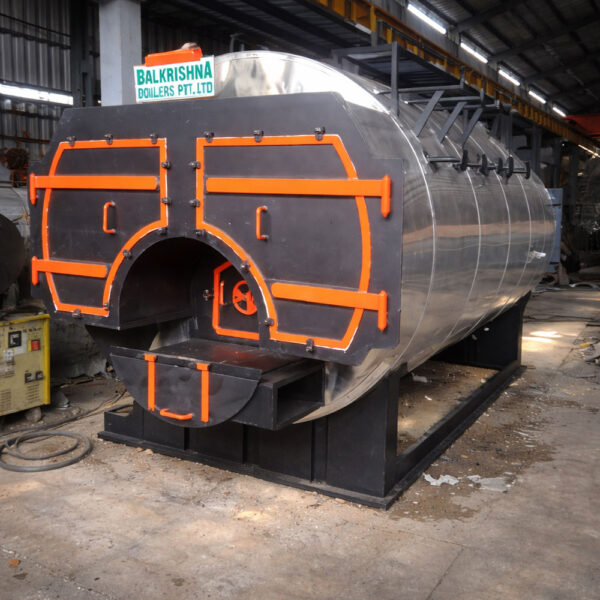
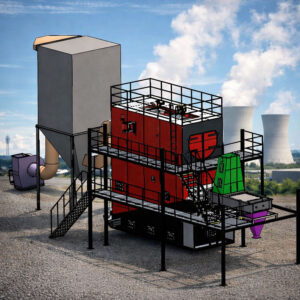
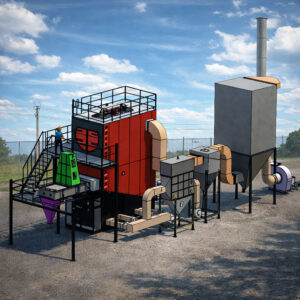
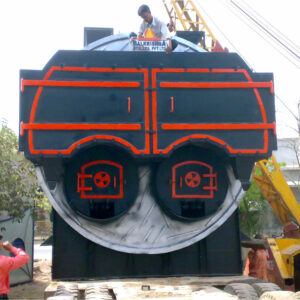
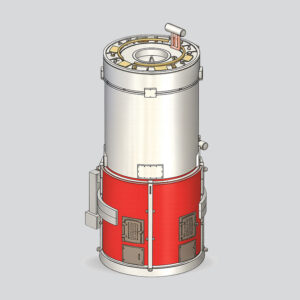
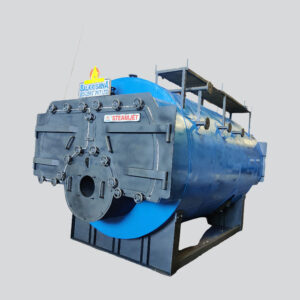
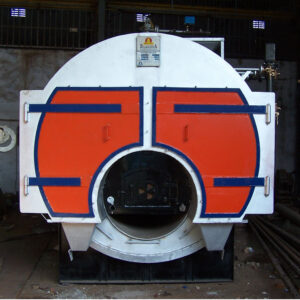
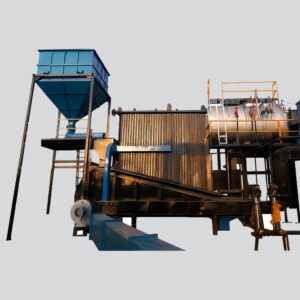

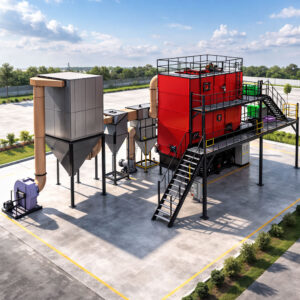
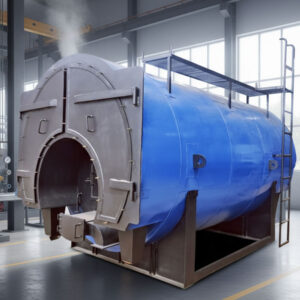
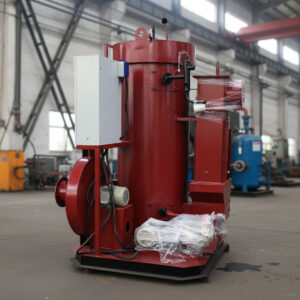
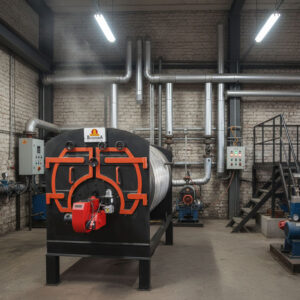
Syngas Fired Boiler
High-Efficiency Synthesis Gas Combustion | Advanced Waste-to-Energy
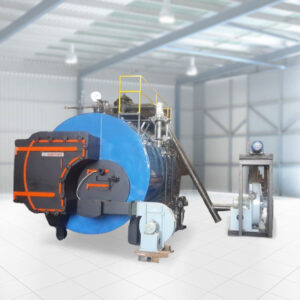
At IndianBoilers.com, we provide the thermal heart for modern gasification plants. Our Syngas Fired Boilers are precision-engineered to combust Synthetic Gas—a mixture primarily consisting of Hydrogen (H₂), Carbon Monoxide (CO), and Methane (CH₄). Syngas is a versatile but sensitive fuel; its low energy density and high hydrogen content require a sophisticated combustion approach that standard gas boilers cannot provide.
Manufactured in Ahmedabad, our Syngas boilers feature custom-built burner geometries and advanced safety systems designed to handle the specific flame speeds and ignition characteristics of synthesis gas, ensuring reliable and ultra-clean steam generation.
Key Features & Performance
- Custom Low-Btu Burners: Syngas typically has a lower calorific value than Natural Gas. Our boilers use specialized high-volume burners that ensure stable combustion and flame retention despite the low-Btu nature of the gas.
- Hydrogen-Ready Safety Systems: Given the high flammability and small molecular size of Hydrogen in Syngas, our gas trains use specialized seals, “Double Block & Bleed” valves, and nitrogen purging systems for maximum safety.
- Dual-Fuel / Co-firing Capability: To manage fluctuations in gasifier output, our boilers can seamlessly switch to or co-fire with Natural Gas, LPG, or Diesel, ensuring your steam pressure never drops.
- High-Temperature Design: Syngas combustion can result in high adiabatic flame temperatures. We utilize membrane-wall furnace designs and high-grade alloys to manage thermal stress and prevent tube overheating.
- Precise Air-Fuel Modulation: Integrated with advanced O2 trimmers and VFD-controlled fans to maintain the perfect stoichiometric ratio, preventing the formation of soot or unburnt CO.
- Zero-Emission Potential: When coupled with gasification of biomass or waste, our Syngas boilers provide a near carbon-neutral energy loop with extremely low NOx and particulate emissions.
Core Industry Applications
The Syngas Fired Boiler is the critical link in:
- Integrated Gasification Combined Cycle (IGCC): Power generation plants converting coal or biomass into clean electricity.
- Chemical & Fertilizer Plants: Utilizing byproduct syngas from ammonia or methanol synthesis for process steam.
- Waste-to-Energy Projects: Converting municipal or hazardous waste into syngas via plasma or thermal gasification.
- Steel & Metallurgical Plants: Recovery of energy from off-gases produced in blast furnaces or coke ovens.
Advantages
- Refractory Engineering: We use specialized high-alumina bricks and castables that can withstand the unique chemical environment of Syngas flue gases.
- Explosion-Proof Instrumentation: All electronic controls and sensors used in our Syngas series are flame-proof and built for hazardous area classifications.
- Local Expertise: Based in the industrial hub of Ahmedabad, we offer on-site technical consultation to integrate our boiler perfectly with your existing gasifier system.
Operating Range
- Capacity – 0.5 TPH to 15.0 TPH
- Fuel- Oil (FO, Diesel, LDO), Gas (Natural Gas, LPG), and various waste gases
- Pressure- 10.54 Kg/cm² to 21 Kg/cm²
Technical Specifications
| Specification | Unit | SJ-05 | SJ-10 | SJ-15 | SJ-20 | SJ-30 | SJ-40 | SJ-50 | SJ-60 | SJ-80 | SJ-100 |
|---|---|---|---|---|---|---|---|---|---|---|---|
| General | |||||||||||
| Steam Output From & at 100°C | Kg/hr | 500 | 1000 | 1500 | 2000 | 3000 | 4000 | 5000 | 6000 | 8000 | 10000 |
| Working Pressure | Kg/CM² | 10.54 | 10.54 | 10.54 | 10.54 | 10.54 | 10.54 | 10.54 | 10.54 | 10.54 | 10.54 |
| Steam Temprature | °C | 183 | 183 | 183 | 183 | 183 | 183 | 183 | 183 | 184 | 185 |
| No’s Passes | No’s | Three | Three | Three | Three | Three | Three | Three | Three | Three | Three |
| No’s of Furnace | No’s | 1 | 1 | 1 | 1 | 1 | 1 | 1 | 1 | 1 | 1 |
| Steam Outlet | MM | 40 | 50 | 80 | 80 | 100 | 100 | 125 | 150 | 150 | 200 |
| HTA | M² | 15 | 30 | 45 | 60 | 90 | 120 | 150 | 180 | 240 | 300 |
| Burner: Pressure jet Monoblock Burner | |||||||||||
| Type of Fuel: Diesel, LPG, NG, PNG, FO, LDO | |||||||||||
| Boilers Efficiency | |||||||||||
| On Gas | % | 90 +/-2 | 90 +/-2 | 90 +/-2 | 90 +/-2 | 90 +/-2 | 90 +/-2 | 90 +/-2 | 90 +/-2 | 90 +/-2 | 90 +/-2 |
| On Oil | % | 88 +/-2 | 88 +/-2 | 88 +/-2 | 88 +/-2 | 88 +/-2 | 88 +/-2 | 88 +/-2 | 88 +/-2 | 88 +/-2 | 88 +/-2 |
| Fuel Consumption | |||||||||||
| Diesel (10500) | Kg/hr | 29 | 58 | 88 | 117 | 175 | 234 | 292 | 351 | 468 | 584 |
| Furnace Oil (9600) | Kg/hr | 32 | 64 | 96 | 128 | 192 | 256 | 320 | 384 | 511 | 639 |
| LDO (10200) | Kg/hr | 30 | 60 | 90 | 120 | 180 | 241 | 301 | 361 | 481 | 602 |
| LPG (11000) | Kg/hr | 30 | 60 | 90 | 120 | 180 | 241 | 301 | 361 | 481 | 602 |
| Natural gas(8900) | M³/hr | 34 | 67 | 101 | 135 | 202 | 270 | 337 | 404 | 539 | 674 |
| Electrical Load | |||||||||||
| Feed Water Pump | H.P. | 2.00 | 2.00 | 3.00 | 3.00 | 4.00 | 4.00 | 6.00 | 7.50 | 10.00 | 15.00 |
| Burner Blower (oil) | H.P. | 0.37 | 1.10 | 3.00 | 3.00 | 5.50 | 7.50 | 7.50 | 11.00 | 18.5 | 18.5 |
| Fuel Pump | H.P. | * | * | * | * | 1.10 | 1.10 | 1.10 | 1.50 | 3.0 | 3.0 |
| Total Electric Load | H.P. | 2.37 | 3.10 | 6.00 | 6.00 | 10.60 | 12.60 | 14.60 | 20.00 | 31.50 | 36.50 |
| NOTE: In view of constant endeavors to improve our products, we reserve the right to alter or change above specifications without prior notice. | |||||||||||
Frequently Asked Questions
Can a standard Natural Gas boiler be converted to fire Syngas?
It is not recommended. Syngas requires a much higher fuel-to-air ratio and has a higher hydrogen content, which can cause "flashback" in standard burners. A purpose-built Syngas Fired Boiler from IndianBoilers.com is essential for safety and performance.
What is the typical Calorific Value (CV) of Syngas that your boilers can handle?
We design boilers for "Lean Gas" with a GCV as low as 1000 to 1500 Kcal/Nm³. Our burners are custom-sized to handle the high volume of gas required to meet your steam demand.
Is the boiler IBR (Indian Boiler Regulations) certified?
Yes. All our Syngas boilers are manufactured and certified under IBR standards, ensuring they meet the highest safety and quality benchmarks for high-pressure industrial use.
Does the boiler handle Syngas produced from different feedstocks?
Yes. Whether your syngas comes from Biomass, Coal, MSW, or Plastic Gasification, we tune the combustion system to match the specific chemical composition of your gas.
How do you manage the high Hydrogen (H2) content in Syngas?
Hydrogen is highly volatile. We use Hydrogen-rated seals, specialized gas trains, and advanced flame scanners (UV/IR) that are specifically calibrated to detect the blue/transparent flame of hydrogen-rich gas.
Is there a risk of explosion with Syngas?
Syngas contains CO and H2, which are flammable and toxic. We integrate a Nitrogen Purging System and a "Double Block & Bleed" valve train to ensure the system is safely purged before ignition and after shutdown.
How do you handle "Tar" and impurities in the Syngas?
Ideally, Syngas should be cleaned (scrubbed). However, if trace tars remain, we provide heated gas lines and specialized non-clogging burner nozzles to prevent buildup and ensure continuous firing.
Can the boiler run on a backup fuel if the gasifier is down?
Yes. We offer Dual-Fuel Burners (Syngas + Diesel or Syngas + Natural Gas). This ensures your factory never stops production if the syngas supply is interrupted.
What safety certifications are provided for the electronic components?
All electrical panels and sensors used in our Syngas series are Flame-proof (Explosion-proof) and comply with hazardous area classifications.
What thermal efficiency can I expect from a Syngas boiler?
Our boilers achieve 88% to 92% efficiency when equipped with our high-grade Air Pre-heaters (APH) and Economizers to recover heat from the flue gases.
Does Syngas produce more emissions than Natural Gas?
Syngas is much cleaner than coal or oil. When fired in our optimized burners, it produces extremely low SO× and NO×. However, if the syngas is coal-derived, we recommend a bag filter to capture trace particulates.
Why is the furnace volume larger in a Syngas boiler?
Because Syngas has a lower energy density, a larger volume of gas must be burned to reach the same temperature. The larger furnace provides the necessary residence time for complete combustion.
Can the boiler handle fluctuations in gas pressure from the gasifier?
Yes. We use Variable Frequency Drives (VFD) and modulating gas valves that automatically adjust to pressure changes to maintain steady steam production.
How do you prevent corrosion in the boiler tubes?
If the syngas contains trace sulfur or moisture, we use corrosion-resistant coatings or specialized alloy tubes in the convective zones to extend the life of the boiler.
How often does a Syngas burner require cleaning?
If the gas is well-scrubbed, the burner requires minimal maintenance. For "raw" syngas, we recommend a monthly inspection of the nozzles and spark electrodes.
What is the typical startup time for a Syngas boiler?
From a cold start, it typically takes 45 to 90 minutes to reach full operating pressure, depending on the boiler capacity and the heating rate of the refractory.
Can the boiler be monitored remotely?
Yes. Our PLC-based panels are SCADA-compatible, allowing you to monitor gas flow, steam pressure, and safety alarms from your smartphone or central control room.
What kind of training do you provide for the operators?
Since Syngas requires careful handling, we provide comprehensive on-site training for your staff, covering gas-handling safety, burner tuning, and emergency shutdown procedures.
Why choose IndianBoilers.com for Syngas projects?
Based in Ahmedabad, we are one of the few manufacturers in India with the engineering expertise to handle complex gases like Syngas. We provide localized support, IBR expertise, and custom-engineered solutions that global manufacturers cannot match at our price point.

Reviews
There are no reviews yet.