

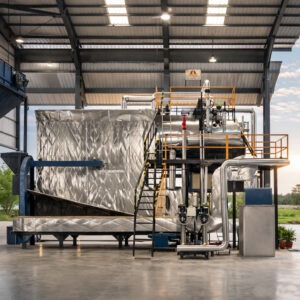
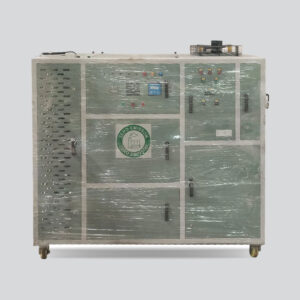
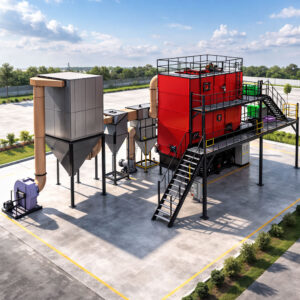
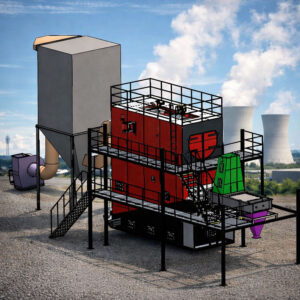
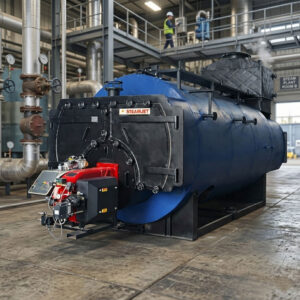
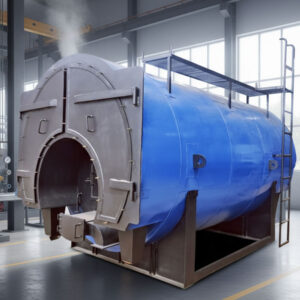
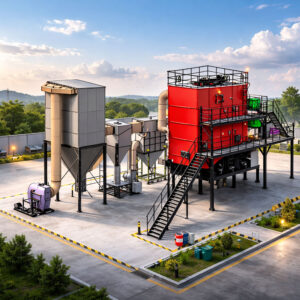
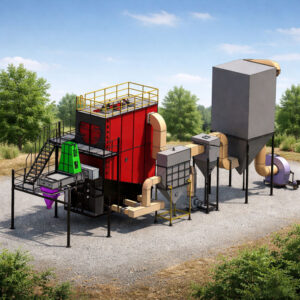
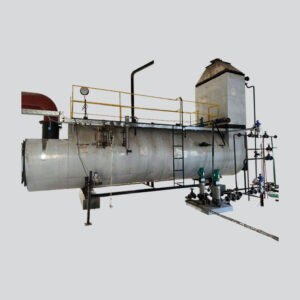
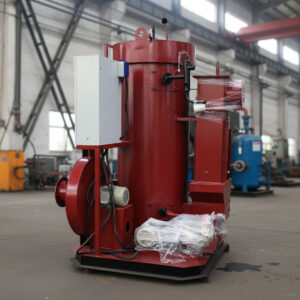
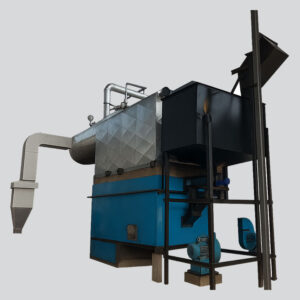
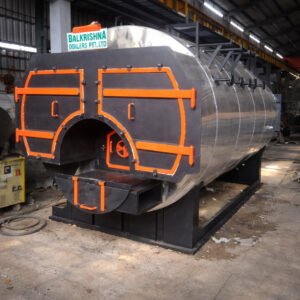
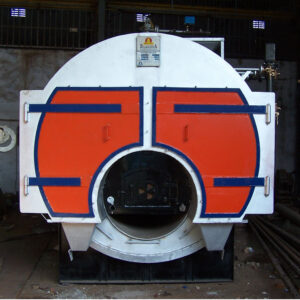
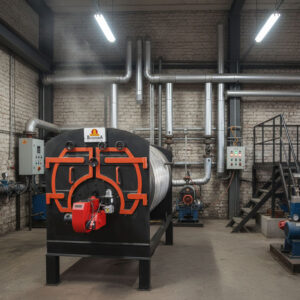
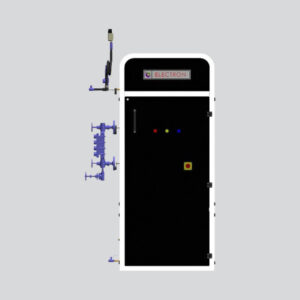
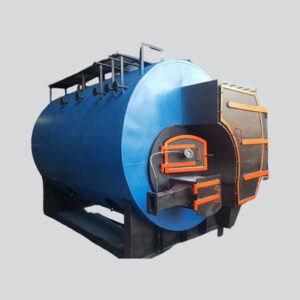
Cotton Stalk Fired Boiler
High-Performance Biomass Energy | Sustainable Steam from Cotton Waste
At IndianBoilers.com, we turn agricultural liability into industrial power. Cotton Stalks are a high-energy biomass resource that is often burnt in the fields, causing environmental pollution. Our Cotton Stalk Fired Boilers provide a sustainable alternative, allowing textile mills, ginning units, and agro-industries to utilize this waste for high-efficiency steam generation.
Manufactured in Ahmedabad, our boilers are designed to overcome the challenges of cotton stalk combustion—such as low bulk density and varying moisture—ensuring a steady and cost-effective energy supply for your facility.
Key Features & Performance
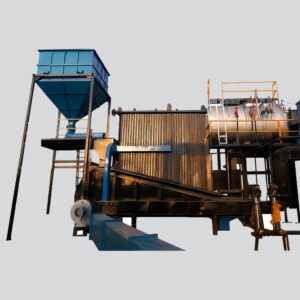
- Robust Furnace Geometry: Cotton stalks have high volatile matter and low density. Our extra-large combustion chambers provide the necessary residence time for complete, smoke-free combustion.
- Dual-Feed Flexibility: Our system is engineered to handle both shredded stalks and baled stalks, allowing you to choose the most cost-effective fuel preparation method.
- High Thermal Efficiency: Optimized air-to-fuel ratios and integrated Air Pre-heaters (APH) ensure that you achieve 78% to 82% efficiency, even with varying fuel quality.
- Anti-Clinkering Grates: Cotton stalk ash can be prone to fusion at high temperatures. We use specialized Fixed or Pulsating Grates with controlled primary air cooling to prevent clinker buildup and ensure easy ash removal.
- Automated Fuel Handling: Features heavy-duty screw feeders or pneumatic injectors that prevent fuel “bridging” and ensure a consistent flow into the furnace.
- PCB Compliant Emissions: Equipped with Multi-cyclone Dust Collectors (MDC) and high-efficiency ID fans to ensure your stack emissions meet all environmental norms.
Core Industry Applications
The Cotton Stalk Fired Boiler is a game-changer for:
- Textile & Spinning Mills: Utilizing the byproduct of the cotton supply chain to power dyeing and processing units.
- Cotton Ginning Units: Self-sufficient steam generation for moisture restoration and industrial heating.
- Chemical & Pharma: Low-cost thermal energy for batch reactors and drying processes.
- Food Processing: Efficient steam for parboiling, drying, and sterilization.
Advantages
- Fuel Security: Our boilers are “Multi-Fuel” capable. If cotton stalks are out of season, you can switch to any other biomass or briquettes without modifying the hardware.
- High-Grade Materials: We use only IBR-certified, high-thickness boiler steel to withstand the mildly acidic nature of biomass flue gases.
- Local Expertise: As a leading manufacturer in Gujarat, we have deep experience in optimizing furnaces for the specific GCV (Gross Calorific Value) of local cotton varieties.
Operating Range
- Capacity – 0.5 THP to 6 THP
- Fuel- wood log, Briquette, Lignite and Coal
- Pressure- 10.54 Kg/cm² to 21 Kg/cm²
Technical Specifications
| Specification | Unit | CC-05 | CC-10 | CC-20 | CC-30 | CC-40 | CC-50 | CC-60 | ||
|---|---|---|---|---|---|---|---|---|---|---|
| General | ||||||||||
| Steam Output From & at 100°C | Kg/hr | 500 | 1000 | 2000 | 3000 | 4000 | 5000 | 6000 | ||
| Working Pressure | Kg/CM² | 10.54 | 10.54 | 10.54 | 10.54 | 10.54 | 10.54 | 10.54 | ||
| Steam Temperature | °C | 183 | 183 | 183 | 183 | 183 | 183 | 183 | ||
| No’s of Passes | No’s | Three | Three | Three | Three | Three | Three | Three | ||
| No’s of Furnace | No’s | 1 | 1 | 1 | 1 | 1 | 1 | 1 | ||
| Grate Area | M² | 0.85 | 1.25 | 2.2 | 2.9 | 4.15 | 5.7 | 6 | ||
| Steam Outlet | MM | 40 | 50 | 80 | 100 | 100 | 125 | 150 | ||
| Heat Transfer Area | M² | 20 | 40 | 80 | 120 | 160 | 200 | 240 | ||
| Type of Fuel: woodlog, Briquette, Lignite and Coal | ||||||||||
| Boilers Efficiency with APH | ||||||||||
| On woodlog | % | 78 +/-2 | 78 +/-2 | 78 +/-2 | 78 +/-2 | 78 +/-2 | 78 +/-2 | 78 +/-2 | ||
| On Coal | % | 78 +/-2 | 78 +/-2 | 78 +/-2 | 78 +/-2 | 78 +/-2 | 78 +/-2 | 78 +/-2 | ||
| Fuel Consumption | ||||||||||
| WoodLog (3500) | Kg/hr | 99 | 198 | 396 | 593 | 791 | 989 | 1187 | ||
| Briquette (4000) | Kg/hr | 87 | 173 | 346 | 519 | 692 | 865 | 1038 | ||
| Lignite (3000) | Kg/hr | 115 | 231 | 462 | 692 | 923 | 1154 | 1385 | ||
| Coal (4500) | Kg/hr | 77 | 154 | 308 | 462 | 615 | 769 | 923 | ||
| Electrical Load | ||||||||||
| Feed Water Pump | H.P. | 2.00 | 2.00 | 3.00 | 4.00 | 4.00 | 6.00 | 7.50 | ||
| I.D. fan without BF | H.P. | 3.00 | 5.00 | 10.00 | 15.00 | 20.00 | 25.00 | 30.00 | ||
| F.D. Fan | H.P. | 1.00 | 2.00 | 5.00 | 7.50 | 7.40 | 10.00 | 12.50 | ||
| Total Electric Load | H.P. | 6.00 | 9.00 | 18.00 | 26.50 | 31.40 | 41.00 | 50.00 | ||
| NOTE: In view of constant endeavors to improve our products, we reserve the right to alter or change above specifications without prior notice. | ||||||||||
Frequently Asked Questions
Why do cotton stalks require a specialized furnace?
Cotton stalks have a high alkali content (potassium and sodium). If burned in a standard boiler, the ash can melt and stick to the tubes (slagging). Our furnaces are designed with specific temperatures to prevent this.
Do I need to shred the stalks before feeding?
Yes. For automated feeding and better efficiency, stalks should be shredded into 2–3 inch pieces. This ensures a uniform fire bed and prevents the feeding system from choking.
What is the calorific value of cotton stalks?
Dried cotton stalks typically have a Gross Calorific Value (GCV) of 3800 to 4200 Kcal/kg, making them an excellent alternative to coal.
Is this boiler IBR certified?
Yes. IndianBoilers.com manufactures these units according to Indian Boiler Regulations (IBR), ensuring they are safe for high-pressure industrial use.
How do you prevent "Slagging" in the furnace?
We use Large Volumetric Furnaces and controlled air-cooling to keep the furnace temperature below the ash fusion point of cotton stalks.
What type of grate is best for cotton stalks?
For shredder stalks, a Pulsating Grate or Traveling Grate is ideal. For manual firing of bundles, a Fixed Grate with a high-volume external furnace is used.
How do you handle the bulky nature of the fuel?
We provide Extra-large Fuel Hoppers and heavy-duty screw conveyors designed to handle the low-density, high-volume nature of shredded stalks.
Can this boiler run on other agricultural waste?
Yes. These are multi-fuel boilers. You can easily switch to wood chips, mustard stalks, or briquettes during the cotton off-season.
Why is "Secondary Air" important for cotton stalks?
Cotton stalks are highly volatile. Secondary air nozzles create turbulence in the furnace to ensure these gases burn completely, preventing black smoke and increasing efficiency.
How much ash is produced?
Cotton stalks produce approximately 3% to 6% ash. While low, the ash is very fine and requires a robust collection system.
Does the boiler require frequent cleaning?
Due to the potential for "fouling" (ash buildup on tubes), we recommend using Soot Blowers (manual or automatic) to keep the heat transfer surfaces clean during operation.
What is the moisture limit for cotton stalks?
For best performance, moisture should be below 15–20%. High moisture reduces efficiency and can cause white smoke.
Is the feeding system prone to jamming?
We use Heavy-duty Industrial Shredders and anti-bridge hoppers to ensure the stalks flow smoothly into the furnace without "bridging" or jamming.
How long does it take to start the boiler?
Because cotton stalks ignite easily, the boiler can reach operating pressure from a cold start in about 60 to 90 minutes.
What is the ROI for a cotton ginning mill?
If you are a ginning mill using your own waste stalks, your fuel cost is nearly zero. Most units pay for themselves within 10 to 12 months.
Does burning cotton stalks help the environment?
Yes. Instead of farmers burning stalks in the field (which causes massive pollution), you are using them for clean energy, making the process carbon-neutral.
How do you control smoke and emissions?
We install Multi-cyclone Dust Collectors and sometimes Bag Filters to ensure the particulate matter in the chimney stays well within Pollution Control Board (PCB) limits.
Are there government subsidies for these boilers?
Yes, many biomass-based energy projects in India qualify for subsidies from MNRE or IREDA. We provide the necessary technical data to help with your application.
Why choose IndianBoilers.com?
Based in Ahmedabad, we are at the heart of the cotton belt. We have optimized our designs specifically for the local cotton varieties, ensuring a rugged, reliable, and high-performance boiler.

Reviews
There are no reviews yet.