
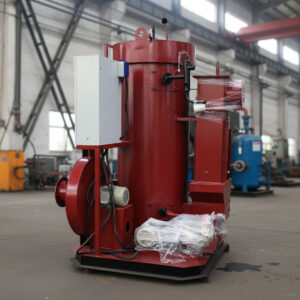
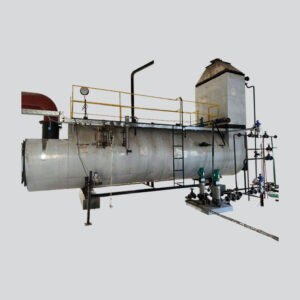
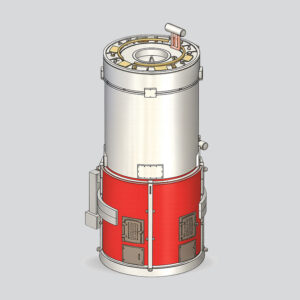
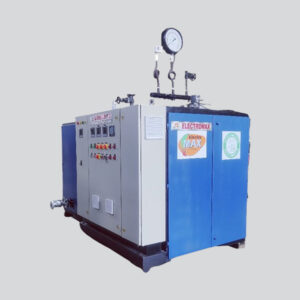
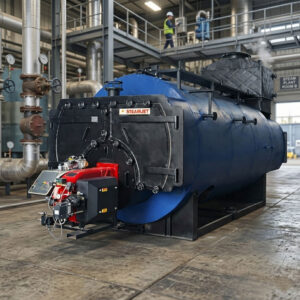
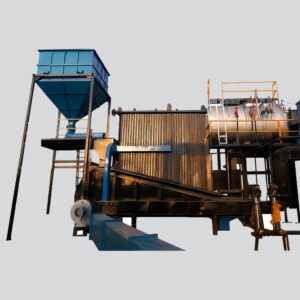
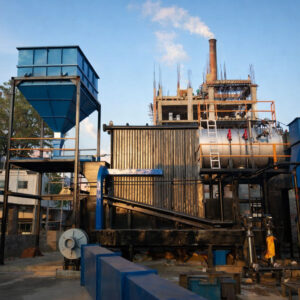
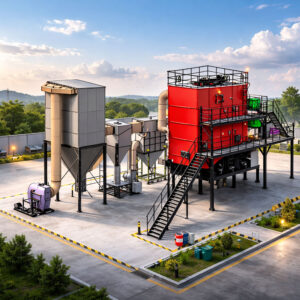

Coffee Husk Fired Boiler
High-Calorific Bio-Energy | Sustainable Steam for Coffee Curing & Beyond
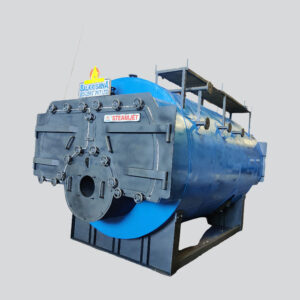
At IndianBoilers.com, we help coffee processors close the loop on waste. Our Coffee Husk Fired Boilers are specifically designed to handle the light, high-volatile nature of coffee husks (the outer layer of the coffee cherry). With a calorific value comparable to wood but at a significantly lower cost, coffee husk is the ideal fuel for drying, curing, and industrial heating.
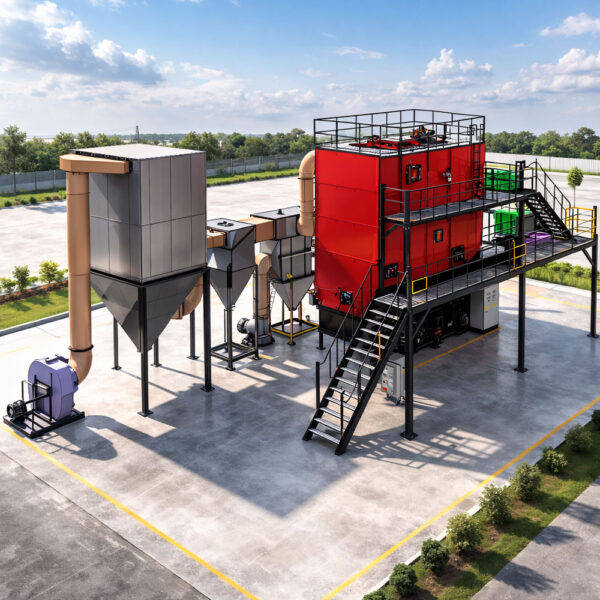
Manufactured in Ahmedabad, our boilers feature specialized pneumatic feeding and air-distribution systems that manage the “quick-burn” properties of coffee husks, preventing unburnt waste and ensuring consistent steam pressure.
Key Features & Performance
- Optimized for High Volatiles: Coffee husks ignite almost instantly. Our furnaces are designed with high-volume combustion chambers to manage rapid heat release and ensure smoke-free operation.
- Pneumatic Fuel Feeding: Includes an automatic blower-fed system that spreads the husks evenly across the fire bed, eliminating the manual labor of hand-firing and ensuring uniform steam generation.
- High Thermal Efficiency: Featuring a 3-pass smoke tube design with integrated Air Pre-heaters (APH), achieving thermal efficiencies of 78% to 84%.
- Anti-Sintering Grate Design: Coffee husk ash can have a low melting point. Our grates are engineered with targeted air cooling to prevent “clinkering” (ash fusion), ensuring long runs between cleanings.
- Low Operating Cost: By utilizing the husk generated in your own curing works, you can reduce your fuel bill to near zero, making your facility energy-independent.
- Clean Stack Emissions: Integrated with Multi-cyclone Dust Collectors (MDC) to capture fine ash particles, ensuring your plant stays compliant with local pollution control norms.
Core Industry Applications
The Coffee Husk Fired Boiler is the industry standard for:
- Coffee Curing Works: Providing the essential heat for mechanical dryers and moisture control.
- Instant Coffee Plants: High-pressure steam for extraction, evaporation, and spray-drying processes.
- Textile & Garments: A cost-effective alternative to coal in regions where coffee husk is abundant.
- Food Processing: Reliable, food-grade steam for dehydration and roasting units.
Advantages
- Dual-Fuel Flexibility: Our grates are versatile. During the coffee off-season, you can switch to wood, briquettes, or sawdust without any hardware changes.
- Robust Construction: We use only IBR-certified, boiler-quality steel (SA 515/516) to ensure your boiler handles the high-intensity heat of biomass combustion.
- Local Expertise: Based in the industrial heart of Ahmedabad, we provide rapid spare parts and service support across the coffee-growing belts of India.
Operating Range
- Capacity – 0.5 THP to 6 THP
- Fuel- wood log, Briquette, Lignite and Coal
- Pressure- 10.54 Kg/cm² to 21 Kg/cm²
Technical Specifications
| Specification | Unit | CC-05 | CC-10 | CC-20 | CC-30 | CC-40 | CC-50 | CC-60 | ||
|---|---|---|---|---|---|---|---|---|---|---|
| General | ||||||||||
| Steam Output From & at 100°C | Kg/hr | 500 | 1000 | 2000 | 3000 | 4000 | 5000 | 6000 | ||
| Working Pressure | Kg/CM² | 10.54 | 10.54 | 10.54 | 10.54 | 10.54 | 10.54 | 10.54 | ||
| Steam Temperature | °C | 183 | 183 | 183 | 183 | 183 | 183 | 183 | ||
| No’s of Passes | No’s | Three | Three | Three | Three | Three | Three | Three | ||
| No’s of Furnace | No’s | 1 | 1 | 1 | 1 | 1 | 1 | 1 | ||
| Grate Area | M² | 0.85 | 1.25 | 2.2 | 2.9 | 4.15 | 5.7 | 6 | ||
| Steam Outlet | MM | 40 | 50 | 80 | 100 | 100 | 125 | 150 | ||
| Heat Transfer Area | M² | 20 | 40 | 80 | 120 | 160 | 200 | 240 | ||
| Type of Fuel: woodlog, Briquette, Lignite and Coal | ||||||||||
| Boilers Efficiency with APH | ||||||||||
| On woodlog | % | 78 +/-2 | 78 +/-2 | 78 +/-2 | 78 +/-2 | 78 +/-2 | 78 +/-2 | 78 +/-2 | ||
| On Coal | % | 78 +/-2 | 78 +/-2 | 78 +/-2 | 78 +/-2 | 78 +/-2 | 78 +/-2 | 78 +/-2 | ||
| Fuel Consumption | ||||||||||
| WoodLog (3500) | Kg/hr | 99 | 198 | 396 | 593 | 791 | 989 | 1187 | ||
| Briquette (4000) | Kg/hr | 87 | 173 | 346 | 519 | 692 | 865 | 1038 | ||
| Lignite (3000) | Kg/hr | 115 | 231 | 462 | 692 | 923 | 1154 | 1385 | ||
| Coal (4500) | Kg/hr | 77 | 154 | 308 | 462 | 615 | 769 | 923 | ||
| Electrical Load | ||||||||||
| Feed Water Pump | H.P. | 2.00 | 2.00 | 3.00 | 4.00 | 4.00 | 6.00 | 7.50 | ||
| I.D. fan without BF | H.P. | 3.00 | 5.00 | 10.00 | 15.00 | 20.00 | 25.00 | 30.00 | ||
| F.D. Fan | H.P. | 1.00 | 2.00 | 5.00 | 7.50 | 7.40 | 10.00 | 12.50 | ||
| Total Electric Load | H.P. | 6.00 | 9.00 | 18.00 | 26.50 | 31.40 | 41.00 | 50.00 | ||
| NOTE: In view of constant endeavors to improve our products, we reserve the right to alter or change above specifications without prior notice. | ||||||||||
Frequently Asked Questions
Can I fire raw coffee husks directly from the mill?
Yes. Since husks are naturally separated during dry processing, they are usually ready for combustion. However, if they are wet from the "wet process," they must be dried to below 15% moisture for efficient burning.
How much steam can 1 kg of coffee husks generate?
On average, 1 kg of coffee husks can produce approximately 2.8 to 3.2 kg of steam, depending on the boiler's design and husk moisture.
Is the Coffee Husk Boiler IBR certified?
Yes. At IndianBoilers.com, we manufacture these boilers in full compliance with Indian Boiler Regulations (IBR), ensuring safety and legal reliability.
How does coffee husk compare to wood or coal?
Husks are lighter and burn much faster than wood or coal. Because they have a high volatile content, they require a larger furnace volume and precision air control to prevent smoke.
Why is a specialized feeding system needed for coffee husks?
Coffee husks are very light and flowable. We use VFD-controlled screw feeders or pneumatic injectors to ensure a steady, "drip-feed" of husks into the furnace, preventing pressure surges.
How do you manage the "flying ash" associated with husks?
Because husks are light, fine ash can easily be carried into the tubes. We design our boilers with Multi-cyclone Dust Collectors (MCDC) and specialized baffles to capture ash before it enters the stack.
Can I use coffee parchment (endocarp) in this boiler?
Yes. Coffee parchment is very similar to the husk and can be fired alone or mixed with other biomass residues.
What type of grate is best for coffee husks?
For small units, a Fixed Grate works well. For larger industrial units (above 3 TPH), we recommend a Reciprocating Grate to ensure uniform air distribution and automatic ash discharge.
Can the boiler handle "Coffee Grounds" from instant coffee plants?
Spent coffee grounds are much wetter (~50% moisture). Our specialized Internal Furnace boilers can handle grounds if they are pre-dried or co-fired with dry husks.
Is there a risk of "clogging" in the fuel lines?
Yes, if the husks contain long fibers or twigs. We include a screening system at the hopper to ensure only clean husks enter the automated feeder.
How often do I need to clean the ash pit?
Coffee husk has a moderate ash content (approx. 5–8%). In a manual system, cleaning once per shift is typical; in our automated systems, the ash is removed continuously.
How do you prevent "Sintering" (ash melting) on the grates?
Coffee ash has a high potassium content, which can melt at high temperatures. We use forced-draft air cooling for the grates to keep temperatures below the ash fusion point.
What is the startup time for a husk-fired boiler?
From a cold start, our boilers typically reach operating pressure in 45 to 60 minutes, thanks to the fast-burning nature of the husks.
Can the boiler be operated without a full-time fireman?
Our fully automated models require minimal supervision. The PLC monitors water levels, steam pressure, and fuel feed, requiring only periodic safety checks.
Does the boiler produce black smoke?
Only if the air-to-fuel ratio is wrong. We provide secondary air nozzles that create a "cyclonic" flame, ensuring all volatiles are burnt completely for a clear stack.
What is the typical ROI for a coffee processing plant?
Most coffee mills pay for their boiler in 8 to 12 months by eliminating the need for purchased wood, coal, or diesel.
Can I get a subsidy for installing a coffee husk boiler?
In India, many biomass-based projects qualify for IREDA or MNRE subsidies. We provide all the necessary technical documentation to assist your application.
What is the lifespan of a coffee husk boiler?
With proper water treatment and routine cleaning, our boilers are built to provide reliable service for 15 to 20 years.
Why choose IndianBoilers.com?
Located in Ahmedabad, we have optimized our furnace designs specifically for the coffee-growing regions of South India and Africa. We offer the perfect balance of IBR safety and biomass efficiency.