




AIRJET – Powerful & Precise: Oil / Gas Fired Hot Air Generator
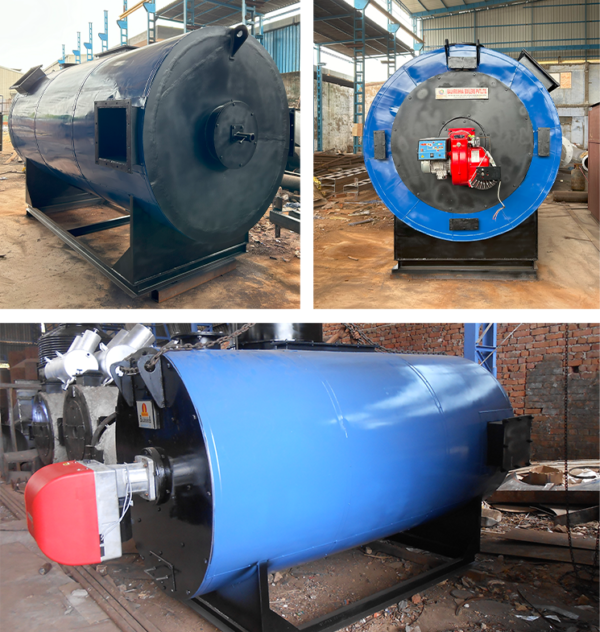
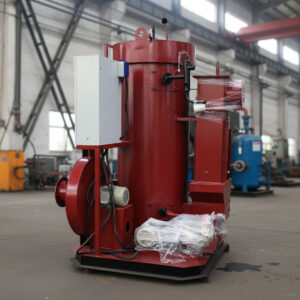
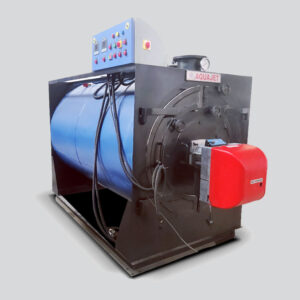
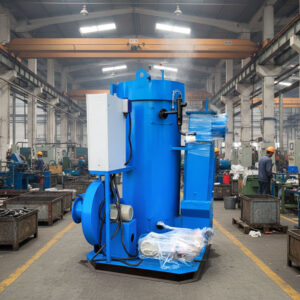
The AIRJET series, horizontal three pass indirect fired shell and shell type hot air generator designed for maximum efficiency using a variety of liquid and gaseous fuels. It is designed with fuel flexibility in mind and can fire a range of heavy oils, light oils and gases. It allows high and low process temperatures without operating pressures. Also, you can use this type of HAG without steam boilers and Thermal fluid heater.
IndianBoilers.com offers the robust and versatile Oil / Gas Fired Hot Air Generator, an essential thermal solution for industries requiring large volumes of clean, high-temperature air for drying, baking, and curing processes. Engineered for maximum efficiency and fuel flexibility, this generator delivers reliable heat with precise temperature control, making it a critical asset in optimizing production quality and speed.
Key Features & Benefits
Our Hot Air Generators are designed for indirect heating, ensuring that the heated air remains entirely clean and free of combustion gases or contaminants—a requirement in many critical processes.
| Feature | Operational Benefit | |
| Multi-Fuel Versatility | Operates efficiently on a wide range of fuels, including Light Oil (LDO), Furnace Oil (FO), Diesel, LPG, and Natural Gas (NG), allowing you to choose the most economical option. | Oil Gas Fired Hot Air Generator, Multi-fuel Air Heater, Industrial LDO/NG Heater |
| High Thermal Efficiency | Advanced multi-pass design maximizes heat transfer, achieving thermal efficiencies typically over 90\%. | high efficiency industrial heater, energy saving air generator |
| High Temperature Output | Capable of delivering hot air at sustained temperatures, commonly up to 350ºC or higher, suitable for demanding industrial processes. | high temperature air generator, industrial drying solutions |
| Clean Air Delivery | Indirect heating design ensures the heated air stream is completely isolated from the combustion chamber, guaranteeing pure, clean air. | clean hot air generator, indirect fired air heater |
| Automatic & Safe Operation | Equipped with high-quality burners and PLC-based controls for fully automatic ignition, firing modulation, and safety interlocks. | automatic hot air generator, industrial heat automation |
Applications: Driving Production Quality
The clean, controlled heat provided by our Oil / Gas Fired Hot Air Generators is vital across numerous industrial sectors:
- Drying Processes:
- Tea, Coffee, and Spices: Maintaining flavor and quality through controlled moisture removal.
- Food Products: Drying snacks, grains, and processed foods.
- Chemicals & Minerals: Removing moisture from powders, granules, and bulk materials.
- Wood & Timber: Kiln drying to prevent warping and cracking.
- Surface Treatment & Curing:
- Paint Baking & Powder Coating: Curing automotive parts, furniture, and industrial finishes.
- Rubber & Plastic Curing: Providing uniform heat for vulcanization and molding processes.
- Textile Industry: Used for fabric drying and heat setting.
Operating Range
- Capacity – 0.1 million kcal/hr to 2.0 million kcal/hr
- Fuel- Heavy oils, light oils and gases
- Temperature- up to 300 ºC
Technical Specifications
| Specification | Unit | AJ-10 | AJ-20 | AJ-30 | AJ-40 | AJ-60 | AJ-80 | AJ-100 | AJ-150 | AJ-200 | AJ-250 |
|---|---|---|---|---|---|---|---|---|---|---|---|
| General | |||||||||||
| Maximum heat output | M.Kcal/hr | 0.1 | 0.2 | 0.3 | 0.4 | 0.6 | 0.8 | 1.0 | 1.5 | 2.0 | 2.5 |
| Hot air Outlet Temperature | °C | 300 | 300 | 300 | 300 | 300 | 300 | 300 | 300 | 300 | 300 |
| Hot air Inlet Temperature | °C | 30 | 30 | 30 | 30 | 30 | 30 | 30 | 30 | 30 | 30 |
| Air Flow @ 300*C | M³/hr | 1300 | 2600 | 3900 | 5200 | 7800 | 10400 | 13000 | 19500 | 26000 | 32500 |
| Air Pressure at HAG Outlet | MMWC | 100 | 100 | 100 | 100 | 100 | 100 | 100 | 100 | 100 | 100 |
| Burner | Pressurejet Monoblock Burner | ||||||||||
| Type of Fuel | Fuel | DIESEL, LPG, NG., PNG, FO,LDO | |||||||||
| Boilers Efficiency | |||||||||||
| On Gas | % | 90 +/-2 | 90 +/-2 | 90 +/-2 | 90 +/-2 | 90 +/-2 | 90 +/-2 | 90 +/-2 | 90 +/-2 | 90 +/-2 | 90 +/-2 |
| On Oil | % | 88 +/-2 | 88 +/-2 | 88 +/-2 | 88 +/-2 | 88 +/-2 | 88 +/-2 | 88 +/-2 | 88 +/-2 | 88 +/-2 | 88 +/-2 |
| Fuel Consumption | |||||||||||
| Diesel (10500) | Kg/hr | 11 | 22 | 32 | 43 | 54 | 65 | 87 | 108 | 162 | 216 |
| Furnace Oil (9600) | Kg/hr | 12 | 24 | 36 | 47 | 59 | 71 | 95 | 118 | 178 | 237 |
| LDO (10200) | Kg/hr | 11 | 22 | 33 | 45 | 56 | 67 | 89 | 111 | 167 | 223 |
| LPG (11000) | Kg/hr | 10 | 20 | 30 | 40 | 51 | 61 | 81 | 101 | 152 | 202 |
| Natural gas(8900) | M³/hr | 12 | 25 | 37 | 50 | 62 | 75 | 100 | 125 | 187 | 250 |
| Electrical Load | |||||||||||
| P.A. Fan with Motor | H.P. | 5.00 | 7.50 | 10.00 | 15.00 | 20.00 | 25.00 | 30.00 | 40.00 | 50.00 | 60.00 |
| Burner Blower (oil) | H.P. | 0.37 | 0.50 | 0.50 | 0.90 | 1.10 | 1.10 | 3.00 | 3.00 | 5.5 | 7.5 |
| Fuel Pump | H.P. | 0.00 | 0.00 | 0.00 | 0.00 | 0.00 | 0.00 | 0.00 | 0.00 | 1.1 | 1.1 |
| Total Electric Load | H.P. | 5.37 | 8.00 | 10.50 | 15.90 | 21.10 | 26.10 | 33.00 | 43.00 | 56.60 | 68.60 |
| NOTE: In view of constant endeavors to improve our products, we reserve the right to alter or change above specifications without prior notice. | |||||||||||
Frequently Asked Questions
How does the "Indirect Fired" system work?
In an indirect-fired generator, the combustion takes place inside a high-temperature stainless steel heat exchanger. The process air passes over the external surface of the exchanger, absorbing heat without ever coming into contact with the actual flame or flue gases.
What is the difference between Direct and Indirect Fired generators?
- Direct Fired: The flame is in the airstream; flue gases mix with the process air (highest efficiency, but air is not 100% clean).
- Indirect Fired: Flue gases are exhausted via a chimney; the process air remains 100% clean and contamination-free.
What temperature range can these units achieve?
Standard units from indianboilers.com provide hot air from ambient up to 400°C. Custom designs for higher temperatures are available upon request for specialized metallurgy.
Which fuels are compatible with these generators?
Our burners are versatile and can be configured for:
- Liquid Fuels: HSD (High-Speed Diesel), LDO (Light Diesel Oil), or Furnace Oil.
- Gaseous Fuels: Natural Gas (NG), LPG, or Propane.
What is the typical thermal efficiency of these units?
Our indirect-fired systems generally offer 80% to 85% efficiency, while direct-fired systems can reach up to 95-98%.
Can I switch from Oil to Gas later on?
Yes. Most of our units are designed to accommodate a burner change. By simply replacing the burner assembly and adjusting the controls, you can switch fuel types based on market prices.
What capacities are available?
We offer a wide range of capacities, measured in heat output (kcal/hr), ranging from 50,000 kcal/hr to 5,000,000 kcal/hr.
What kind of burners do you use?
We integrate world-class, fully automatic monoblock burners that ensure optimal fuel-air mixing, low emissions, and reliable ignition.
How is the temperature controlled?
The units feature a fully automated control panel with a digital temperature controller. The burner modulates (High/Low or Stepless) to maintain the set temperature with high precision.
Which industries use Oil/Gas Fired Hot Air Generators?
They are essential in:
- Chemicals & Fertilizers: For spray dryers and flash dryers.
- Ceramics: For spray drying of clay slip.
- Textiles: For stenters and curing chambers.
- Agriculture: For large-scale grain and seed drying.
Is the air clean enough for food products?
With our Indirect Fired models, the air is 100% clean and free of combustion by-products, making it perfectly safe for drying spices, milk powder, and other food items.
How does this compare to using a Steam Radiator for air heating?
Steam systems are limited by the pressure of the boiler. An Oil/Gas Hot Air Generator can reach much higher temperatures (above 200°C) more efficiently than a steam-to-air heat exchanger.
What safety interlocks are provided?
At indianboilers.com, safety is a standard feature. Our units include:
- Flame sensors (Photocells) to prevent fuel build-up.
- High-temperature safety cut-offs.
- Blower-burner interlocks (Burner won't start without airflow).
Does the unit require a chimney?
Yes, for indirect-fired units, a chimney is required to vent the combustion gases safely outside the facility.
How often is maintenance required?
We recommend a major service every 6 months, focusing on burner cleaning, nozzle replacement, and inspection of the heat exchanger for any soot build-up or cracks.
How long is the lifespan of the heat exchanger?
Constructed with high-grade stainless steel (SS 310 or SS 316), our heat exchangers are designed to last 10 to 15 years with proper maintenance.
What are the installation requirements?
The unit requires a level concrete plinth, a fuel storage tank, electrical connection, and ducting to connect the hot air outlet to your process equipment.
How quickly can I see a Return on Investment (ROI)?
By replacing inefficient heating methods or moving to cheaper fuels like Natural Gas, most clients see a complete ROI within 12 to 18 months.
How do I get a technical proposal for my project?
Contact our engineering team through the indianboilers.com contact page. Please provide your required Air Flow (m³/hr) and Inlet/Outlet Temperature for an accurate quote.
What is the average price of an Oil/Gas Fired Hot Air Generator?
The price varies significantly based on capacity (Kcal/hr) and technology. In India, a standard industrial oil or gas-fired hot air generator typically starts from ₹10 Lakhs for small-scale units (approx. 50,000 Kcal/hr) and can go up to ₹15 Lakhs to ₹40 Lakhs for high-capacity, fully automated industrial systems (1 million Kcal/hr and above).
What are the main factors that determine the price?
The price is primarily driven by:
- Heating Capacity: Measured in kcal/hr. A 1 million kcal/hr unit is significantly more expensive than a 100,000 kcal/hr unit due to the size of the combustion chamber and burner.
- Direct vs. Indirect Firing:
- Direct Fired: Cheaper, as the flue gases mix with the air. Used for non-sensitive materials like minerals.
- Indirect Fired: More expensive (20% – 40% more) because it uses a heat exchanger to keep the process air clean. Essential for food, pharma, and chemicals.
- Material of Construction (MOC): Mild Steel (MS) is the standard and most affordable. Stainless Steel (SS 304 or 316) increases the price but is necessary for high-temperature or corrosive environments.
Is there a big price difference between Oil and Gas units?
Usually, the "shell" of the generator is similar. The price difference often lies in the Burner:
- Gas Burners: (Natural Gas/LPG) can sometimes be slightly more expensive due to complex gas trains and safety valves.
- Dual Fuel Burners: These allow you to switch between oil and gas. These are the most expensive burner options but offer the best fuel flexibility.
Does the temperature requirement affect the cost?
Yes. Standard units usually provide air up to 200°C – 300°C. If your process requires high-temperature air (up to 600°C or higher), the unit will require specialized refractory lining and high-grade alloys, which can double the cost.
What "hidden" costs should I budget for?
Beyond the machine price, consider:
- Installation & Commissioning: Usually 5% – 10% of the machine cost.
- Ducting & Insulation: Bringing the hot air to your process equipment.
- Fuel Storage: Tanks for oil or gas pipeline infrastructure.
- Chimney/Stack: Depending on local environmental regulations.
What is the typical warranty and its impact on price?
Most manufacturers offer a 1-year warranty. Extended warranties or "Annual Maintenance Contracts" (AMC) are often available for an additional 2% – 5% of the purchase price, which can be a wise investment for high-uptime industrial plants.

Reviews
There are no reviews yet.