

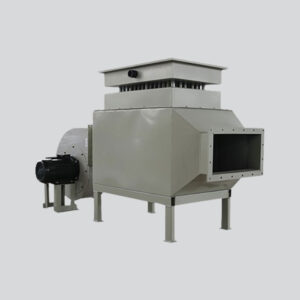

Industrial Hot Air Generator Manufacturers: Electric, Wood, Oil/Gas
At IndianBoilers.com, we are globally recognized leaders in the design and manufacturing of high-performance thermal solutions. Our Industrial Hot Air Generators (HAG) are engineered to deliver consistent, high-volume heat for critical processes like drying, curing, and baking across the textile, food, chemical, and pharmaceutical sectors.
Our Range of Hot Air Generators
1. Industrial Electric Hot Air Generator (ELECTROAIR Series)
For industries demanding zero-emission and ultra-clean heat, our ELECTROAIR series is the definitive choice. It is ideal for cleanrooms and food-grade environments where combustion by-products are strictly prohibited.
- Key Features: * Fins tube bundle heaters with Ni-Cr wire for rapid heat transfer.
- Thyristor-based control panels for pinpoint temperature accuracy.
- No chimney required; zero noise and zero pollution at the source.
- Capacity: 50,000 to 4,000,000 Kcal/hr.
- Operating Temp: Up to 350°C.
2. Oil & Gas Fired Hot Air Generator (AIRJET Series)
The AIRJET series is a horizontal three-pass indirect fired system designed for maximum thermal efficiency and fuel flexibility.
- Key Features: * Fully automatic mono-block burners (Imported/Indigenous).
- Multi-fuel capability: Diesel (LDO/HSD), LPG, Natural Gas, and Furnace Oil.
- Indirect heating design ensures the process air remains 100% clean.
- Capacity: 0.1 million to 2.0 million Kcal/hr.
- Efficiency: 85% (+/-2%) on NCV.
3. Wood & Briquette Fired Hot Air Generator (AIRMAX Series)
A cost-effective solution for industries with easy access to solid fuels. These units are built with high-grade refractory lining to withstand intense heat and ensure long-term durability.
- Key Features:
- Large combustion chamber for efficient burning of wood logs, chips, and biomass briquettes.
- Manual or automatic fuel feeding systems available.
- Ideal for agricultural drying, plywood curing, and tea processing.
- Capacity: Custom-engineered up to 5,000,000 Kcal/hr.
Technical Specifications Table
| Specification | Electric (ELECTROAIR) | Oil / Gas (AIRJET) | Wood / Solid Fuel |
| Heat Output | 50k – 4000k Kcal/hr | 100k – 2000k Kcal/hr | 100k – 5000k Kcal/hr |
| Max Temperature | 350°C | 300°C – 450°C | 400°C |
| Heating Method | Electric Resistance | Indirect (Heat Exchanger) | Direct / Indirect |
| Efficiency | ~99% | 85% – 92% | 75% – 80% |
| Control System | Thyristor / PLC | Fully Automatic | Manual / Semi-Auto |
Why Choose IndianBoilers.com?
- Custom Engineering: We specialize in high-temperature requirements for specific textile and chemical processes.
- Safety First: Equipped with safety interlocks, including high-temperature audio/visual alarms and flame sensors.
- Global Presence: With over 5,000 successful installations, our equipment is built to withstand the toughest industrial environments.
- Energy Efficiency: Our designs focus on 15%–20% fuel savings compared to traditional steam or thermic fluid radiators.
Core Applications
- Textiles: Fast, even drying for dyed fabrics and yarns.
- Food Processing: Dehydration of snacks, spices, and milk powder.
- Chemicals/Pharma: Precise drying of granules and powders.
- Automotive: Flawless paint curing and powder coating.
Frequently Asked Questions
How does a hot air generator work in industrial applications?
An energy source (burner or electric element) creates heat. A high-capacity blower draws in ambient air, passes it through a combustion chamber or heat exchanger, and discharges the heated air through ducts to the process equipment.
What are the main components of a hot air generator?
The core components include the Burner/Heating Elements, Combustion Chamber, Heat Exchanger (for indirect models), Blower/Fan, and a PID/PLC-based Control Panel.
What is the difference between direct fired and indirect hot air generators?
- Direct Fired: Combustion gases mix with the process air (100% efficient; used for non-sensitive materials).
- Indirect Fired: Air is heated via a heat exchanger (Process air remains 100% clean; used for food/pharma).
Can a hot air generator replace a traditional steam boiler?
Yes. If your process only requires hot air for drying, an HAG can save 30% to 40% in fuel costs by eliminating water treatment and steam distribution losses.
What are the advantages of hot air generators over other heating systems?
We offer faster start-up times, lower capital investment, higher energy efficiency, and lower maintenance compared to steam or thermic fluid systems.
What fuel options are available for hot air generators?
Options include Natural Gas, LPG, Diesel, Wood, Biomass Briquettes, and Electricity.
Which is the most efficient fuel for industrial hot air generators?
Natural Gas is the cleanest and most efficient fossil fuel, while Electric HAGs offer nearly 99% efficiency at the point of heat transfer.
How energy-efficient are modern hot air generators?
Modern units range from 85% (solid fuel) to 95% (gas) and 99% (electric) efficiency, depending on the design.
Can Indianboilers.com customize hot air generators for specific needs?
Yes. We offer customization in terms of Material of Construction (SS 304/316), vertical or horizontal layouts, and high-temperature variants up to 800°C.
What industries commonly use hot air generators?
Common industries include Textiles, Food Processing, Chemicals, Pharmaceuticals, Automotive, and Plywood.
How are hot air generators used in textile processing?
We are used in stenters for drying dyed fabrics, heat-setting synthetic fibers, and curing prints.
What role do hot air generators play in food processing and drying?
We provide clean heat for dehydrating fruits/vegetables and for spray drying systems to produce powders (e.g., milk or coffee).
Can hot air generators support pharmaceutical manufacturing processes?
Yes. Our indirect and electric models are used in Fluid Bed Dryers (FBD) and sterilization processes requiring medical-grade air purity.
Are you a hot air generator manufacturer in India?
Yes, IndianBoilers.com is a premier manufacturer based in India, providing ISO-certified thermal solutions globally.
What customization options does Indianboilers.com offer for hot air systems?
We offer PLC-based automation, specific metallurgy for corrosive environments, and specialized ducting layouts.
How to select the right hot air generator capacity for my process?
Capacity is calculated based on air volume m3 hr, the required temperature rise (Delta T), and the specific heat of your product.
How does hot air heating benefit industrial processes?
It provides uniform heating, prevents moisture spots, and allows for rapid temperature adjustments.
What maintenance is required for industrial hot air generators?
Regular maintenance involves cleaning burner nozzles, checking blower alignment, inspecting refractory lining, and cleaning heat exchanger tubes.
What temperature ranges can hot air generators achieve?
Indirect systems typically reach up to 450°C, while direct-fired systems can achieve up to 1000°C.
